Best Workbench Vises for Woodworking
Compare woodworking vises by jaw width, opening capacity, mounting style, quick release, racking resistance, and bench compatibility.
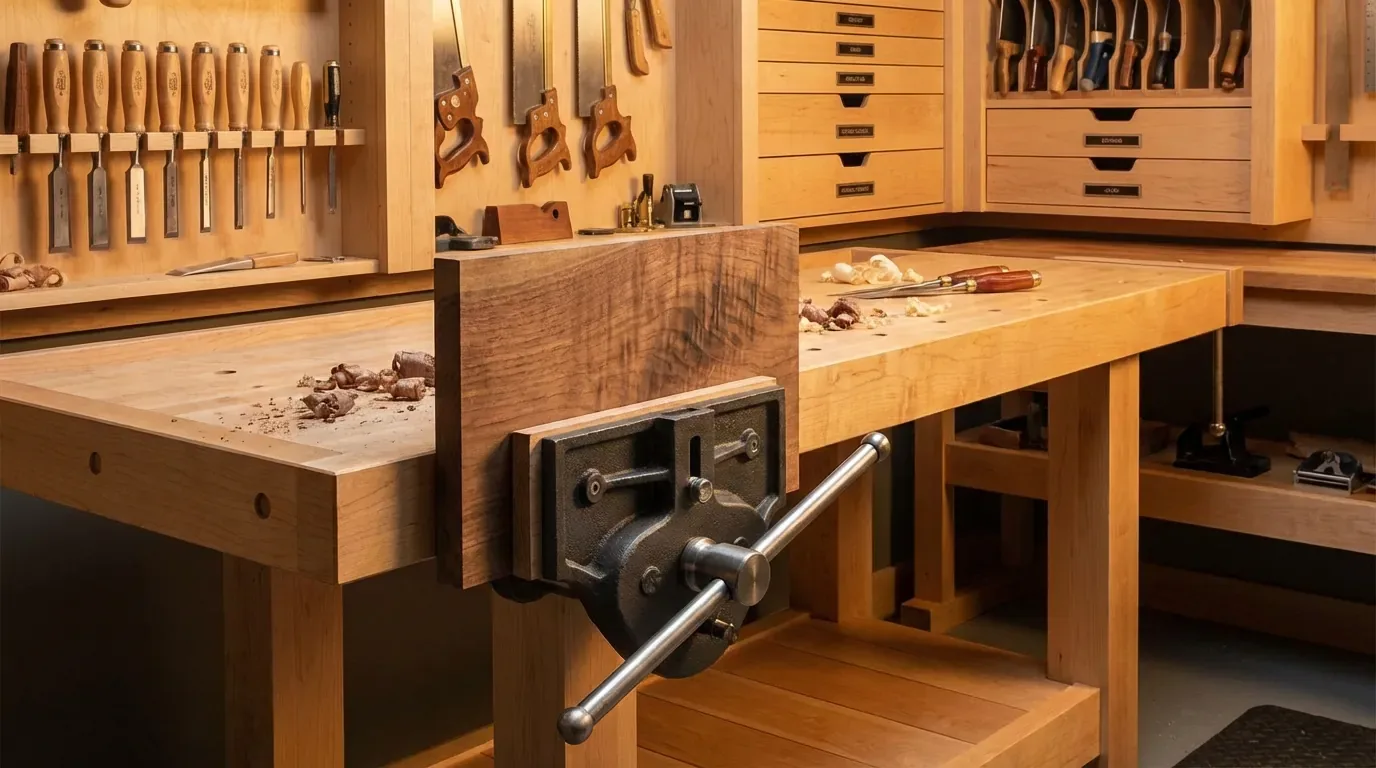
A woodworking vise is often described as the "third hand" of the workshop, but that comparison actually undersells its importance. In reality, a high-quality vise is the foundation of almost every precision task you perform at your workbench. Whether you are hand-planing an edge, chiseling out a delicate mortise, or simply holding a board steady for a crosscut, the stability provided by your vise determines the accuracy of your work. Without a reliable way to secure your material, you aren't just making the job harder; you are compromising safety and increasing the likelihood of costly mistakes.
Choosing the right woodworking vise requires more than just picking the heaviest piece of cast iron you can find. A good vise must offer a balance of clamping force, throat depth, and smooth mechanical action. If the jaws don't close evenly, or if the screw mechanism binds under pressure, you’ll find yourself constantly fighting your tools instead of focusing on your craft. For many woodworkers, the vise is the most-used tool in the shop, which is why investing in a model that matches your specific workflow—whether that’s heavy timber framing or fine cabinetry—is a decision that pays dividends for decades.
In this guide, we have curated a selection of the best woodworking vises currently available, ranging from heavy-duty professional front vises to versatile quick-release models. We evaluated these tools based on their construction quality, ease of installation, and long-term durability. Our goal is to help you move past the "make-do" stage of shop organization and equip your workbench with a tool that provides rock-solid reliability every time you step up to the bench.
Table of Contents
- Quick Comparison Table
- Best Overall: Yost M7WW Woodworking Vise
- Best Premium Option: Wilton 63144 Front Vise
- Best Budget Pick: IRWIN Woodworking Vise (226303)
- Best for Speed: Pony Jorgensen Rapid Acting Vise
- How We Evaluated These Vises
- Comprehensive Buying Guide
- Frequently Asked Questions
Quick Comparison Table
Prices and marketplace ratings in this imported comparison were captured January 16, 2026 and may have changed. Check the retailer for current details.
| Product Name | Price | Rating | Best For |
|---|---|---|---|
| Yost M7WW 7-Inch Vise ↗ | $65.00 | 4.6/5 | All-Around Shop Use |
| Wilton 63144 Professional Vise ↗ | $180.00 | 4.8/5 | Heavy Duty/Professional |
| IRWIN Woodworking Vise 6.5" ↗ | $35.00 | 4.4/5 | Beginners & Small Spaces |
| Pony Jorgensen 7-Inch Rapid Acting ↗ | $110.00 | 4.7/5 | High-Efficiency Workflows |
Best Overall: Yost M7WW Woodworking Vise
The Yost M7WW represents the perfect intersection of value, durability, and functionality for the average woodworker. Built from heavy-duty cast iron and featuring a 7-inch jaw width, this vise provides enough surface area to hold medium to large workpieces without the bulk of a massive industrial unit. One of the standout features of this model is the integrated "dog" or pop-up stop. When used in conjunction with bench dogs on your tabletop, this vise transforms your entire workbench into a massive clamping surface, allowing you to secure long boards for surface planing with ease.
Installation of the Yost M7WW is straightforward, though it does require a bit of underside mounting. The screw action is remarkably smooth for a vise in this price bracket, thanks to the precision-machined main screw and twin guide bars. These guide bars are critical because they prevent "racking"—the tendency of the vise to twist when you clamp a piece of wood on only one side of the jaws. While it isn't a quick-release model, the threading is aggressive enough that you can move the jaws across their 8-inch opening range quite rapidly.
I recommend the Yost M7WW for any intermediate woodworker who needs a permanent, reliable front vise that won't break the bank. It’s best for those who primarily work with furniture-sized components and need a vise that can handle significant clamping pressure for glue-ups or heavy chisel work. The standout feature is undoubtedly the built-in bench dog, which adds a layer of versatility that many budget vises lack.
One minor drawback is that the cast iron jaws are unfinished; you will absolutely want to install wooden jaw liners (sacrificial faces) to protect your workpieces from marring and to provide a better grip. Compared to the Irwin budget alternative, the Yost feels significantly more "planted" and exhibits far less flex under heavy load. It is the workhorse of the Yost lineup and a staple in many home workshops for good reason.
Best Premium Option: Wilton 63144 Front Vise
When you move into the territory of the Wilton 63144, you are no longer looking at a simple tool; you are investing in a piece of shop equipment designed to last for multiple generations. Wilton has a storied reputation in the industrial world, and this woodworking vise carries that legacy forward. The most immediate difference you notice is the sheer mass and the precision of the castings. Every surface is machined to tight tolerances, ensuring that the jaws remain perfectly parallel even when you are applying the maximum amount of torque to the handle.
The Wilton 63144 features a rapid-acting nut design that allows for nearly instantaneous adjustments. By simply rotating the handle counter-clockwise, the nut disengages, allowing you to slide the jaw to any position. This is a massive time-saver for projects that involve workpieces of varying thicknesses. Furthermore, the vise is designed to be mounted flush with the top of your workbench, creating a seamless transition that is ideal for hand-tool enthusiasts who need to support long boards along the edge of the bench.
This vise is best for the professional woodworker or the serious hobbyist who demands the highest level of precision and speed. If your workflow involves constant adjustments—moving from a 1/2-inch drawer side to a 4-inch table leg—the rapid-acting mechanism will save you hours of cranking over the course of a year. The standout feature is the "no-play" guide bar system, which virtually eliminates racking, making it the most stable vise in its class.
The main consideration here is the price and the weight. At nearly 30 pounds, you need a very sturdy workbench to support it, and the price point is significantly higher than entry-level models. However, when compared to standard vises, the Wilton offers a level of refinement in the screw movement that makes clamping feel effortless. It is a "buy once, cry once" tool that removes all the frustrations common with cheaper alternatives.

Best Budget Pick: IRWIN Woodworking Vise (226303)
For those just starting out or working in a small, multi-purpose space, the Irwin 6.5-inch vise is an excellent entry point. Unlike the larger cast-iron beasts, this vise is designed with portability and ease of setup in mind. It features a bolt-on design that can be attached to almost any sturdy table or temporary workbench without requiring complex mortising or underside mounting. While it is smaller than our other top picks, it still offers a respectable 4.5-inch clamping capacity, which is plenty for most craft projects, birdhouses, or basic furniture repairs.
Despite its lower price point, Irwin didn't skimp on the essentials. The vise includes an integrated anvil on the back jaw, which, while more common in metalworking, can be surprisingly useful for light hammering tasks in a general-purpose workshop. The jaws also feature pre-drilled holes, making it easy to attach wooden pads to protect your projects. It’s a lightweight solution that provides a surprising amount of grip for its size, making it a favorite for "apartment woodworkers" who may need to remove their vise when not in use.
I recommend this vise for beginners, students, or hobbyists who are working with limited space and a tight budget. It’s best for light-duty tasks like sanding, assembly, or light sawing. The standout feature is its portability; you can move it from a dedicated bench to a sawhorse or a kitchen table in minutes. It provides a level of stability that is vastly superior to using plastic trigger clamps to hold your work to a table edge.
The drawback is its limited capacity and the potential for racking. Because it lacks the heavy-duty twin guide bars found on the Yost or Wilton, it can twist if you clamp a workpiece too far to one side. Compared to the more expensive models, the screw action is a bit coarser, and it lacks a quick-release feature. However, at its price point, it offers unbeatable value for someone who just needs a reliable way to hold a board steady.
Best for Speed: Pony Jorgensen Rapid Acting Vise
The Pony Jorgensen 7-Inch Rapid Acting Vise is a favorite among cabinet makers who value efficiency. This vise strikes a middle ground between the heavy industrial feel of the Wilton and the accessibility of the Yost. The defining feature is the quick-release lever located on the front of the vise. With a simple pull, you can bypass the screw threads and slide the jaw open or closed instantly. This is particularly useful when working on a set of chairs or cabinets where you are constantly switching between different components.
Construction-wise, the Pony Jorgensen is built like a tank. It uses a heavy-duty steel screw and twin guide bars that ensure the jaws stay aligned even under heavy pressure. The 7-inch jaw width is the "Goldilocks" size for most woodworkers—large enough for serious work but not so big that it gets in the way on a smaller bench. It also features a front-mounted dog, allowing it to work in tandem with bench dogs for surface work, much like the Yost model.
This vise is best for production-oriented woodworkers or anyone who finds themselves frequently frustrated by the slow process of cranking a traditional vise handle. If you do a lot of joinery where you are constantly taking pieces in and out of the vise to check fits, the rapid-acting feature is a game-changer. The standout feature is the responsiveness of the quick-release mechanism; it engages and disengages crisply without the "spongy" feel found on some lower-end rapid-acting models.
One consideration is the installation; like the Wilton, it requires a specific mounting configuration and may require you to add a spacer block to your workbench. Some users have noted that the quick-release mechanism requires occasional cleaning and lubrication to keep it moving smoothly. Compared to the Yost, it is a significant upgrade in speed, though it comes at a higher price. It is a professional-grade tool that brings a high level of efficiency to any shop.
How We Evaluated These Vises
This comparison is based on published specifications, installation documentation, product construction, and patterns in owner feedback. We have not mounted and stress-tested every vise in this list, so the recommendations should not be read as standardized lab results.
We compared jaw width and opening, mounting requirements, screw and quick-release design, reported racking, replaceable jaw-liner options, and long-term serviceability. Before buying, confirm the mounting dimensions against your bench and look for model-specific reports from woodworkers doing work similar to yours.
Comprehensive Buying Guide
When shopping for a woodworking vise, the first decision you need to make is the mounting style. Most woodworkers prefer a Front Vise (also called a Face Vise), which is mounted on the long side of the workbench. This is the most versatile position for tasks like sawing joinery or planing the ends of boards. However, an End Vise (or Tail Vise) is mounted on the short end of the bench and is primarily used in conjunction with bench dogs to clamp boards flat on the benchtop. If you only have room or budget for one, a front vise is almost always the better choice.
The next critical factor is the Jaw Width and Opening Capacity. For general furniture making, a 7-inch jaw width is standard. It provides enough surface area to hold a wide variety of parts without being overly cumbersome. If you frequently work on very large projects like entry doors or heavy dining tables, you might consider moving up to a 9-inch or 10-inch model. Pay close attention to the "opening capacity"—this is the maximum distance the jaws can move apart. A standard 8-inch opening is usually sufficient, but remember that adding wooden jaw liners will reduce this capacity by an inch or two.
Finally, consider the Mechanical Features, specifically whether you want a standard screw or a quick-release mechanism. Standard screws are simpler, have fewer parts to fail, and are generally more affordable. They are perfectly adequate for woodworkers who don't mind a bit of extra cranking. Quick-release vises, on the other hand, use a split-nut or trigger mechanism to allow the jaw to slide freely. This is a massive convenience but adds to the cost and complexity of the tool. Regardless of the mechanism, look for a vise with "toe-in" jaws—this means the tops of the jaws touch slightly before the bottoms, ensuring that when you tighten the vise, the pressure is concentrated at the top where the workpiece is held.
Frequently Asked Questions
Do I really need to add wooden jaw liners to my vise?
Yes, adding wooden jaw liners (often called "cheeks") is highly recommended for several reasons. First, the raw cast iron or steel of the vise jaws can easily mar and dent your wood workpieces, especially softer species like pine or walnut. Second, wood-on-wood contact provides a much higher coefficient of friction, meaning you don't have to crank the vise as hard to get a secure grip. Finally, wooden liners are sacrificial; if you accidentally nick them with a saw or a chisel, you can simply replace the wood rather than damaging your expensive vise.
How do I prevent my vise from "racking"?
Racking occurs when you clamp a workpiece on one side of the vise, causing the jaws to twist. The best way to prevent this is to use a "spacer" or "balance block" on the opposite side of the vise. Simply find a scrap piece of wood that is the same thickness as your workpiece and place it on the other side of the screw before tightening. This ensures the jaws apply pressure evenly across the entire surface and prevents long-term damage to the guide bars.
What is the difference between a woodworking vise and a mechanic's vise?
While both hold things, they are designed for very different tasks. A mechanic's vise usually has serrated steel jaws meant for gripping metal pipe or parts; these serrations will ruin a wood project instantly. Woodworking vises have large, flat jaws designed to distribute pressure over a wide area to avoid crushing wood fibers. Additionally, woodworking vises are designed to be mounted flush with the workbench surface, whereas mechanic's vises usually sit on top of the bench.
Can I mount a woodworking vise to a standard folding workbench?
It depends on the weight of the vise and the stability of the bench. Lightweight models like the Irwin 6.5-inch vise are often compatible with portable benches. However, heavy-duty cast iron vises like the Wilton or Yost require a thick, solid-core workbench (at least 1.5 to 2 inches thick) to handle the weight and the clamping forces involved. If your bench is too light, the entire table may tip over when you apply pressure or try to plane a board held in the vise.
How often should I lubricate my woodworking vise?
For most hobbyist shops, a quick maintenance check once every six months is sufficient. Use a dry lubricant like PTFE spray or a light coat of paste wax on the main screw and the guide bars. Avoid using heavy greases or oils, as these will attract sawdust and create a "gritty paste" that can actually accelerate wear on the threads. Keeping the screw clean and lightly lubricated will ensure the action remains smooth for decades.
Explore the recommendations.
Check Amazon for current product details, available options, and pricing.
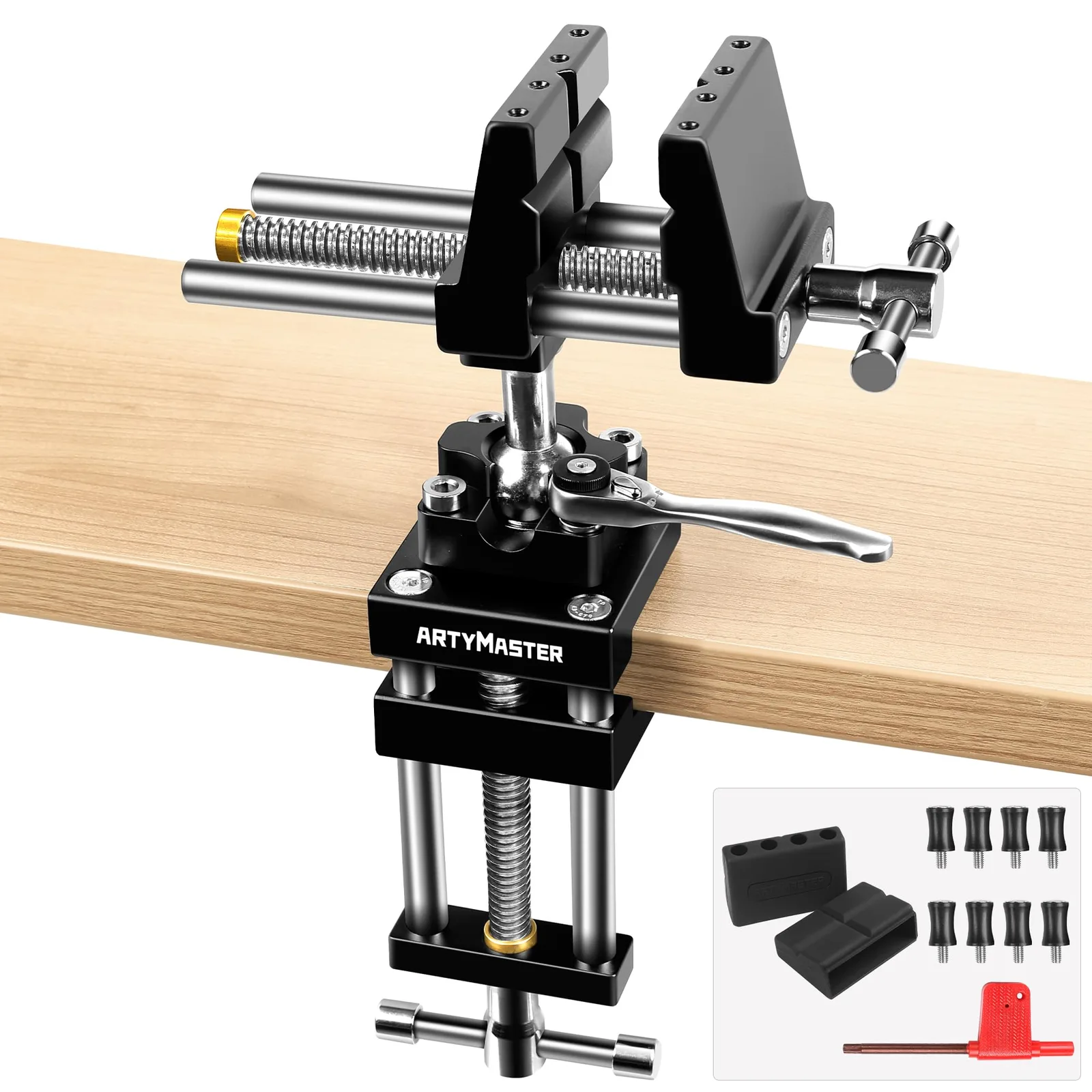
ArtyMaster Vise 4-Inch 360° Ball Joint Swivel Bench Vise, Heavy Duty Aluminum Clamp-On Workbench Vise with Quick Ratchet Lock, Silicone Jaw Pads, Ideal for Woodworking, Repair & DIY Projects (WT117A) Swivel Vise 4" Clamp-On
Product details
【360° Rotating Ball Head Bench Vise – Work at Any Angle】 ArtyMaster rotating vise features an innovative 360° ball head that allows free adjustment from any angle. Perfect for woodworking, metalworking, model assembly, jewelry repair, or DIY crafts—achieve precise multi‑angle control for smoother, more efficient operations. 【Ratchet Quick‑Lock Mechanism – Fast, Effortless & Secure】 Designed with a ratchet wrench quick‑lock system, this table vise locks firmly in place with just a twist. Prevents angle drift or slipping during sanding, drilling, polishing, or gluing, ensuring stable and accurate results every time. 【Heavy‑Duty Aluminum Alloy Vise – Strong & Lightweight】 ArtyMaster bench vise made from premium forged aluminum alloy, this vise combines strength and lightness. Its corrosion-resistant and deformation-proof properties ensure long-lasting performance, making it ideal for heavy-duty daily use. 【Multi-Functional Clamping Design – Fits Various Workpieces】 With a maximum clamping width of 4 inches and depth of 2 inches, this mini vise easily adapts to different workpiece sizes. Includes silicone jaw covers to protect delicate surfaces, plus 8 POM positioning pins to securely hold pipes, bottles, and irregularly shaped objects safely and conveniently. 【Universal Workbench Helper – Ideal for Woodworking, Metalwork & DIY】 Sturdy C-clamp base securely mounts to tables, workbenches, or shelves (up to 3.3-inch thickness), this multi‑angle vise clamp is the perfect tool for crafts, hobby repair, maintenance, and fabrication—your reliable all‑purpose bench partner for home or professional workshops.
- 【360° Rotating Ball Head Bench Vise – Work at Any Angle】 ArtyMaster rotating vise features an innovative 360° ball head that allows free adjustment from any angle. Perfect for woodworking, metalworking, model assembly, jewelry repair, or DIY crafts—achieve precise multi‑angle control for smoother, more efficient operations.
- 【Ratchet Quick‑Lock Mechanism – Fast, Effortless & Secure】 Designed with a ratchet wrench quick‑lock system, this table vise locks firmly in place with just a twist. Prevents angle drift or slipping during sanding, drilling, polishing, or gluing, ensuring stable and accurate results every time.
- 【Heavy‑Duty Aluminum Alloy Vise – Strong & Lightweight】 ArtyMaster bench vise made from premium forged aluminum alloy, this vise combines strength and lightness. Its corrosion-resistant and deformation-proof properties ensure long-lasting performance, making it ideal for heavy-duty daily use.
- 【Multi-Functional Clamping Design – Fits Various Workpieces】 With a maximum clamping width of 4 inches and depth of 2 inches, this mini vise easily adapts to different workpiece sizes. Includes silicone jaw covers to protect delicate surfaces, plus 8 POM positioning pins to securely hold pipes, bottles, and irregularly shaped objects safely and conveniently.
- 【Universal Workbench Helper – Ideal for Woodworking, Metalwork & DIY】 Sturdy C-clamp base securely mounts to tables, workbenches, or shelves (up to 3.3-inch thickness), this multi‑angle vise clamp is the perfect tool for crafts, hobby repair, maintenance, and fabrication—your reliable all‑purpose bench partner for home or professional workshops.
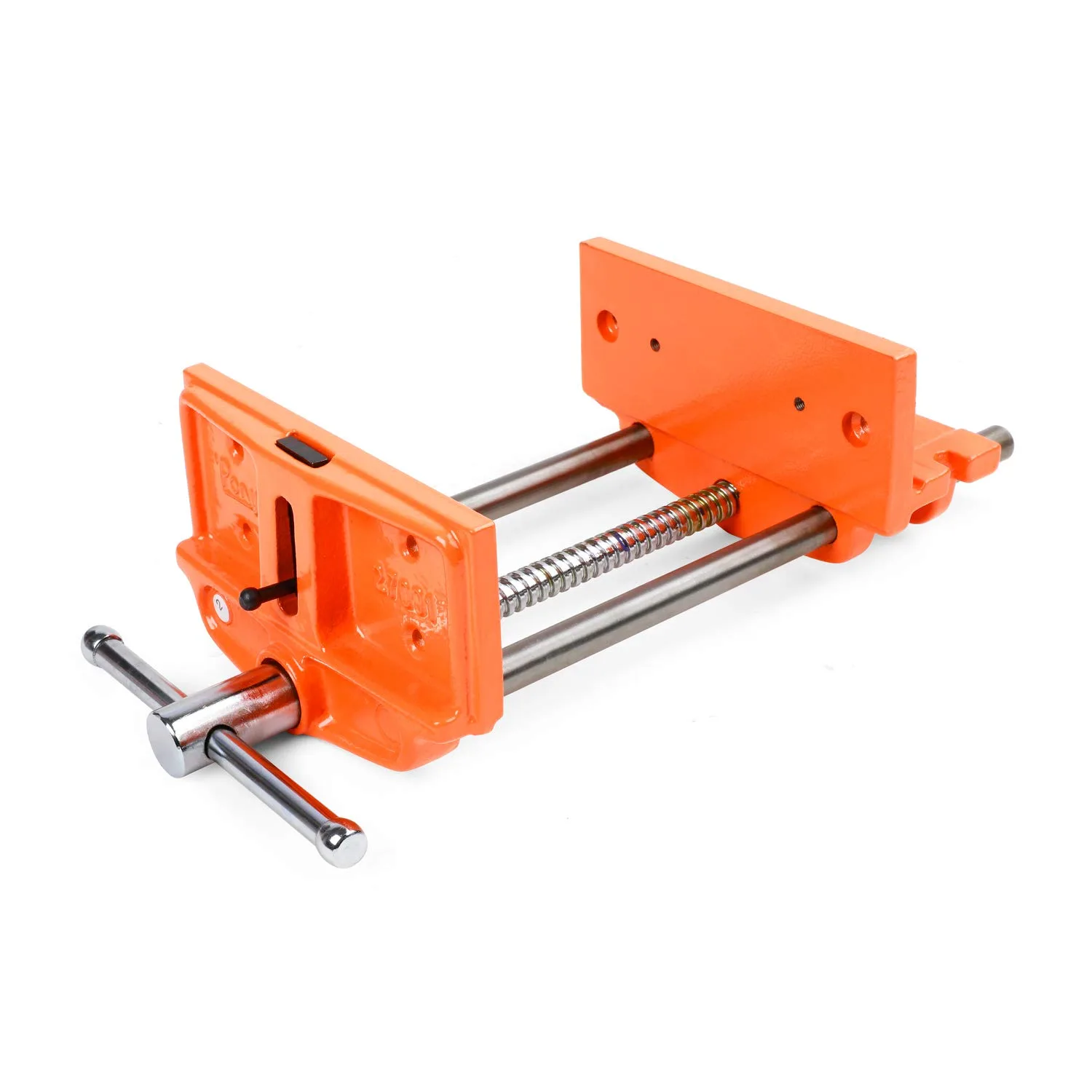
Pony Jorgensen 27091 Medium Duty Woodworker's Vise, Orange, Grey, 9-Inch By 7-Inch
Product details
Country Of Origin : China Package Weight : 5.96 Lbs Designed To Mount To The Face Of Wood Work Benches Vise Is For Medium Duty Home, Shop Or Professional Use
- Country Of Origin : China
- Package Weight : 5.96 Lbs
- Designed To Mount To The Face Of Wood Work Benches
- Vise Is For Medium Duty Home, Shop Or Professional Use
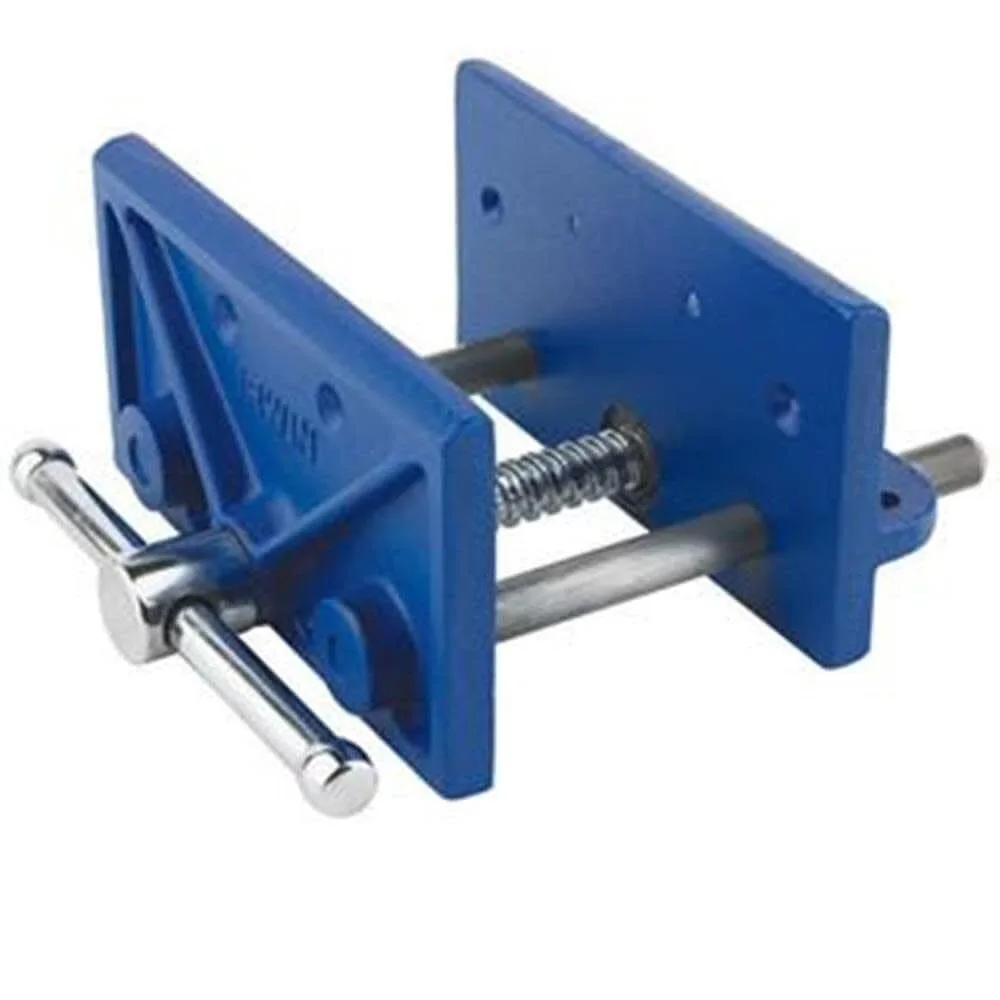
IRWIN Tools Woodworker's Vise, 6 1/2", 226361
Product details
Toe-in toward top jaws helps ensure firm grip on workpiece Square body seating for easy under-bench mounting Provision for installing wooden cheeks to protect work pieces 4-1/2" jaw capacity perfect for light duty woodworking tasks Crated of forged iron for long-lasting durability
- Toe-in toward top jaws helps ensure firm grip on workpiece
- Square body seating for easy under-bench mounting
- Provision for installing wooden cheeks to protect work pieces
- 4-1/2" jaw capacity perfect for light duty woodworking tasks
- Crated of forged iron for long-lasting durability
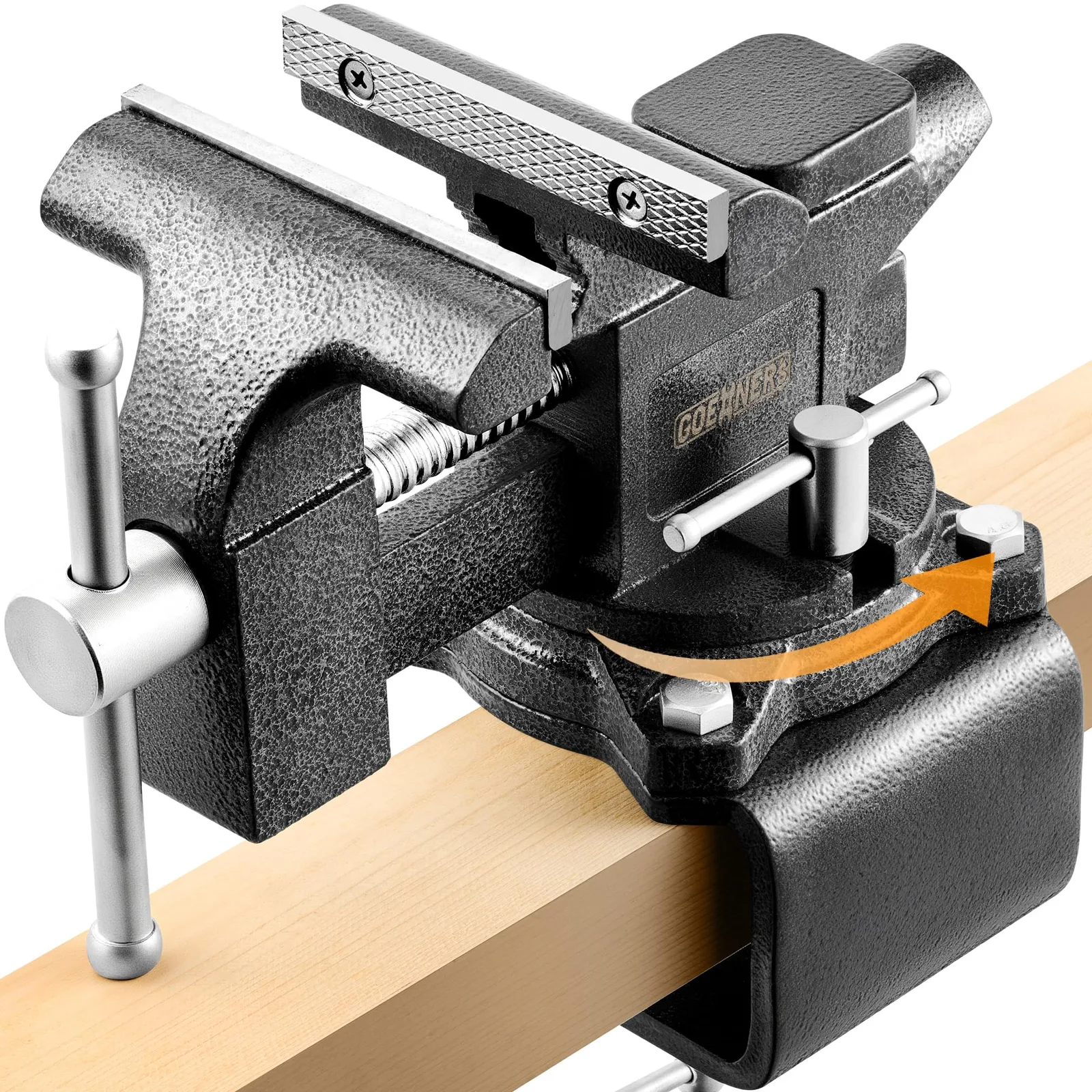
Updated 2-In-1 Bench Vise or Table Vise 4.5 Inch, Clamp Vice for Workbench Constructed with Cast Steel, Heavy Duty Workbench Vise Swivel for Woodworking
Product details
Multi-Purpose Vise: The heavy duty bench vice could be screwed firmly to the workbench or table with screws, and it can also be conveniently clamped on the workbench. Constructed with high-strength forged steel 60,000PSI, this vice can withstand high clamping pressure without breaking. Versatile Jaw: The 4.5 inch vise adopts a pipe and flat jaw combination so that you easily hold circular pieces, such as tubes and pipes. The specially hardened and engraved jaws provide excellent grip and ensure long-lasting performance. Premium Material: The surface is sprayed to enhance corrosion-resistance and to make it more smooth to the touch. With up to 5500 lbs. of clamping force, it's perfect for all your clamping needs. Perfect for both industrial and DIY home use. 270° Rotation: Built with a 270 degree swivel base, this work bench vise is ideal for use with a variety of clamping angles for versatility. Smooth guide rail makes both the screw and handle use smooth and effortless. Universal Specs: Portable workbench vise boasts a polished flat anvil. Maximum opening of jaw is up to 110mm, jaw width 115mm and 50mm throat depth.
- Multi-Purpose Vise: The heavy duty bench vice could be screwed firmly to the workbench or table with screws, and it can also be conveniently clamped on the workbench. Constructed with high-strength forged steel 60,000PSI, this vice can withstand high clamping pressure without breaking.
- Versatile Jaw: The 4.5 inch vise adopts a pipe and flat jaw combination so that you easily hold circular pieces, such as tubes and pipes. The specially hardened and engraved jaws provide excellent grip and ensure long-lasting performance.
- Premium Material: The surface is sprayed to enhance corrosion-resistance and to make it more smooth to the touch. With up to 5500 lbs. of clamping force, it's perfect for all your clamping needs. Perfect for both industrial and DIY home use.
- 270° Rotation: Built with a 270 degree swivel base, this work bench vise is ideal for use with a variety of clamping angles for versatility. Smooth guide rail makes both the screw and handle use smooth and effortless.
- Universal Specs: Portable workbench vise boasts a polished flat anvil. Maximum opening of jaw is up to 110mm, jaw width 115mm and 50mm throat depth.