Clever Ways to Store Wood Scraps
Keep useful wood scraps without losing shop space using simple sorting rules, vertical bins, rolling carts, and project-ready cutoffs.
Every woodworker knows the "offcut struggle." You finish a beautiful project, but you’re left with a pile of high-quality hardwood pieces that are just too good to throw away but too small to fit back on your main lumber rack. Before you know it, these scraps have migrated into corners, under workbenches, and across every flat surface in your shop. Finding effective wood scrap storage ideas isn't just about aesthetics; it’s about reclaiming your workspace and ensuring that $50 board foot of walnut doesn't end up as expensive kindling because you couldn't find it when you needed a small drawer pull or a decorative inlay.
The key to a successful storage system is accessibility and visibility. If you have to dig through a deep, dark bin to find a 10-inch piece of oak, you’ll likely give up and cut into a fresh board instead, which defeats the purpose of keeping scraps in the first place. In this guide, we will explore various strategies to categorize, store, and actually use your wood offcuts. From mobile carts that follow you around the shop to vertical wall solutions that utilize dead space, we’ll cover the best ways to turn your scrap pile into a valuable resource library.
By the end of this article, you will have a clear plan for auditing your current scrap inventory and implementing a system that fits your specific workshop footprint. Whether you have a sprawling three-car garage shop or a tiny basement nook, there is a storage solution that can handle your offcuts. We’ll look at the pros and cons of different methods and provide actionable tips on how to maintain these systems so they don't become another source of clutter in six months.
Table of Contents
- The Philosophy of Scrap Management: When to Keep and When to Toss
- Mobile Scrap Carts: The Ultimate Flexible Solution
- Wall-Mounted Racks for Long and Narrow Offcuts
- Small Part Storage: Bins, Buckets, and Cubbies
- Sorting Strategies: By Species, Size, or Project Type
- Safety and Maintenance Tips for Wood Storage
- Frequently Asked Questions
The Philosophy of Scrap Management: When to Keep and When to Toss
The first step in implementing wood scrap storage ideas is deciding what actually deserves a spot in your shop. Many woodworkers suffer from "hoarding tendencies" because wood is expensive and every piece feels like it has potential. However, a shop filled with useless slivers is a shop where work becomes difficult and dangerous. A good rule of thumb is the "Three-Inch Rule": if a piece is less than three inches wide or six inches long, it should probably go into the firewood bin or the trash, unless it is a particularly rare or expensive species like ebony or figured maple.
Developing a rigorous culling process is essential for maintaining an organized shop. Every time you finish a project, perform a "scrap audit." Ask yourself if the leftover pieces are large enough for a future project you actually plan to build. If you primarily build large furniture, keeping tiny blocks is a waste of space. Conversely, if you are a turner or a box maker, those small blocks are your bread and butter. Be honest about your workflow. If you haven't touched a specific scrap in over a year, it’s likely time to move it along to make room for materials you will actually use.
Finally, consider the quality of the scrap. Check for major defects like large knots, deep cracks, or significant warping. Storing a piece of wood that is structurally unsound only wastes space and might lead to frustration later when you try to incorporate it into a project only to have it fail. By being selective about what you keep, you ensure that your storage system remains manageable and that every piece inside it is a "high-value" asset. This mental shift is the foundation of a clean, efficient woodworking environment.
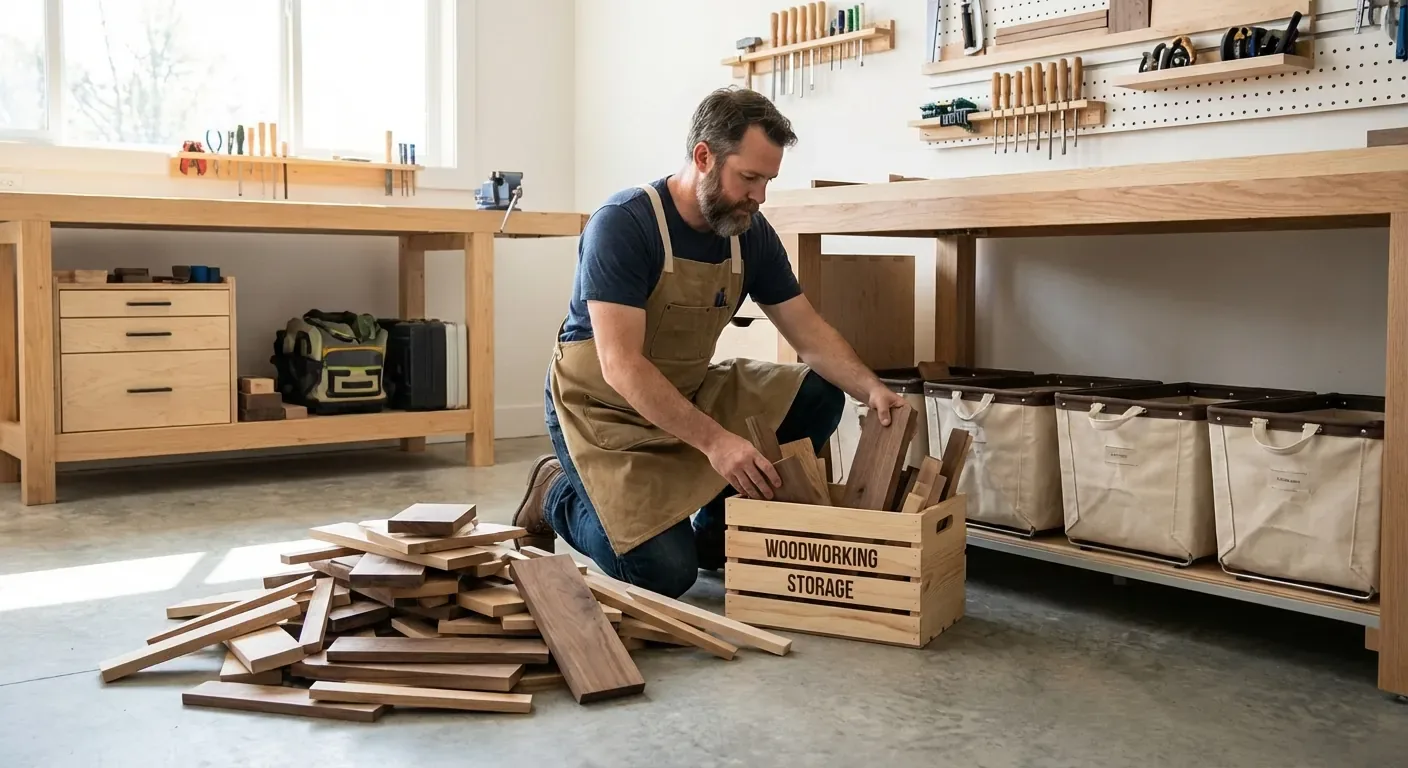
Mobile Scrap Carts: The Ultimate Flexible Solution
For many hobbyists and professionals alike, a mobile scrap cart is the pinnacle of wood scrap storage ideas. These carts are typically designed with multiple compartments of varying heights and depths to accommodate everything from 4-foot long boards to small blocks. The primary advantage of a mobile cart is its ability to be tucked into a corner when not in use and rolled directly to your table saw or miter saw when you’re hunting for a specific piece. This mobility prevents the "walking back and forth" fatigue that can slow down a project.
When building or buying a mobile cart, look for a design that utilizes an "A-frame" or a "vertical bin" structure. An A-frame design allows you to lean longer boards against the center support, while the interior of the frame can be used for shorter pieces or even sheet goods. It is crucial to use heavy-duty locking casters; wood is incredibly heavy, and a fully loaded scrap cart can easily weigh several hundred pounds. Without high-quality wheels, the cart becomes a permanent fixture rather than a mobile tool, defeating half of its purpose.
Another design consideration is the "tiered" approach. By creating sections of different heights, you ensure that shorter pieces don't get buried behind longer ones. Some woodworkers even incorporate a "sheet good" slot on the back of the cart for plywood offcuts, which are notoriously difficult to store because they tend to bow if leaned at an angle for too long. A well-designed cart acts as a central hub for all project leftovers, keeping the rest of your shop clear of "wood-tripping hazards."
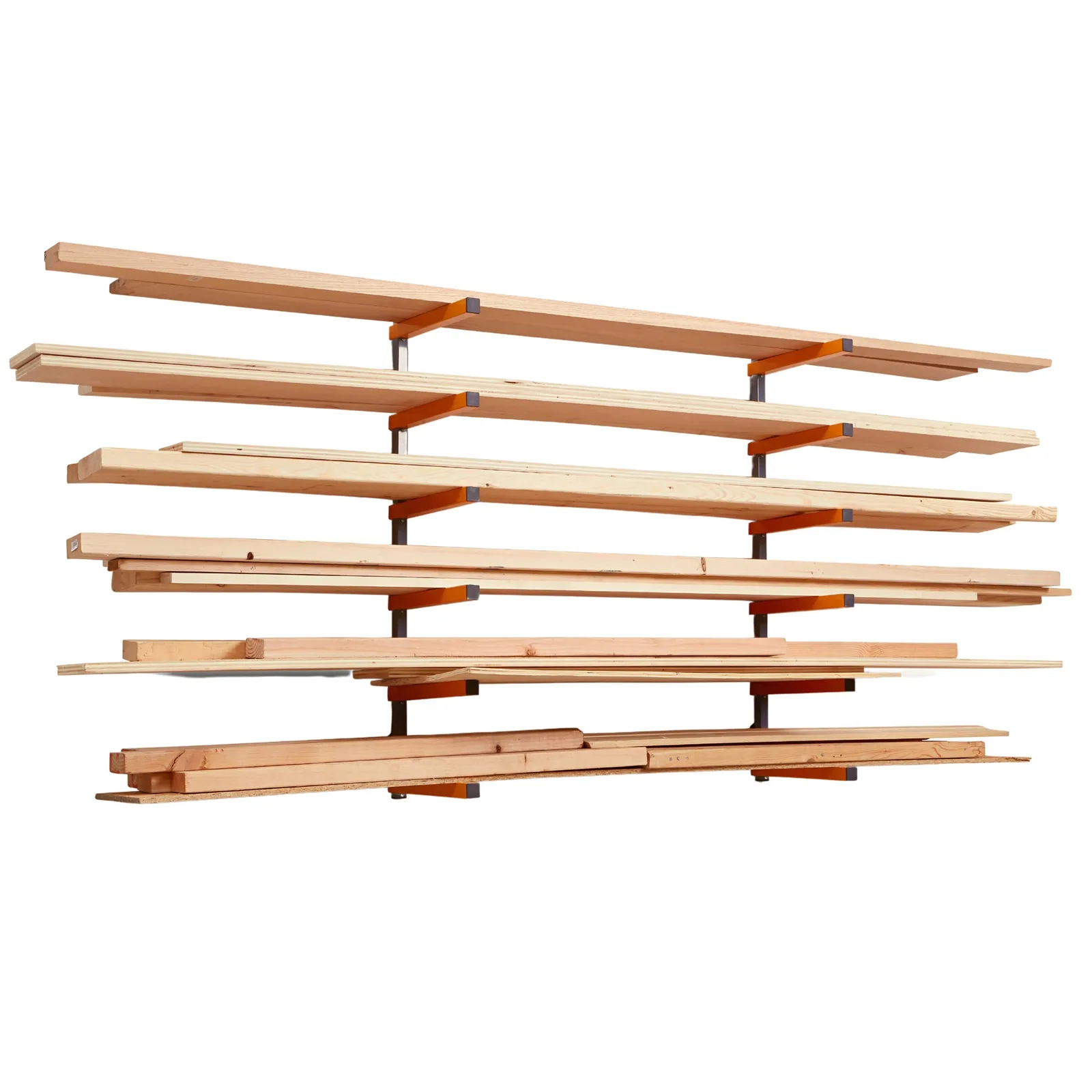
I highly recommend a heavy-duty wall-mounted or mobile-compatible rack system like the Bora Portamate for anyone struggling with mid-to-long scrap pieces. This specific system is best for woodworkers who have a mix of long, thin offcuts and heavier boards that need to stay flat to prevent warping. It is particularly effective because it uses vertical space that is often wasted in a garage or basement shop.
The standout feature of this rack is its weight capacity; each level can typically hold up to 100-110 lbs, which is essential when you're stacking dense hardwoods like oak or maple. The powder-coated steel construction ensures it won't sag over time, unlike homemade wooden versions that might succumb to the weight. One drawback to consider is that because it is a fixed rack, you need to ensure you have the wall clearance to slide long boards in and out. Compared to a simple floor pile, this rack increases your usable floor space by 300% by moving the "footprint" of your wood to the wall.
Wall-Mounted Racks for Long and Narrow Offcuts
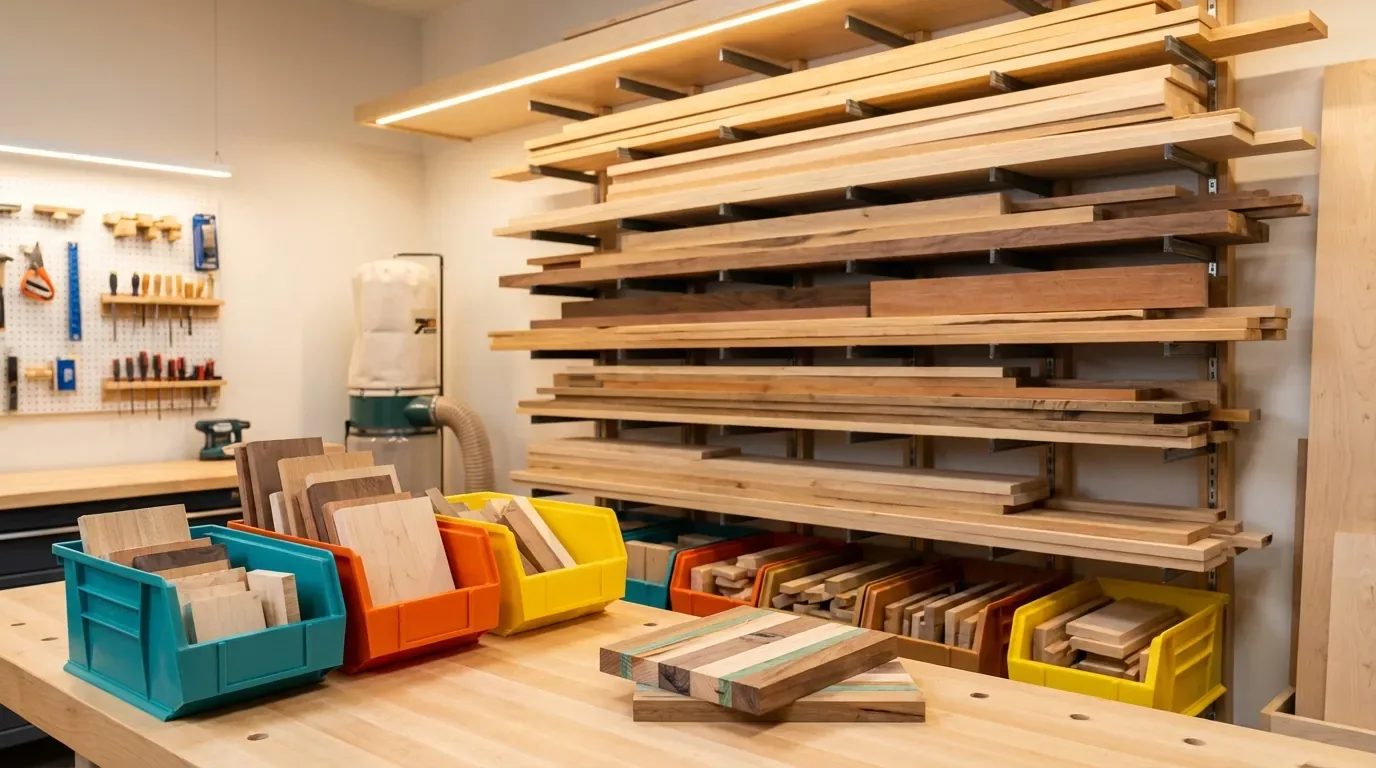
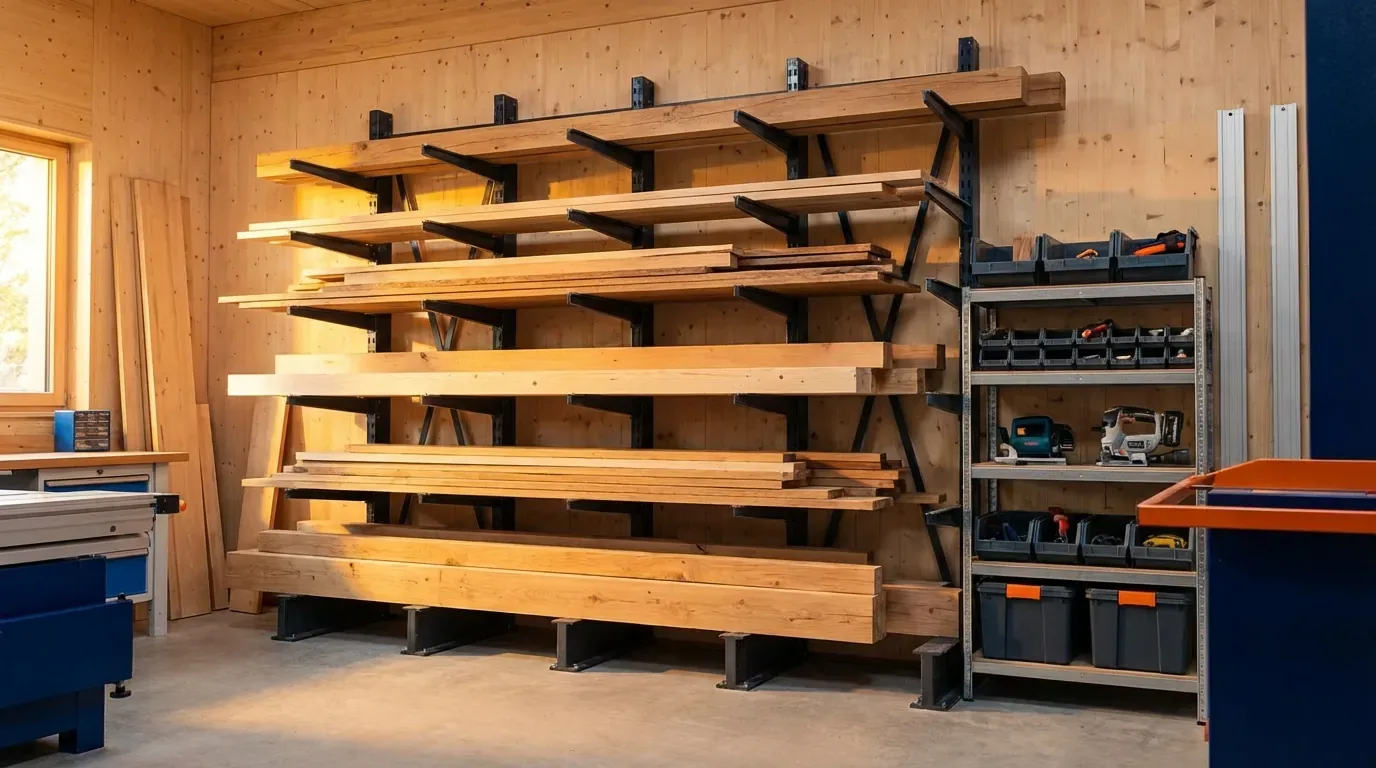
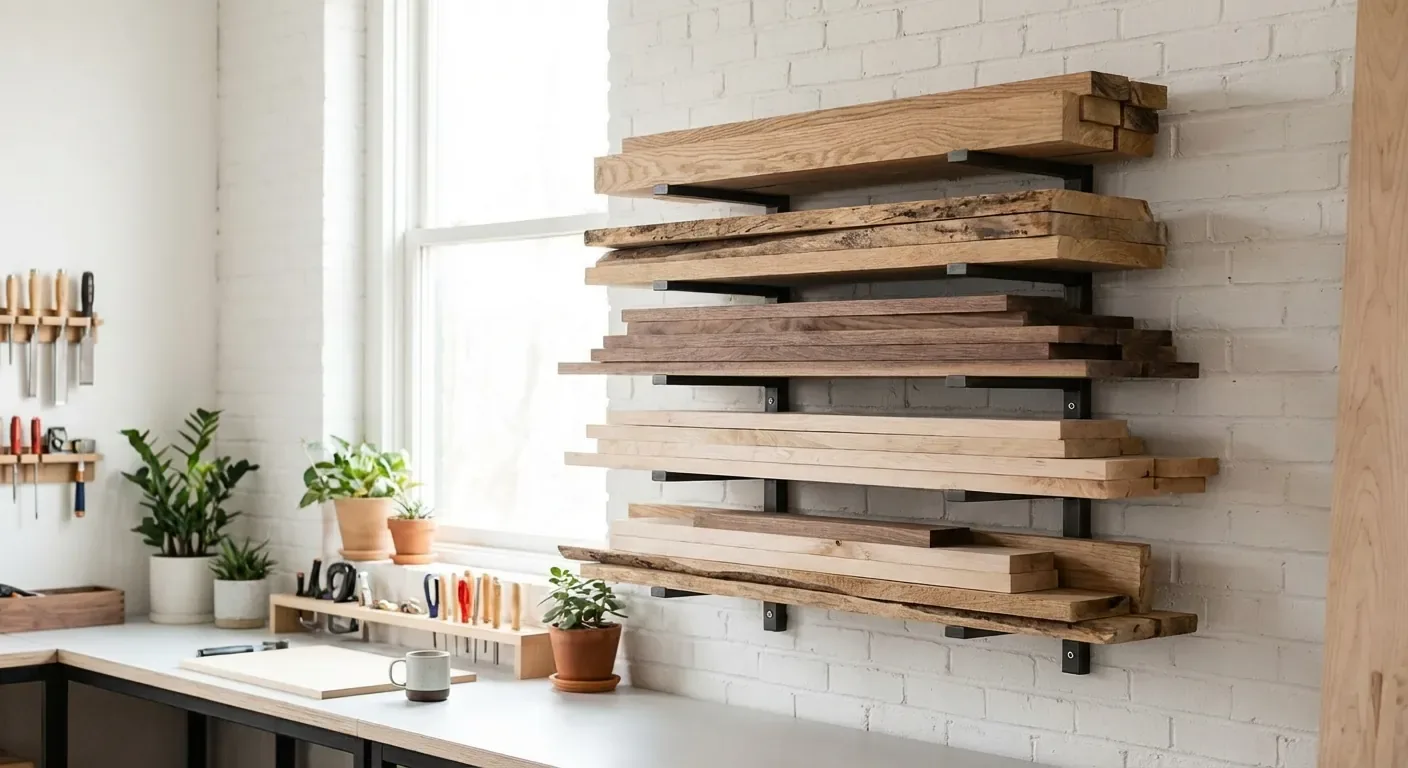
When floor space is at a premium, looking up is the best way to find new wood scrap storage ideas. Wall-mounted racks are ideal for storing long, narrow offcuts—the kind left over from ripping boards to width. These pieces are often too long for a cart but too thin to stand up on their own without bowing. By using a series of horizontal brackets, you can support these pieces along their entire length, which is critical for maintaining their straightness for future use.
The most effective wall racks are those that allow for "zoning." You might dedicate the top shelf to very long, light moldings and the lower, more accessible shelves to heavier hardwood offcuts. One clever trick is to install the brackets at a slight upward angle (about 1-2 degrees). This prevents boards from accidentally sliding off the front of the rack due to vibrations from heavy machinery. Additionally, using a "cantilever" style rack allows you to see the edges of every board, making it much easier to identify the species and thickness at a glance.
If you are building your own wall rack, ensure that the vertical supports are bolted directly into the wall studs. A common mistake is relying on drywall anchors, which will inevitably fail under the concentrated weight of lumber. For shops with high ceilings, you can even install "overhead" racks that hang from the joists. This is the perfect spot for "deep storage"—the pieces you know you want to keep but don't need to access every day. Just be mindful of the height; if you need a ladder every time you want a scrap, you’ll likely stop using the system.
Small Part Storage: Bins, Buckets, and Cubbies
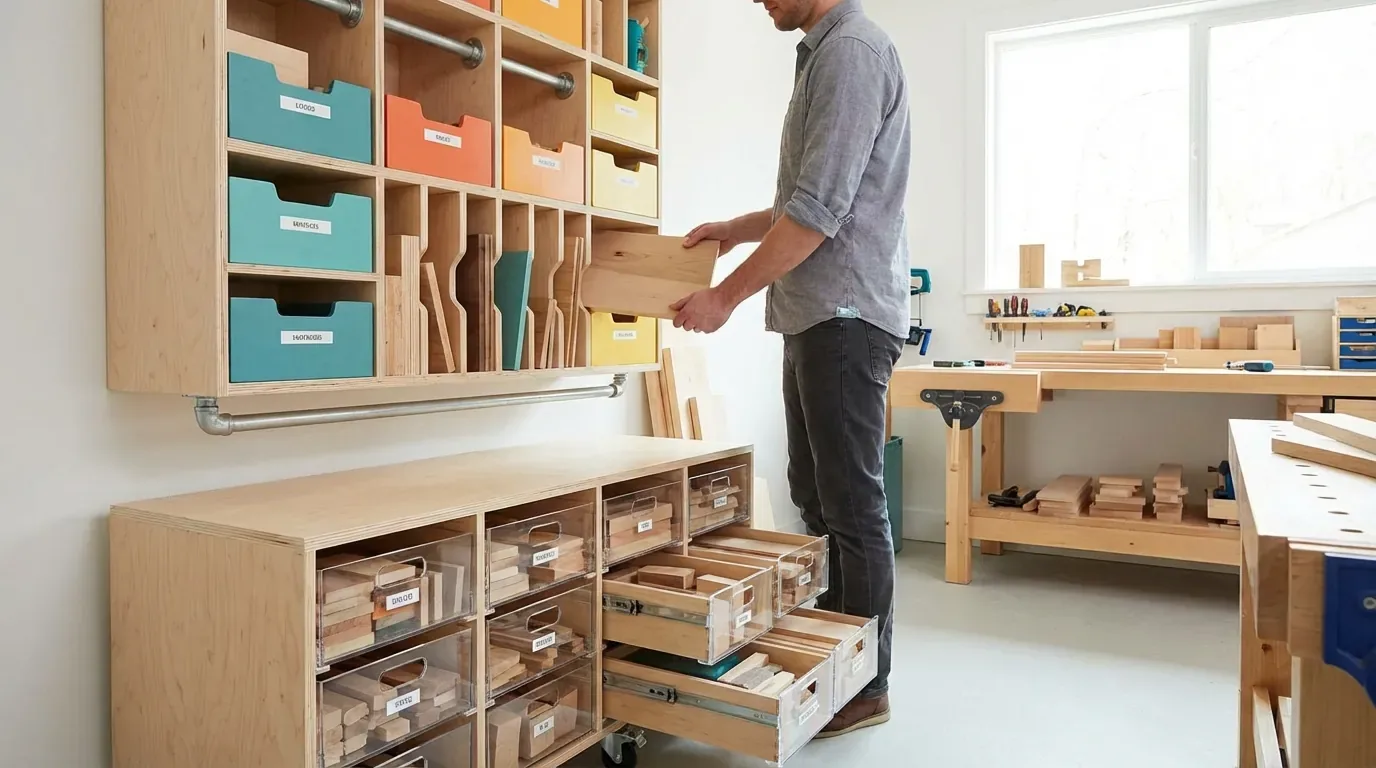
Not all wood scraps are long boards; some of the most useful pieces are the small blocks, turning blanks, and "shorts" that are less than 12 inches long. These pieces are the most difficult to organize because they tend to settle at the bottom of larger containers. For these, a cubby-style system or a series of clear plastic bins is the most effective of all wood scrap storage ideas. Cubbies allow you to sort by species or by "type" (e.g., pen blanks, bowl blanks, or small furniture blocks).
Using clear bins is a game-changer for small scrap management. When you can see through the sides of the container, you don't have to dump the whole thing out to find that one piece of cherry you remember saving. For even better organization, label the front of each bin with the wood species and the date it was added. If you find a bin hasn't been touched in two years, it's a prime candidate for the "giveaway" pile. Some woodworkers prefer using 5-gallon buckets for very small cutoffs, but these often become "black holes" where the best pieces are always at the bottom.
To maximize efficiency, integrate your small part storage near the workbench where you do your assembly or detail work. Having a "short-bin" right next to your miter saw station allows you to drop offcuts directly into their designated home as you cut them, rather than letting them pile up on the saw table. This "point-of-origin" organization is the secret to a shop that stays clean during a build rather than needing a massive overhaul once the project is finished.
Sorting Strategies: By Species, Size, or Project Type
Once you have your physical storage in place, you need a logical system for how to arrange the wood. The most common method is sorting by species. This is ideal for woodworkers who do a lot of grain matching or who frequently work with specific "signature" woods like walnut or white oak. When you need a small piece for a repair or a matching detail, you can go straight to the "Walnut Bin" and find exactly what you need without guessing.
However, sorting by size is often more practical for general woodworking. In this system, you might have one section for "long and thin," one for "short and thick," and another for "sheet goods." This is particularly helpful when you have a specific gap to fill in a project and you don't care about the species as much as the dimensions. For example, if you need a 2x2 block for a hidden internal brace, you can look in the "2-inch thick" cubby regardless of whether the wood is pine, poplar, or maple.
A third, less common but highly effective strategy is sorting by "project type." If you frequently make cutting boards, you might have a dedicated bin for "cutting board strips"—scraps that are already the correct thickness and just need to be cross-cut. If you are a woodturner, a "turning square" bin is a lifesaver. By aligning your storage with the way you work, you reduce the "friction" of starting a new project. You can simply grab a bin and start creating, rather than spending the first hour of your shop time processing raw lumber.
Safety and Maintenance Tips for Wood Storage
Proper wood scrap storage ideas must prioritize safety. Wood is combustible, and a disorganized pile of scraps is a significant fire hazard, especially if it's located near a sparking grinder or a wood-burning stove. Furthermore, dust and cobwebs tend to accumulate in stagnant wood piles. Regularly vacuuming your storage areas and ensuring that there is some airflow around your lumber will prevent mold and pest infestations. Spiders and beetles love the dark, undisturbed crevices of a messy wood pile.
Another safety concern is weight distribution. Always store your heaviest pieces on the bottom levels of racks and carts. A top-heavy scrap cart is a tipping hazard that can cause serious injury. Similarly, wall racks should be checked periodically to ensure the fasteners aren't pulling away from the studs. Overloading a rack is easy to do because wood is denser than it looks. If you notice a shelf starting to sag, it's time to either reinforce the rack or cull the inventory.
Finally, consider the "moisture factor." If you store your scraps in a damp basement or an unheated garage, the wood will move as it absorbs and releases moisture. This can lead to warping, cupping, and checking. Try to keep your "active" scrap pile in the same environmental conditions as your main workshop. If you bring a piece of wood from a damp corner and immediately use it in a project, it will likely shrink and crack once it moves into a climate-controlled home.
Frequently Asked Questions
How do I decide what size wood scrap is worth keeping? This depends entirely on the type of woodworking you do. As a general rule, if a piece is smaller than 1" x 1" x 6", it's probably not worth keeping unless it is a very expensive or rare species. Most woodworkers find that "shorts" (pieces under 12 inches) are the hardest to use, while "narrow rips" (long, thin pieces) are great for edge banding or small decorative trim. Be honest about your past projects; if you never use small pieces, don't keep them.
What is the best way to store plywood and sheet good scraps? Plywood scraps are best stored vertically in a "slat" or "divider" system that keeps them upright. If you lean plywood at a steep angle, it will develop a "memory" and stay bowed, making it difficult to use for drawers or cabinet parts later. A dedicated vertical slot on the back of a mobile scrap cart or a simple floor-standing divider rack is the best way to keep these pieces flat and accessible.
Is it better to build or buy a wood scrap storage system? Building your own system allows you to customize the dimensions to fit your specific shop and the types of wood you use. Most woodworkers find that a DIY scrap cart is a great "weekend project" that uses up some of the very scraps it’s designed to hold. However, for heavy-duty wall storage, commercial steel racks are often safer and more reliable than wooden versions, as they are engineered to hold specific weight loads without failing.
How can I prevent my scrap pile from becoming a mess again? The secret is "continuous maintenance." Every time you finish a project, don't just throw the leftovers into a bin. Take five minutes to trim off any cracked ends, remove any hardware or glue squeeze-out, and place the piece in its designated spot. If a bin gets full, you must follow the "one in, one out" rule: you can't add a new piece until you use or discard an old one.
Can I store wood scraps outside or in a shed? While you can store wood outside if it is covered and off the ground, it is not recommended for furniture-grade hardwoods. Outdoor storage subjects the wood to extreme temperature and humidity swings, which can cause severe warping and rot. If you must store wood in a shed, ensure it is well-ventilated and that the wood is "stickered" (separated by small strips of wood) to allow air to circulate around all sides of the boards.
Explore the recommendations.
Check Amazon for current product details, available options, and pricing.

6PCS Mini Ink Paints Mixing Blending Brush Blending Tools Smooth Blending Ink Painting Small Brushes Hand Tools for DIY Scrapbooking Paper Cards Making (Gold)
Product details
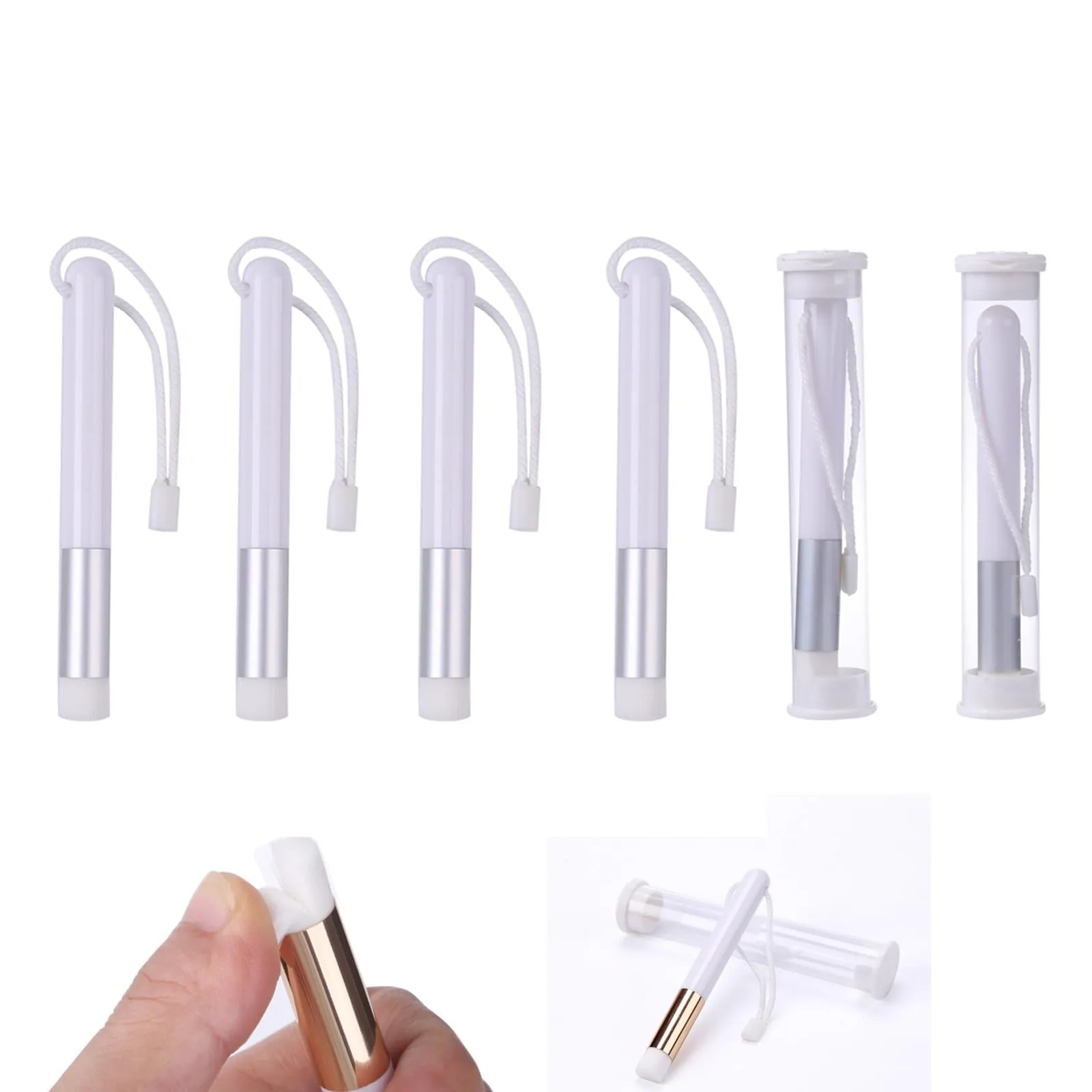
6PCS Mini Ink Paints Mixing Blending Brush Blending Tools Smooth Blending Ink Painting Small Brushes Hand Tools for DIY Scrapbooking Paper Cards Making (Silver)
Product details
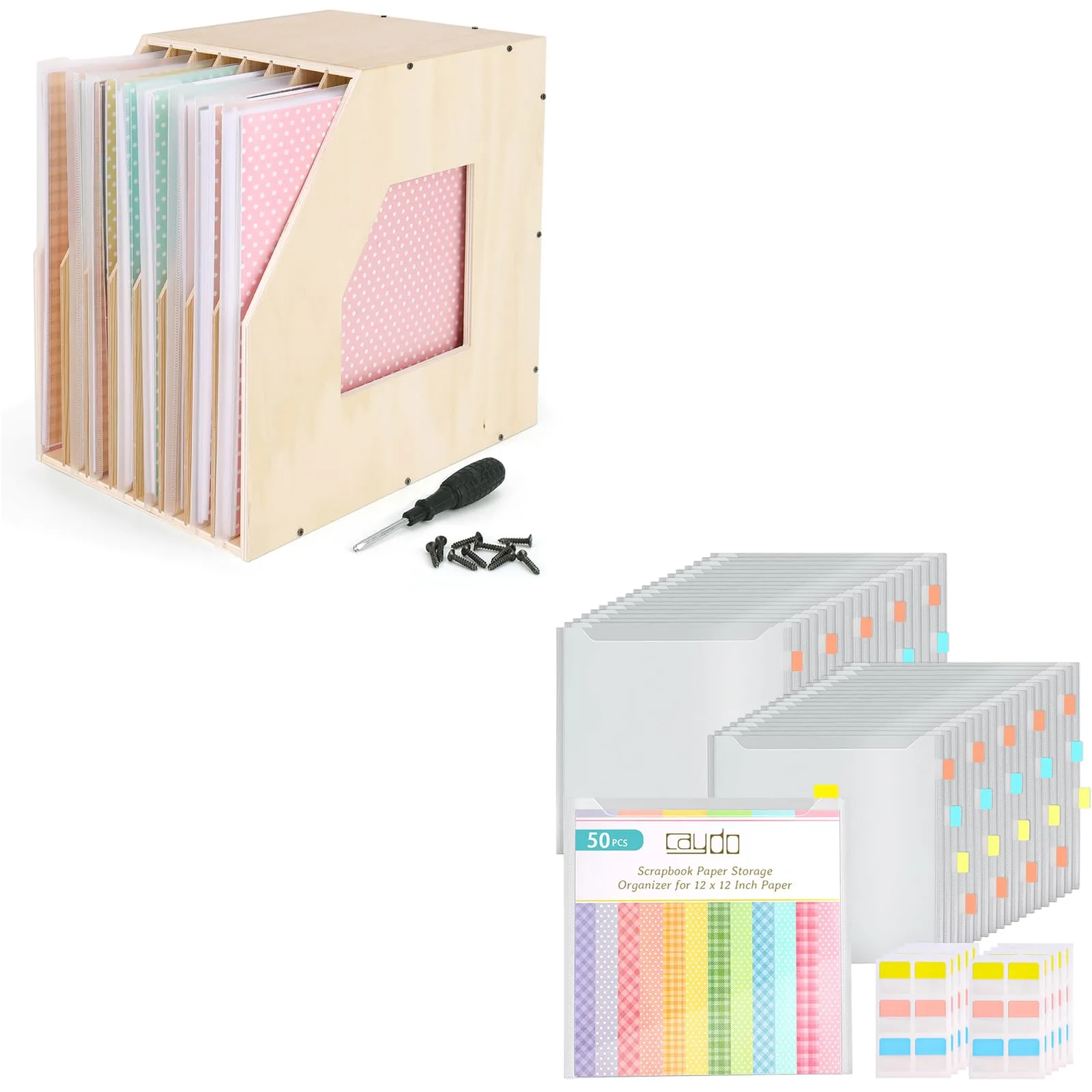
Caydo Wood Paper Storage Organizer with 50 Pieces Scrapbook Paper Storage Organizer and 120 Pieces Sticky Index Tabs for Holding 12 x 12 Inch Scrapbook Paper, Files, Vinyl Paper and Cardstock
Product details
【Wood Paper Storage Organizer】Measuing about 9.5 x 13 x 13.2 inch, with 8 slots. Each slot presenting good support can hold up to 100 sheets of paper (without packaging bag), which keeps valuable paper flat, orderly 【50 Pieces Paper Storages Organizers】50 pcs scrapbook organizer measuring about 13 x 12.6inch/33cm x 32cm, plenty of scrapbook paper storage for large scale storage and organization 【Sturdy Frame】Heavy duty wood, high load-bearing capacity, robust, not easy to tilt or collapse. The surface of the wood board is smooth and the interface fits well 【120 Pieces Sticky Tabs】120 pcs pink, blue and yellow sticky tabs can be stuck to the scrapbooking storage so that you can quickly locate the paper you want by identifying the color, saving you valuable time 【Multifunctional Organizers】Great for storing 12 x 12 inch scrapbook paper, vinyl, papers, heat transfer papers, photos, paper collectibles, paper storage envelopes
- 【Wood Paper Storage Organizer】Measuing about 9.5 x 13 x 13.2 inch, with 8 slots. Each slot presenting good support can hold up to 100 sheets of paper (without packaging bag), which keeps valuable paper flat, orderly
- 【50 Pieces Paper Storages Organizers】50 pcs scrapbook organizer measuring about 13 x 12.6inch/33cm x 32cm, plenty of scrapbook paper storage for large scale storage and organization
- 【Sturdy Frame】Heavy duty wood, high load-bearing capacity, robust, not easy to tilt or collapse. The surface of the wood board is smooth and the interface fits well
- 【120 Pieces Sticky Tabs】120 pcs pink, blue and yellow sticky tabs can be stuck to the scrapbooking storage so that you can quickly locate the paper you want by identifying the color, saving you valuable time
- 【Multifunctional Organizers】Great for storing 12 x 12 inch scrapbook paper, vinyl, papers, heat transfer papers, photos, paper collectibles, paper storage envelopes