Complete Woodworking Dust Collection Guide
Understand source capture, shop vacs, dust collectors, ductwork, air filtration, and maintenance for a cleaner woodworking shop.
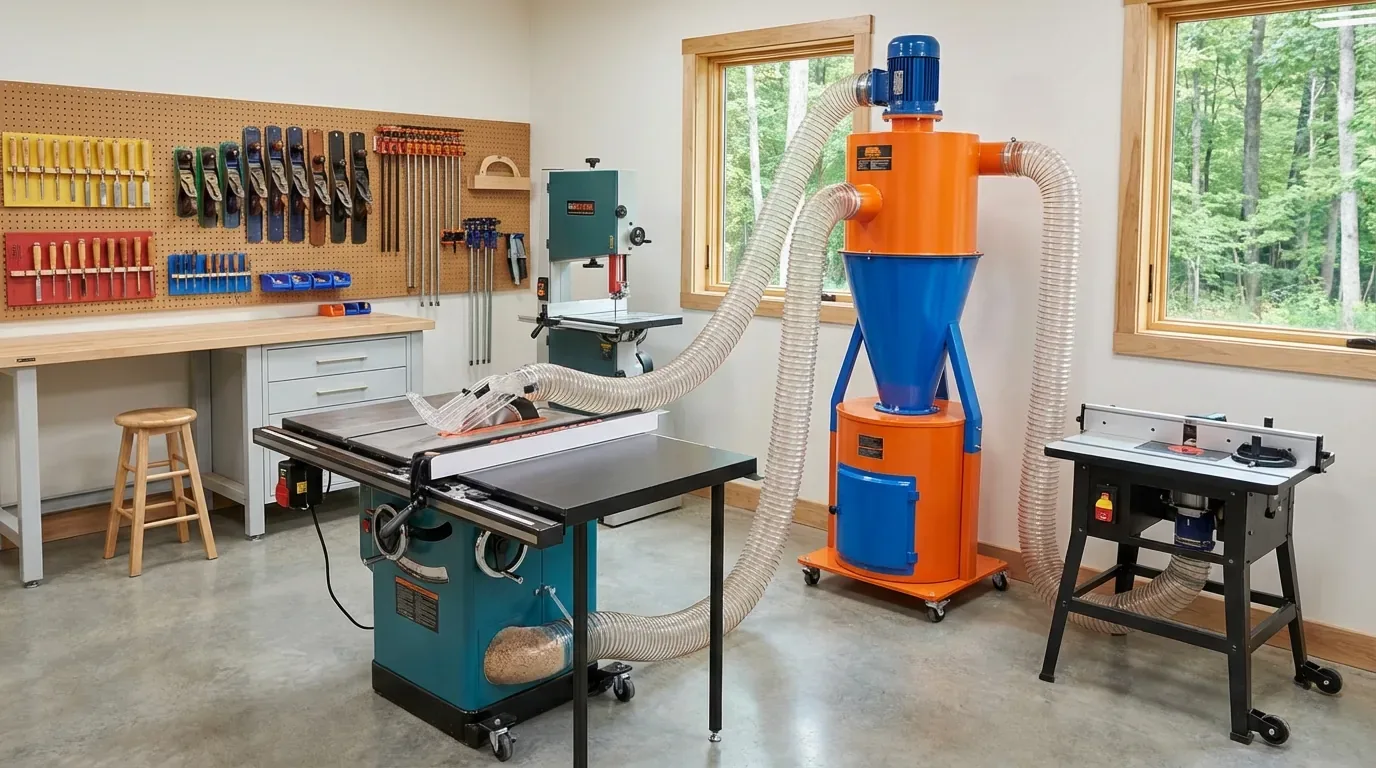
Table of Contents
- Introduction to Woodworking Dust Collection
- The Health Risks of Wood Dust: Why Collection Matters
- Understanding the Three Tiers of Dust Management
- Small Shop Solutions: Shop Vacs vs. Dust Extractors
- The Powerhouse: Dedicated Dust Collectors and Cyclones
- Designing an Efficient Ductwork System
- Air Filtration: Capturing the Invisible Particles
- Essential Accessories: Separators, Blast Gates, and Hoses
- Maintenance and Fire Safety in the Workshop
- Common Dust Collection Mistakes to Avoid
- Frequently Asked Questions
Introduction to Woodworking Dust Collection
Woodworking is a rewarding craft, but it is inherently messy. Every cut, sand, and plane produces debris that ranges from large chips to microscopic particles. Woodworking dust collection is not just about keeping your floor clean; it is a critical system designed to protect your lungs, improve the finish of your projects, and extend the life of your expensive machinery. Without a proper strategy, your workshop quickly becomes a hazardous environment where fine dust settles into every crevice, creating a fire risk and a respiratory nightmare.
A comprehensive dust collection strategy involves more than just plugging a vacuum into a table saw. It requires an understanding of airflow (measured in Cubic Feet per Minute, or CFM) and static pressure. Different tools require different levels of suction. For instance, a drum sander produces fine dust that requires high-volume airflow to capture, while a planer produces large chips that can easily clog small-diameter hoses. Balancing these needs is the hallmark of a well-organized workshop.
In this guide, we will walk through everything from the basic physics of air movement to the specific hardware you need to build a professional-grade system. Whether you are working in a cramped one-car garage or a dedicated industrial space, the principles of woodworking dust collection remain the same: capture the dust at the source, filter the air effectively, and maintain the system for peak performance.
The Health Risks of Wood Dust: Why Collection Matters
Many woodworkers view dust as a mere nuisance, but the medical reality is far more sobering. Wood dust is classified as a Group 1 carcinogen by the International Agency for Research on Cancer (IARC). When you cut wood, you aren't just creating sawdust; you are releasing PM2.5 and PM10 particles. These are particles smaller than 2.5 and 10 microns, respectively. To put that in perspective, a human hair is about 70 microns wide. These microscopic particles bypass the nose and throat, traveling deep into the lungs where they can enter the bloodstream or cause chronic inflammation.
Beyond the long-term risk of cancer, wood dust is a major cause of occupational asthma and sensitization. Certain species, such as Black Walnut, Western Red Cedar, and many exotic hardwoods, contain oils and chemicals that act as irritants or allergens. Once you become sensitized to a specific wood species, even a tiny amount of exposure can trigger a severe allergic reaction. This can effectively end a woodworking hobby or career. A robust woodworking dust collection system is your first line of defense against these invisible threats.
Furthermore, fine dust is a significant fire hazard. In high concentrations, suspended dust in the air can become explosive if it finds an ignition source like a pilot light or a spark from a motor. Even settled dust is dangerous; it can insulate electrical components, causing them to overheat, or act as tinder for a small spark. By implementing a high-quality collection system, you are not just protecting your respiratory health, but also the physical structure of your home and workshop.
Understanding the Three Tiers of Dust Management
To achieve a truly clean shop, you must think in three distinct layers of protection. The first and most important tier is Source Collection. This involves capturing dust the moment it is created by the tool. This is typically achieved using a dust extractor or shop vac connected directly to the tool’s dust port. If you can capture 95% of the dust at the blade or sanding pad, you have already won most of the battle. Source collection relies on high static pressure to pull dust through small openings.
The second tier is Ambient Air Filtration. No source collection system is 100% efficient. Some fine dust will always escape into the air. Ambient air cleaners are ceiling-mounted units that cycle the air in your shop through a series of fine filters. The goal here is to achieve "Air Changes Per Hour" (ACH). For a woodworking shop, you should aim for 6 to 8 air changes per hour. This ensures that the "fog" of dust created during a long sanding session is cleared quickly before it can settle on your surfaces or stay in your breathing zone.
The third tier is General Shop Cleanup. This is the manual process of cleaning what the first two tiers missed. Using a floor sweep integrated into your dust collection ductwork or a high-quality shop vacuum with a HEPA filter ensures that settled dust doesn't get kicked back into the air when you walk around. Never use a broom to sweep fine dust; this simply lofts the smallest, most dangerous particles back into your breathing zone. Instead, use a vacuum-based approach for all cleanup tasks.
Small Shop Solutions: Shop Vacs vs. Dust Extractors
For the hobbyist woodworker in a small space, the primary debate is between a standard shop vacuum and a dedicated dust extractor. Shop vacuums are affordable and have high "lift" (static pressure), making them great for picking up heavy debris or cleaning floors. However, they are incredibly loud and usually lack the filtration necessary to handle fine woodworking dust. Most standard shop vac filters allow the most dangerous microscopic particles to pass right through the motor and back into your shop air.
Dust extractors, on the other hand, are engineered specifically for woodworking. They feature variable suction, tool-actuated triggers (the vacuum starts when the tool starts), and, most importantly, HEPA-rated filtration. While they are more expensive, they operate at a much lower decibel level, making the shop environment more pleasant. They are designed to work with handheld power tools like random orbit sanders and track saws, where consistent, fine-particle capture is the priority.
The Festool CT 26 E HEPA Dust Extractor is widely considered the gold standard for small shop dust management. I recommend this unit because it balances a manageable size with incredible suction power and industry-leading filtration. It is best for woodworkers who use high-end power tools and want a "system" approach where the vacuum and tools work in perfect harmony.
The standout feature is the integrated Sys-Dock, which allows you to lock Festool Systainers directly onto the top of the vacuum for easy transport. Its HEPA filter captures 99.97% of all particulate matter down to 0.3 microns. The main drawback is the price; it is a significant investment compared to a big-box store vacuum. However, when you consider the noise reduction and the medical-grade air filtration, the value becomes clear for anyone serious about their long-term health.
The Powerhouse: Dedicated Dust Collectors and Cyclones
When you move from handheld power tools to stationary machinery like table saws, jointers, and planers, a shop vac will no longer suffice. These tools produce a high volume of waste that requires high-volume airflow (CFM) to move. A dedicated dust collector uses a large impeller to move massive amounts of air through 4-inch or 6-inch hoses. There are two main types: single-stage and two-stage (cyclone) collectors.
Single-stage collectors pull the dust and chips directly through the impeller and blow them into a filter bag. These are affordable but have a major flaw: large chunks of wood can hit the impeller, potentially damaging it or causing a spark. Furthermore, as the filter bag fills up, the airflow drops significantly. Two-stage cyclone collectors solve this by using centrifugal force to spin the heavy chips and dust out of the air stream and into a collection drum before the air reaches the impeller and the fine filter. This maintains a constant CFM and protects the motor.
The WEN DC1300 13-Amp 1300 CFM Dust Collector is an excellent entry-level dedicated collector for a growing shop. I recommend it for the intermediate woodworker who has moved beyond handheld tools and is starting to use a thickness planer or a cabinet saw. It provides enough CFM to handle a 50-foot run of ductwork or a direct connection to a large machine.
The standout feature is the 50-gallon collection bag and the mobile base, which makes it easy to move the unit between tools in a crowded garage. It features a 1-HP motor that is surprisingly quiet for its class. The drawback is that it is a single-stage unit with a 5-micron bag. To truly protect your lungs, you would eventually want to upgrade the bag to a 1-micron canister filter or add a DIY cyclone separator to the front end to prevent the bag from clogging too quickly.
Designing an Efficient Ductwork System
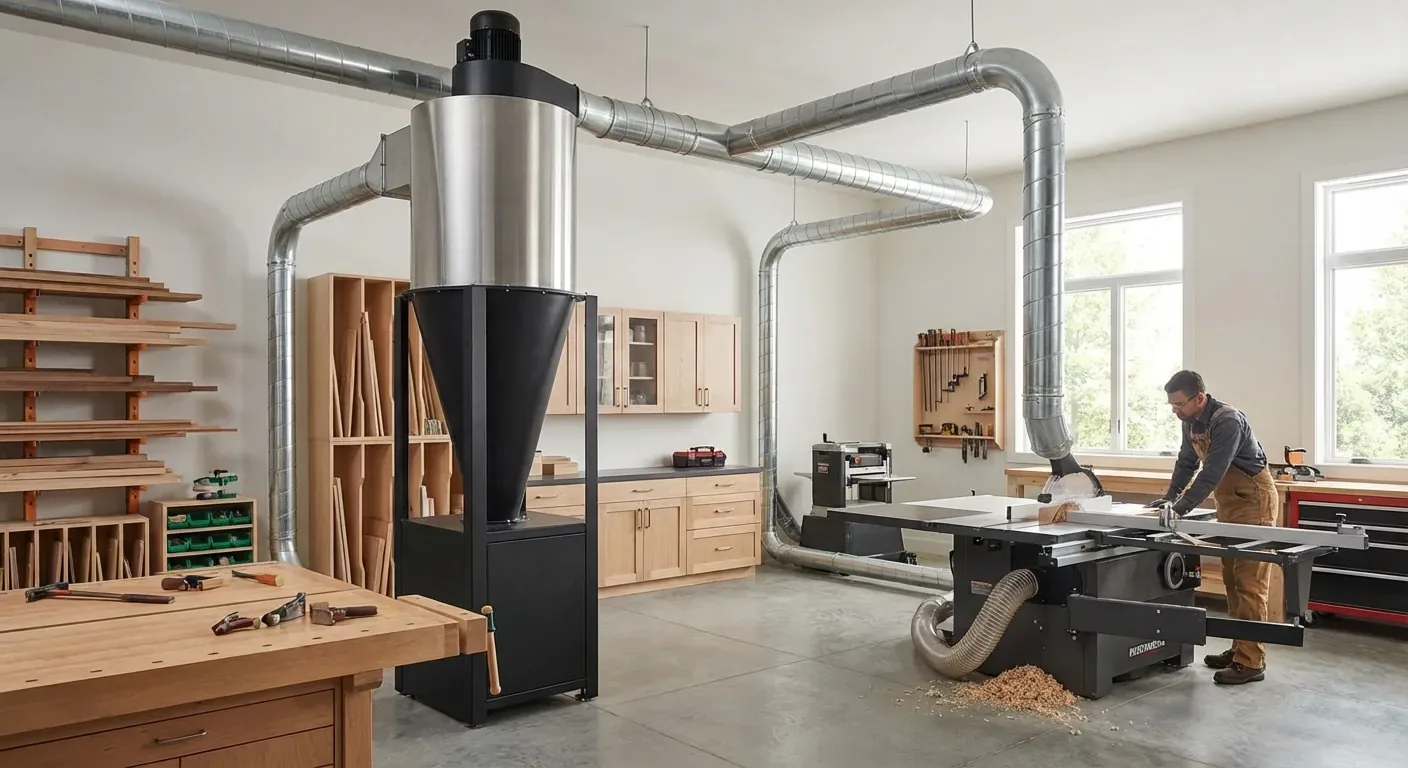
Once you have a dust collector, you need to get the air from the tool to the machine. This is where many woodworkers struggle. The goal of ductwork design is to minimize "static pressure loss." Every foot of pipe, every elbow, and every diameter change creates friction that slows down the air. If the air moves too slowly, the dust will settle inside the pipes, eventually causing a total blockage.
For most 1-HP to 2-HP collectors, 4-inch piping is the standard. However, if you have a 3-HP or larger unit, 6-inch main lines are preferred. When it comes to material, you have two main choices: PVC or metal. PVC (specifically thin-walled S&D pipe) is affordable and easy to install but can build up a static charge. Metal ducting is more expensive and harder to install but is smoother on the inside and naturally grounded. Regardless of the material, always use "long-radius" elbows instead of tight 90-degree turns to keep the air moving smoothly.
Another critical component is the blast gate. Blast gates allow you to close off the airflow to tools that aren't in use, concentrating all the suction on the one tool you are currently operating. Without blast gates, the suction is divided across the entire shop, resulting in poor performance at every port. Place your blast gates within easy reach of the tool to ensure you actually use them.
Air Filtration: Capturing the Invisible Particles
As mentioned earlier, source collection is never perfect. The "invisible" dust—the stuff that hangs in the air and creates a hazy look when the sun shines through a window—is what an air filtration unit is designed to catch. These units are essentially a box with a fan and two filters: a coarse outer filter to catch the big stuff and a fine inner filter (usually 1 micron or less) to catch the dangerous particles.
When selecting an air filtration unit, look for one with a remote control and a timer. You should set the timer to run for 30 to 60 minutes after you leave the shop. This ensures that the air is scrubbed clean while you are in the house, preventing you from walking back into a dust-filled room later. Position the unit in the center of the room, about one-third of the way down from the ceiling, to create a circular airflow pattern that effectively moves all the air in the shop through the filters.
The WEN 3-Speed Remote-Controlled Air Filtration System is a staple in many home workshops. I recommend this because it is highly effective and very affordable. It’s best for anyone working in a basement or garage where ventilation is poor. It can cycle the air in a 400-square-foot shop several times an hour, which is exactly what you need for safety.
The standout feature is the dual-filter system; the outer filter is washable, which saves money, while the inner filter catches particles down to 1 micron. It also includes a remote, which is vital since these units are typically mounted high on the ceiling. The only drawback is that on its highest setting, it can be quite loud, but since you usually run it while wearing hearing protection or after you've finished working, this is rarely a dealbreaker.
Essential Accessories: Separators, Blast Gates, and Hoses
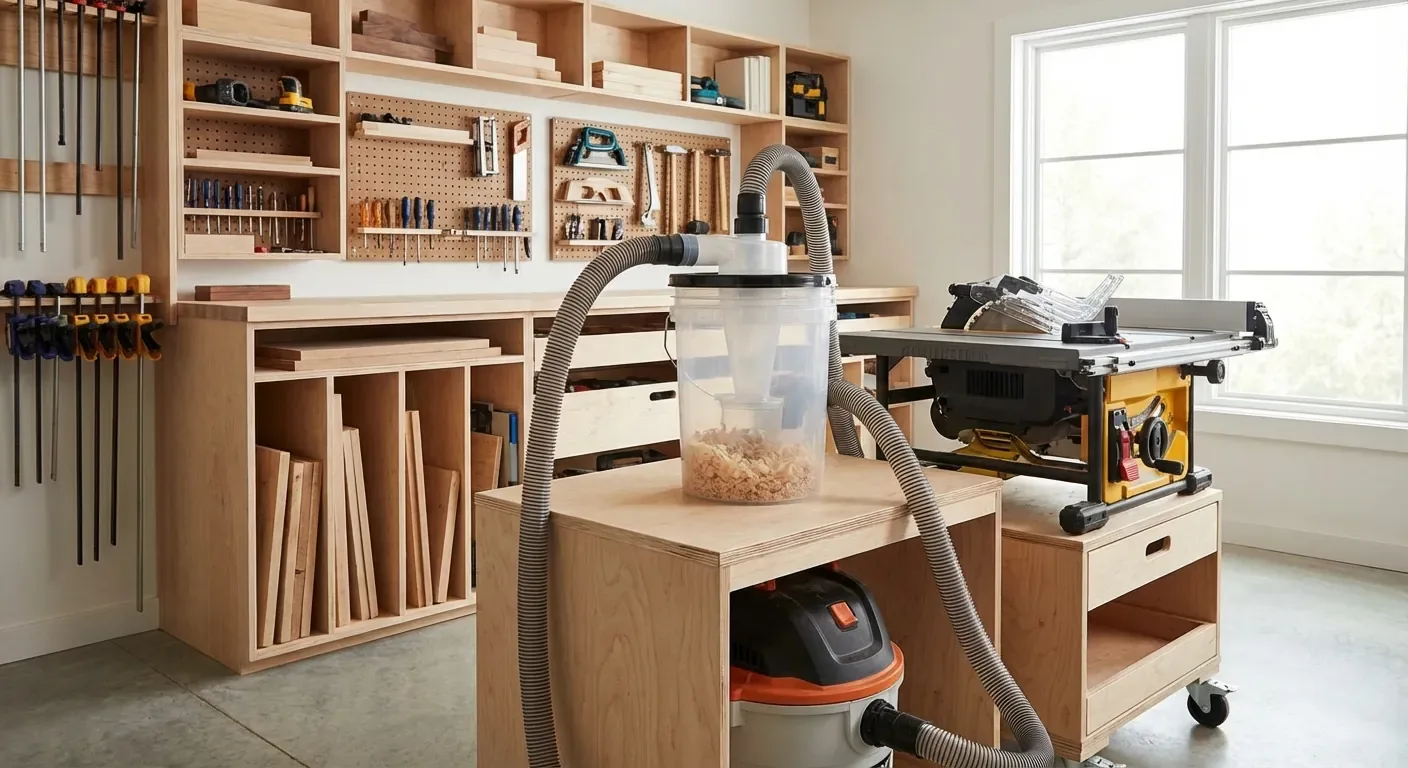
To make your woodworking dust collection system truly efficient, you need a few key accessories. The most impactful is a cyclone separator (like the Dust Deputy). This is a small plastic cone that sits on top of a 5-gallon bucket. You connect your shop vac to the top and your tool to the side. The cyclone spins the dust out into the bucket, keeping your vacuum's expensive HEPA filter clean. This is a game-changer for sanding, as it prevents the fine dust from instantly clogging your vacuum.
Another essential is high-quality flexible hose. Not all hoses are created equal. Cheap, thin hoses will collapse under high suction or develop pinhole leaks. Look for wire-reinforced, transparent PVC hose. The transparency allows you to see if a clog is forming, and the wire reinforcement prevents the hose from "accordioning" when the suction is turned on.
Finally, don't overlook the importance of adapters. Every tool manufacturer seems to have a different size dust port. A collection of universal adapters or a heat gun to custom-mold PVC fittings will save you hours of frustration. Having a secure, airtight connection at the tool is the only way to ensure the CFM you're paying for actually reaches the dust.
Shop-vac cyclone separators to compare
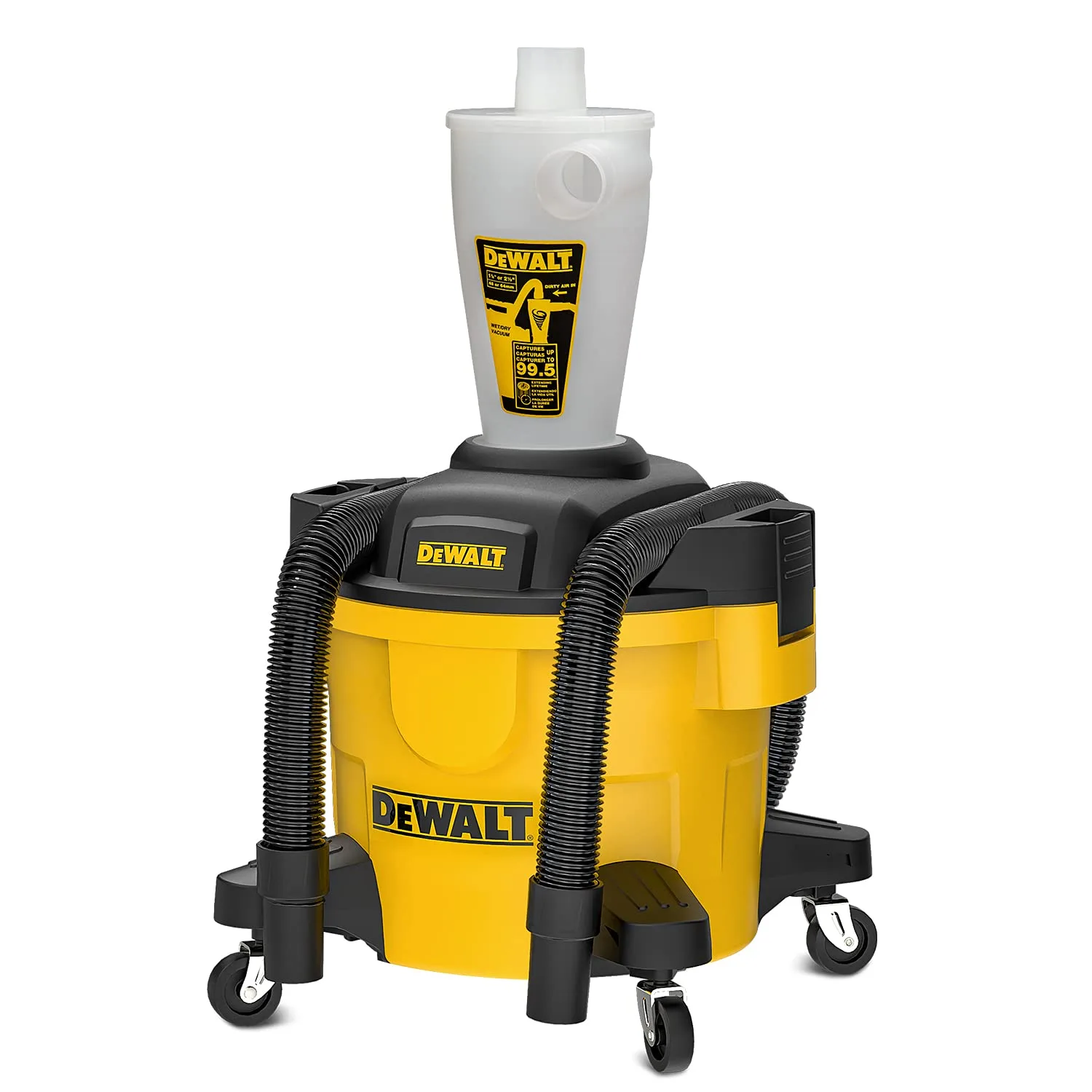
For handheld tools and cleanup, our research reviews cover five common separator formats: the integrated Mullet High-Speed Cyclone, low-profile Dustopper PRO, portable six-gallon DEWALT DXVCS002, DIY-friendly Oneida Dust Deputy 2.5, and higher-capacity Rockler Dust Right Separator. These products belong on the shop-vac side of the system; they do not replace the airflow of a four-inch dust collector.
Maintenance and Fire Safety in the Workshop
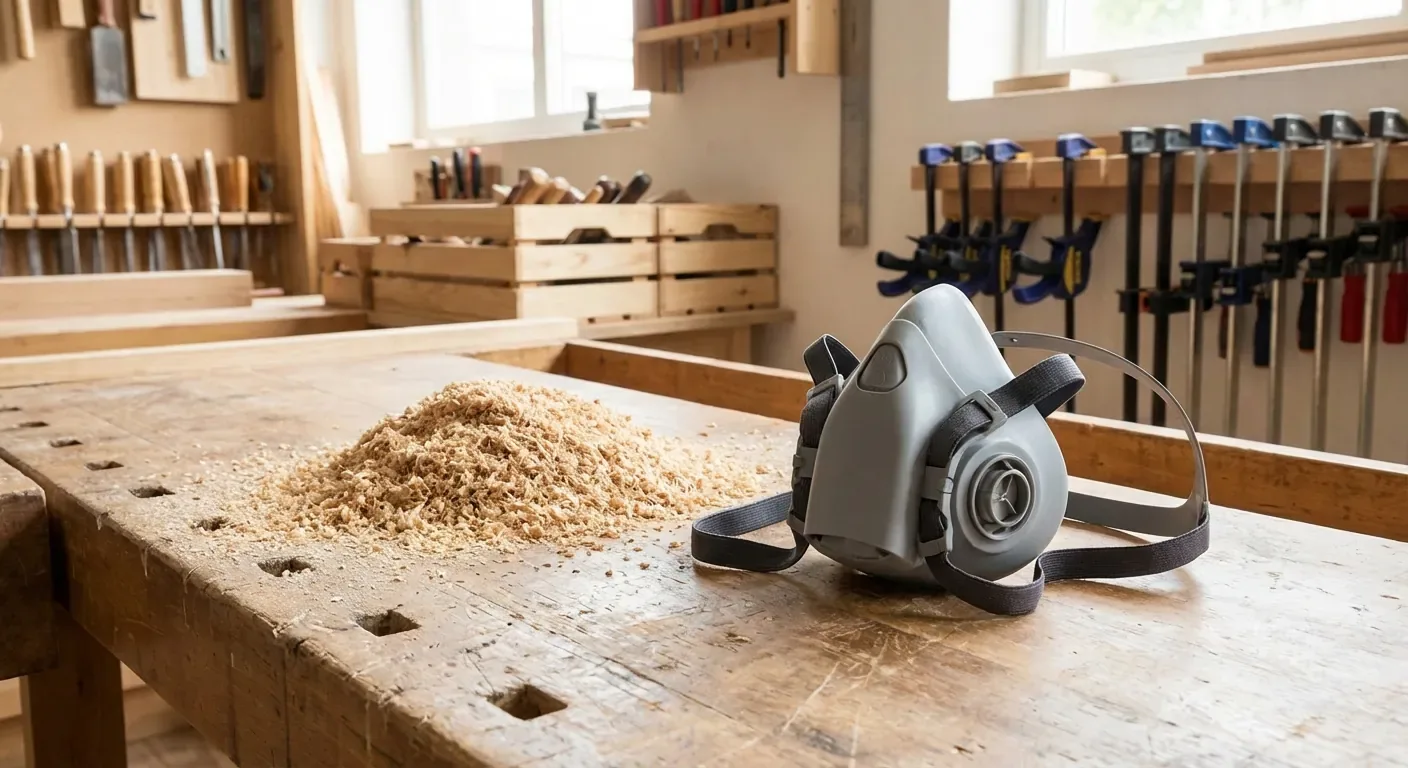
A dust collection system is not a "set it and forget it" tool. It requires regular maintenance to remain effective and safe. The most common maintenance task is emptying the collection bins. Never let a bag or drum get more than three-quarters full. Once it's full, the dust has nowhere to go and will either clog the filters or blow back into the shop. When emptying bins, always wear a respirator, as this is the moment when the most concentrated dust is released.
Filter maintenance is also crucial. For pleated canister filters, use the internal flapper or a gentle tap to knock dust into the bin. Never use compressed air to blow out a fine filter from the outside in; this can tear the delicate filter media and permanently ruin its ability to catch small particles. If you notice a drop in suction, the filter is likely "blinded" with fine dust and needs a thorough, careful cleaning or replacement.
Fire safety is the final piece of the maintenance puzzle. Static electricity builds up as dust rub against the plastic walls of hoses and pipes. In rare cases, a static spark could ignite the dust. While the risk is debated for small hobbyist shops, grounding your system with a copper wire is a cheap insurance policy. More importantly, never use your dust collector to suck up metal sparks from a grinder or hot embers from a wood burner. One spark in a bin full of dry sawdust can smolder for hours before erupting into a full-scale fire.
Common Dust Collection Mistakes to Avoid
One of the most frequent mistakes is using a pipe that is too small for the collector's capacity. Many woodworkers try to run a 2-HP collector through a 2.5-inch shop vac hose. This creates massive air resistance and drops your CFM to almost nothing. Always use the largest pipe possible for as long as possible, only reducing the size at the very last moment where it connects to the tool.
Another mistake is neglecting the "leaks." A system is only as strong as its weakest seal. Use foil tape (not duct tape, which dries out and peels) to seal every joint in your rigid ductwork. Even a small leak can cause a significant drop in static pressure, especially at the end of a long run. If you can hear a whistling sound when the collector is on, you have a leak that needs to be addressed.
Finally, don't forget about the "big chips." Tools like jointers and planers create massive amounts of waste very quickly. If your dust collector has a small intake or a restrictive grid over the impeller, these chips will bird-nest and cause a clog. Ensure your system is designed to handle the type of waste you produce most. If you do a lot of planing, a two-stage cyclone is almost mandatory to prevent constant downtime.
Frequently Asked Questions
Use the dust collector sizing calculator to turn your longest duct run into a CFM and pressure-loss planning target. For specific equipment choices, compare shop vacs for fine wood dust, compact dust collectors, and ambient air-filtration systems.
Can I just use a regular shop vac for my table saw?
While you can connect a shop vac to a table saw, it is generally ineffective for anything other than a small benchtop model. Table saws have large internal cabinets that require a high volume of air (CFM) to clear. A shop vac has high pressure but low volume, meaning it can't move enough air to keep the dust from settling inside the saw cabinet and eventually blowing back out into the room. For a full-sized contractor or cabinet saw, a dedicated 1-HP or larger dust collector is highly recommended.
Furthermore, shop vacs are not designed for continuous duty. Running a shop vac for hours while you process lumber can lead to motor burnout. They are also significantly louder than dedicated dust collectors. If you must use a shop vac, ensure it is paired with a cyclone separator to prevent the filter from clogging every five minutes, and consider upgrading the filter to a HEPA-rated version to protect your lungs.
Do I really need to ground my PVC dust collection pipes?
The debate over grounding PVC is a long-standing one in the woodworking community. Technically, moving dust through plastic pipes creates static electricity, which can result in a painful "zap" when you touch the pipe. There is a theoretical risk that a static spark could ignite a dust cloud inside the pipe, leading to an explosion. However, there are almost no documented cases of this happening in a hobbyist-scale workshop.
That said, the "zaps" themselves are annoying and can occasionally interfere with sensitive electronics or CNC machines. Grounding the system by running a bare copper wire through the inside of the pipe (or wrapped tightly around the outside) and connecting it to the dust collector's chassis is a simple and inexpensive way to eliminate static. Even if the fire risk is minimal, the comfort of not getting shocked is worth the effort.
How often should I change my dust collector filters?
The lifespan of a filter depends entirely on how well you maintain the system. If you use a two-stage cyclone separator, your filters can last for several years because 99% of the dust never reaches them. However, if you have a single-stage collector where the dust hits the filter directly, you may need to replace it more often. You should clean your filters (using the built-in cleaning mechanism or by gently tapping) after every major project or whenever you notice a visible drop in suction.
You will know it's time for a replacement when cleaning no longer restores the suction power. Over time, the microscopic pores in the filter media become "permanently" clogged with the finest dust. If you see dust leaking through the filter or settling on top of the unit, the filter media has likely been compromised (torn or stretched) and is no longer providing the protection you need.
What is the difference between CFM and Static Pressure?
Think of CFM (Cubic Feet per Minute) as the volume of air being moved, and Static Pressure as the strength or "pulling power" of that air. Handheld tools with small ports (like sanders) need high static pressure to pull air through a small opening. Large stationary tools (like planers) need high CFM to move a large volume of chips through a big pipe.
A shop vac is a high-static pressure, low-CFM machine. A dust collector is a low-static pressure, high-CFM machine. This is why you can't easily swap one for the other. If you try to use a dust collector on a sander, the small hose will "choke" the high-volume motor. If you try to use a shop vac on a planer, the low-volume airflow won't be enough to keep the heavy chips moving, leading to a clog.
Is a 1-micron filter enough, or do I need HEPA?
For most hobbyist woodworking, a 1-micron filter is a massive improvement over the standard 5-micron or 30-micron bags that come with entry-level collectors. A 1-micron filter will capture the vast majority of sawdust. However, the most dangerous particles are those smaller than 1 micron (PM2.5). HEPA filters are rated to capture 99.97% of particles down to 0.3 microns.
If you have pre-existing respiratory issues, or if you work frequently with toxic woods like Yew, Oleander, or certain rosewoods, investing in HEPA filtration is highly advisable. For a standard shop, a 1-micron canister filter on your main collector, combined with a ceiling-mounted air ambient filter that also reaches 1 micron, provides a very safe environment for most people.
How do I calculate the CFM I need for my shop?
A general rule of thumb is that a table saw or jointer requires about 400-500 CFM at the tool to be effective. A thickness planer often requires 600-800 CFM due to the volume of chips produced. However, you must account for "static pressure loss" caused by your ductwork. A collector rated at 1200 CFM at the motor might only deliver 600 CFM after it travels through 20 feet of hose and two elbows.
To ensure you have enough power, most experts recommend a 1.5-HP to 2-HP collector for a small shop with a few stationary tools. If you plan on running multiple tools at once, or if you have a very large shop with long duct runs, you will likely need a 3-HP or larger unit. Always check the "fan curve" provided by the manufacturer to see how the CFM drops as the static pressure (resistance) increases.
Where is the best place to mount an air filtration unit?
The goal of an air filtration unit is to create a "circulating" air pattern. You should mount it about 1/3 of the way down from the ceiling and offset from the center of the room. Avoid placing it in a corner or directly against a wall, as this will restrict the intake and exhaust. Ideally, the unit should be placed so that it pulls air away from your main work area (like your workbench or lathe) and exhausts it along a wall to create a circular flow.
Avoid mounting it directly above a tool that produces a lot of dust, as the large chips will quickly clog the expensive fine filters. Let the source collection (the vacuum) handle the heavy lifting, and let the ceiling unit handle the fine mist that escapes into the general room air.
Explore the recommendations.
Check Amazon for current product details, available options, and pricing.
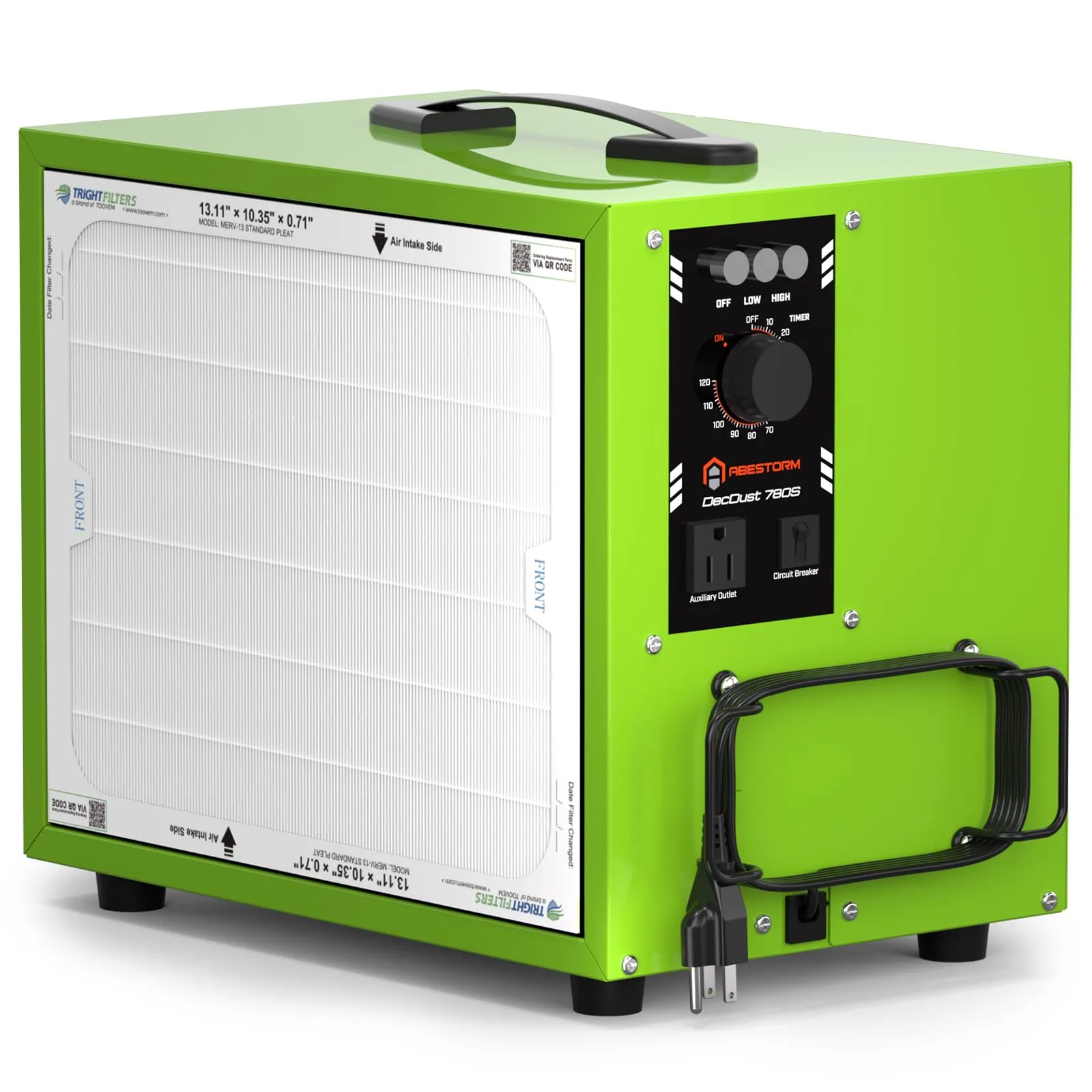
Abestorm Tabletop Dust Collector for Woodworking, Portable Intake Air Filtration Systems, Movable Air Filter with Timer Function, Ideal for Garage Works Shop and Room Renovations DecDust 780S
Product details
Sleek Design & Easy Portability: The metal housing offers a sleek look, and the sturdy handle makes this air filtration system highly portable. With a side cord wrap design makes it easy to store the power cord (11.5 ft) Piano Key Switch & Timer Function: The piano key switch allows for quick operation to turn the dust collector on or off. The timer function lasts up to 120 minutes, making it perfect for woodworking, carving, home workshops, or renovation Efficient Motor & Safety Features: The high-efficiency backward-tilt motor offers a long lifespan, high efficiency, and low power consumption. Equipped with a circuit breaker, it automatically cuts power in case of the current exceeds the safe range, ensuring safety Auxiliary Outlet & MERV-13 Filter: You can connect another Abestorm shop dust collectors through the auxiliary outlet under control panel. Paired with the MERV-13 filter, it enhances dust collection efficiency and purifies the air quickly. The filter lasts up to 6 months Product Specifications: Dimensions: 14.57''×9.45''×11.81'' ; 2 Speed Settings: 580 CFM, 780 CFM; Electrical Requirements: 115V, 0.9A Kindly Note: It does not meet California's regular requirements and it can not be shipped to California. Please do not place the order if you're in California.
- Sleek Design & Easy Portability: The metal housing offers a sleek look, and the sturdy handle makes this air filtration system highly portable. With a side cord wrap design makes it easy to store the power cord (11.5 ft)
- Piano Key Switch & Timer Function: The piano key switch allows for quick operation to turn the dust collector on or off. The timer function lasts up to 120 minutes, making it perfect for woodworking, carving, home workshops, or renovation
- Efficient Motor & Safety Features: The high-efficiency backward-tilt motor offers a long lifespan, high efficiency, and low power consumption. Equipped with a circuit breaker, it automatically cuts power in case of the current exceeds the safe range, ensuring safety
- Auxiliary Outlet & MERV-13 Filter: You can connect another Abestorm shop dust collectors through the auxiliary outlet under control panel. Paired with the MERV-13 filter, it enhances dust collection efficiency and purifies the air quickly. The filter lasts up to 6 months
- Product Specifications: Dimensions: 14.57''×9.45''×11.81'' ; 2 Speed Settings: 580 CFM, 780 CFM; Electrical Requirements: 115V, 0.9A
- Kindly Note: It does not meet California's regular requirements and it can not be shipped to California. Please do not place the order if you're in California.
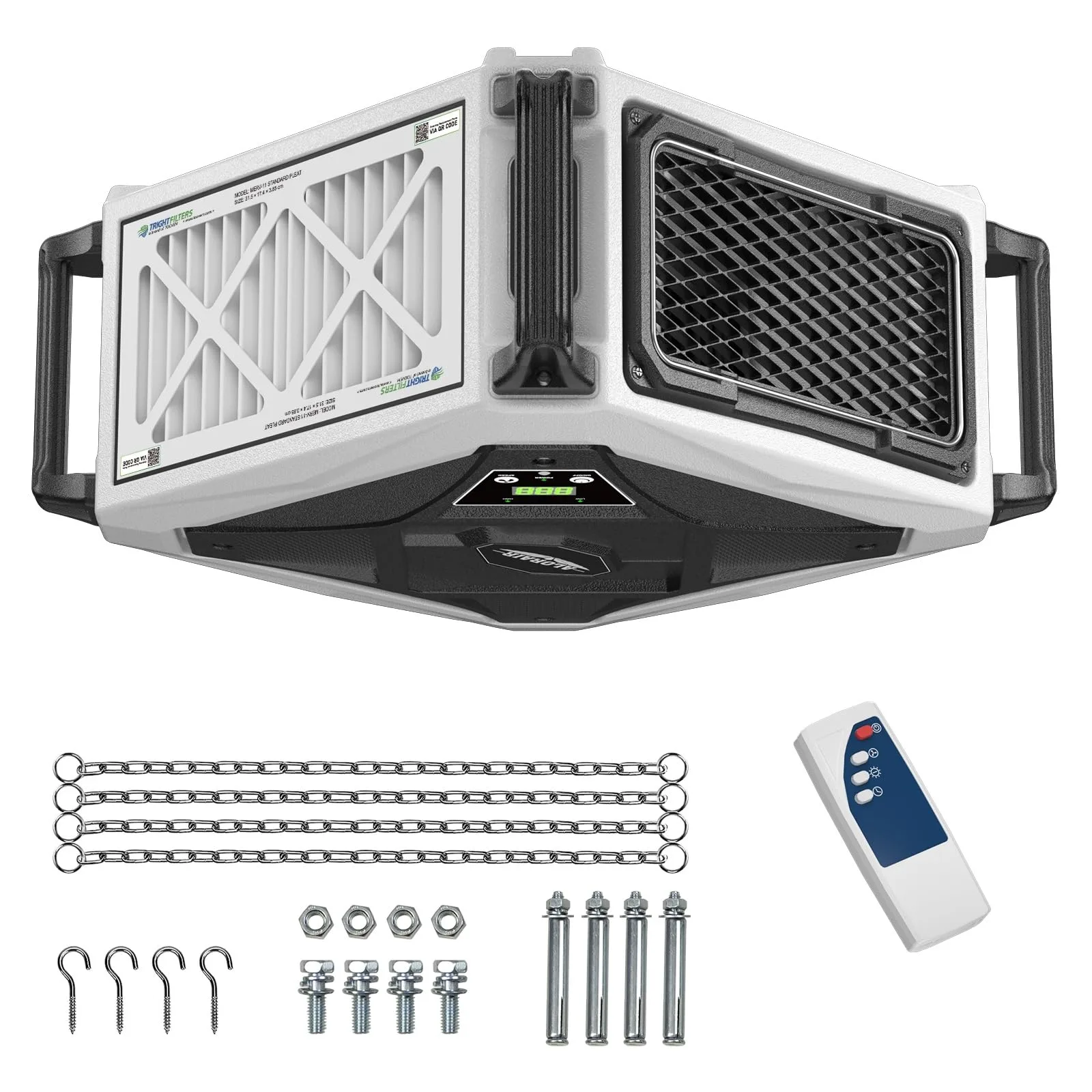
ALORAIR Hanging Intake Air Filtration Systems Woodworking 2 Stage Air Flow (580/780CFM) Remote Control, Shop Dust Collectors with Strong Vortex Fan for Garage, Work Shop, Home Use, Purecare 780
Product details
Kindly Note: It does not meet California's regular requirements and it can not be shipped to California. Please do not place the order if you're in California. 270° air Intake Air Filtration System: The Shop Dust Collector has a 270° air intake design, powerful enough to cover a large area with high circulating airflow, sawdust from woodworking, grinding, sawing, etc. Improving your workplace’s air quality. Dimensions: 18.35"Lx 18.35" Wx 8.8"H; electrical Reguirements: 115v,60 Hz, 0.6 A ; cover rooms up to 800 sq.ft; noise rating: below 50 dBA. Strong Vortex fan: The Air Filtration System for woodworking is equipped with a strong vortex fan, which generates a strong airflow when working, and maintains a high static pressure state even if the filter covers a large amount of wood chips. It has two-stage speed selection. Suitable for wood carving workshop, woodworking, garage and home use. High Eficiency Filtration Technology: The shop air filtration system is equipped with a fiter with class MEVR 11, which canstop 90% of 3-10um particles and 85% of 1um particles. ldeal for wood carving, sanding, tumning, scroll saw work, rotary tools, powder mixing, etc. it quarantees periect results in terms of reducing indoor alr polution. The filter can be easily replaced. Accessibility: Timer cycle controller, you can set fan to shut down automatically in 1-9 hours. IR remote system: There is no wireless interference, and the anti-interference ability is strong. Puricare 780 air filtration system is easy to move and can be hung from the ceiling in the shop or placed on a workbench.
- Kindly Note: It does not meet California's regular requirements and it can not be shipped to California. Please do not place the order if you're in California.
- 270° air Intake Air Filtration System: The Shop Dust Collector has a 270° air intake design, powerful enough to cover a large area with high circulating airflow, sawdust from woodworking, grinding, sawing, etc. Improving your workplace’s air quality. Dimensions: 18.35"Lx 18.35" Wx 8.8"H; electrical Reguirements: 115v,60 Hz, 0.6 A ; cover rooms up to 800 sq.ft; noise rating: below 50 dBA.
- Strong Vortex fan: The Air Filtration System for woodworking is equipped with a strong vortex fan, which generates a strong airflow when working, and maintains a high static pressure state even if the filter covers a large amount of wood chips. It has two-stage speed selection. Suitable for wood carving workshop, woodworking, garage and home use.
- High Eficiency Filtration Technology: The shop air filtration system is equipped with a fiter with class MEVR 11, which canstop 90% of 3-10um particles and 85% of 1um particles. ldeal for wood carving, sanding, tumning, scroll saw work, rotary tools, powder mixing, etc. it quarantees periect results in terms of reducing indoor alr polution. The filter can be easily replaced.
- Accessibility: Timer cycle controller, you can set fan to shut down automatically in 1-9 hours. IR remote system: There is no wireless interference, and the anti-interference ability is strong. Puricare 780 air filtration system is easy to move and can be hung from the ceiling in the shop or placed on a workbench.
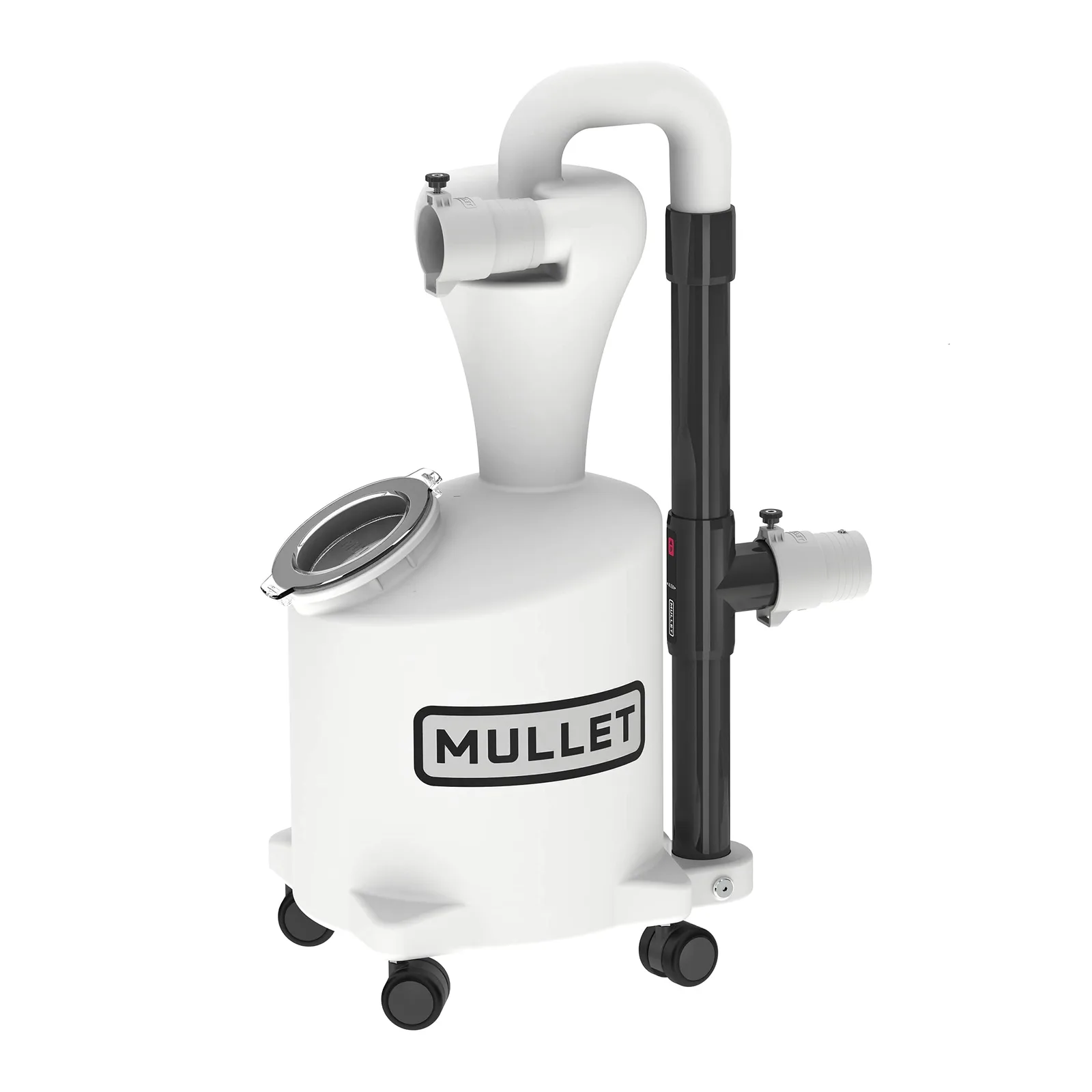
Mullet High-Speed Cyclone Dust Collector for Shop Vacuum - Sawdust Separator, Dust Collectors for Woodworking, Garage, Hobbyist Debris Extraction Modern
Product details
NO MORE CLOGGED FILTERS -- Pre-separates over 99% of debris sending clean air to your shop vac or dust extractor keeping suction strong and your vac running in tip top shape. THE FASTER THE SPIN, THE MORE DUST THAT FALLS IN! -- Parabolic design and seamless one-piece construction create a faster airstream, more suction power and better capture efficiency that ordinary straight-wall cyclone-and-bucket assemblies. RIGID, CUT-TO-FIT PVC CONNECTION -- Eliminates the Frankenstein-like assembly of bolts, bungees, and duct tape of other systems creating a unified, airtight connection and a vac filter that stays cleaner, longer. UNIVERSAL VAC COMPATIBILITY -- Included Hose Adapters allow for easy connection to virtually all wet dry shop vacuums, dust extractors and their hoses. Red, orange, yellow or green; tall, short, big or small; Mullet is made to fit 'em all! MADE IN USA -- Headquartered in Dripping Springs, Texas.
- NO MORE CLOGGED FILTERS -- Pre-separates over 99% of debris sending clean air to your shop vac or dust extractor keeping suction strong and your vac running in tip top shape.
- THE FASTER THE SPIN, THE MORE DUST THAT FALLS IN! -- Parabolic design and seamless one-piece construction create a faster airstream, more suction power and better capture efficiency that ordinary straight-wall cyclone-and-bucket assemblies.
- RIGID, CUT-TO-FIT PVC CONNECTION -- Eliminates the Frankenstein-like assembly of bolts, bungees, and duct tape of other systems creating a unified, airtight connection and a vac filter that stays cleaner, longer.
- UNIVERSAL VAC COMPATIBILITY -- Included Hose Adapters allow for easy connection to virtually all wet dry shop vacuums, dust extractors and their hoses. Red, orange, yellow or green; tall, short, big or small; Mullet is made to fit 'em all!
- MADE IN USA -- Headquartered in Dripping Springs, Texas.
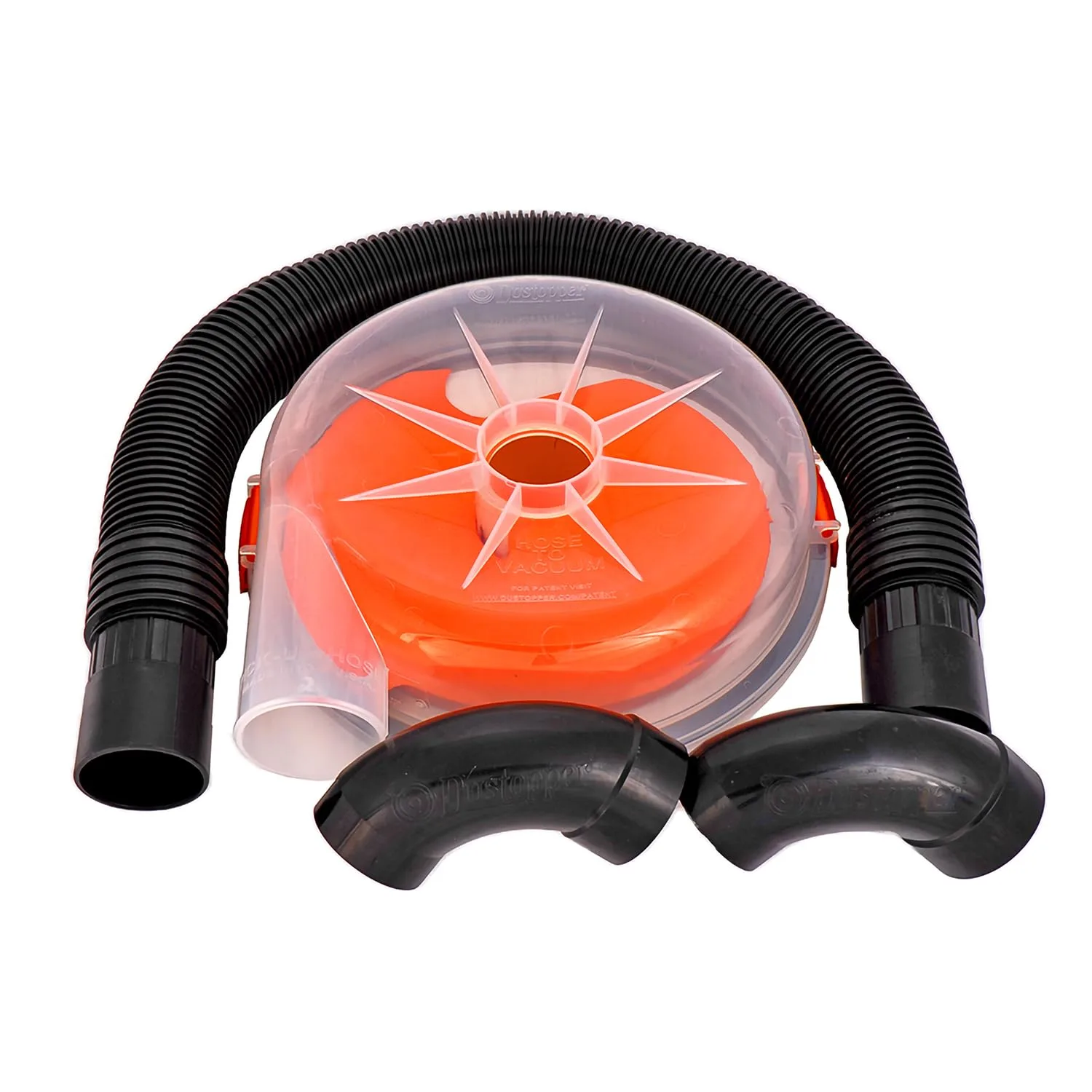
The Dustopper PRO, Low-Profile Dust Separator for Shop Wet/Dry Vacuums. Includes High-Flow 90 Degree Sweep Elbows and Connection Hose. Fits Standard 5 Gallon Buckets, Made in USA Complete Assembly – Separator, Hose & Elbows
Product details
AWARD-WINNING AND PATENTED LOW-PROFILE DESIGN: The Dustopper “PRO” version awarded “Most Innovative Concept Award” at the 2023 National Hardware Show in Las Vegas. Fine Woodworking Magazine editor-at-large says this, “…I like the new Dustopper PRO best.” ENGINEERED FOR MAXIMUM SEPARATION, NOT JUST CFM: The Dustopper is optimized to achieve maximum separation when collecting dust. Engineers of cyclonic separators know that too much CFM can add eddy currents in the air flow that can lower dust separation efficiency. DUSTOPPER PRO SAVES MONEY ON FILTERS AND VACUUM BAGS: Separating and capturing dust before it enters your vacuum is the best way to save money on costly filters and bags. Your investment pays for itself in no time. INDUSTRIAL GRADE GASKET FITS ALL STANDARD 5-GALLON PAILS: The Dustopper designed a hollow-core EPDM gasket that ensures a leak-proof seal to standard pails…and it’s preinstalled! No assembly, no setup, no leaks, no hassles. INCLUDES TWO PATENTED HIGH FLOW SWEEP ELBOWS: Our Dustopper elbows are engineered to optimize CFM by removing turbulence and lowering flow restriction, even on other dust collection systems. Best part…you get TWO of them! PROUDLY MADE IN THE USA: The amazing quality of the Dustopper PRO is a testament to the exceptional quality of products engineered and manufactured in the USA.
- AWARD-WINNING AND PATENTED LOW-PROFILE DESIGN: The Dustopper “PRO” version awarded “Most Innovative Concept Award” at the 2023 National Hardware Show in Las Vegas. Fine Woodworking Magazine editor-at-large says this, “…I like the new Dustopper PRO best.”
- ENGINEERED FOR MAXIMUM SEPARATION, NOT JUST CFM: The Dustopper is optimized to achieve maximum separation when collecting dust. Engineers of cyclonic separators know that too much CFM can add eddy currents in the air flow that can lower dust separation efficiency.
- DUSTOPPER PRO SAVES MONEY ON FILTERS AND VACUUM BAGS: Separating and capturing dust before it enters your vacuum is the best way to save money on costly filters and bags. Your investment pays for itself in no time.
- INDUSTRIAL GRADE GASKET FITS ALL STANDARD 5-GALLON PAILS: The Dustopper designed a hollow-core EPDM gasket that ensures a leak-proof seal to standard pails…and it’s preinstalled! No assembly, no setup, no leaks, no hassles.
- INCLUDES TWO PATENTED HIGH FLOW SWEEP ELBOWS: Our Dustopper elbows are engineered to optimize CFM by removing turbulence and lowering flow restriction, even on other dust collection systems. Best part…you get TWO of them!
- PROUDLY MADE IN THE USA: The amazing quality of the Dustopper PRO is a testament to the exceptional quality of products engineered and manufactured in the USA.
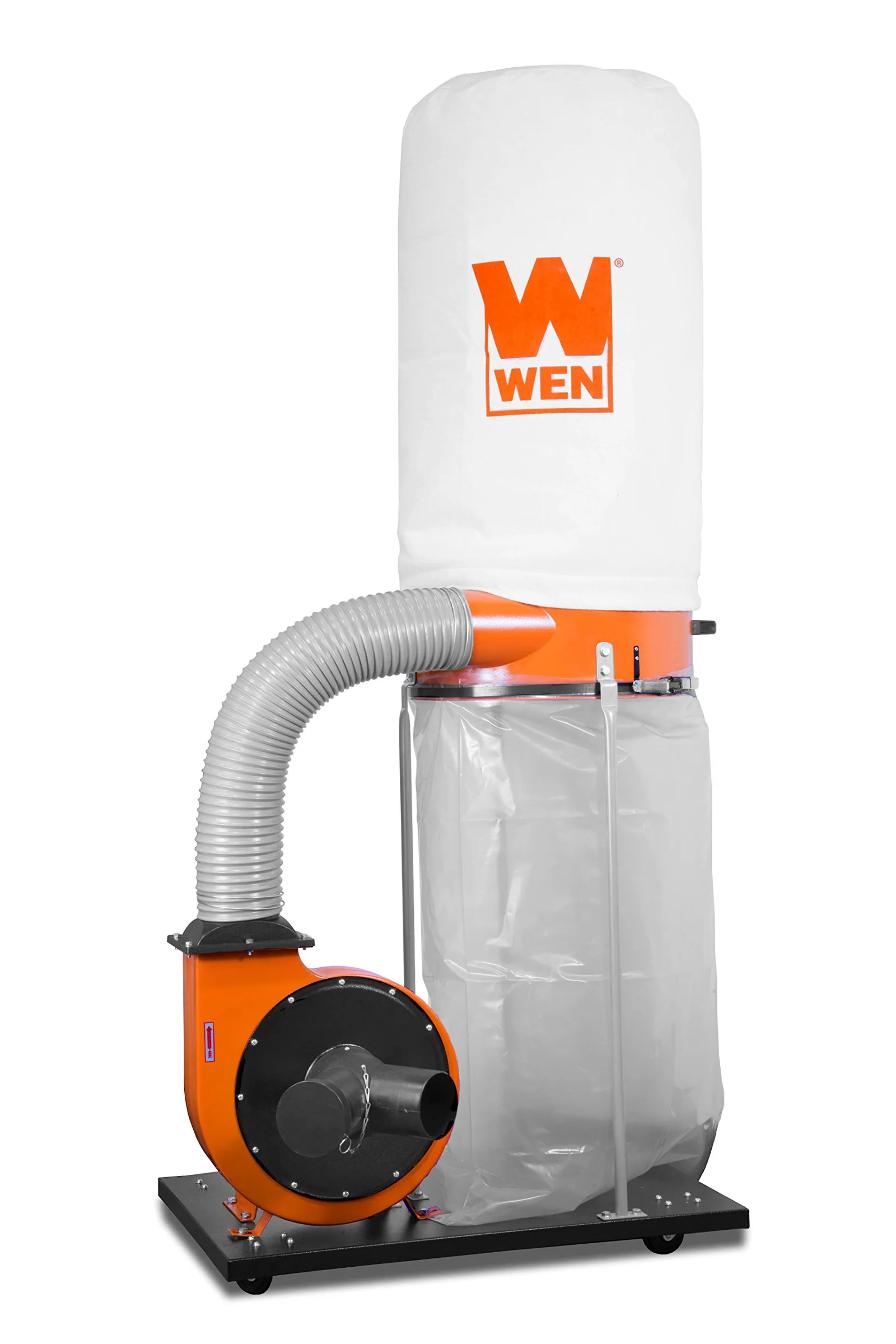
WEN DC1300 1,300 CFM 14-Amp 5-Micron Woodworking Dust Collector with 50-Gallon Collection Bag and Mobile Base , Black 14-Amp, 1300 CFM Collector
Product details
Circulate up to 1,300 cubic feet of air per minute Attach up to two tools at a time with the dual 4-inch air inlets Vertical collection bag holds up to 50 gallons of dust 14-amp motor rotates the 10-inch steel impeller up to 3450 RPM Includes mobile base with four swivel casters for easy mobility
- Circulate up to 1,300 cubic feet of air per minute
- Attach up to two tools at a time with the dual 4-inch air inlets
- Vertical collection bag holds up to 50 gallons of dust
- 14-amp motor rotates the 10-inch steel impeller up to 3450 RPM
- Includes mobile base with four swivel casters for easy mobility
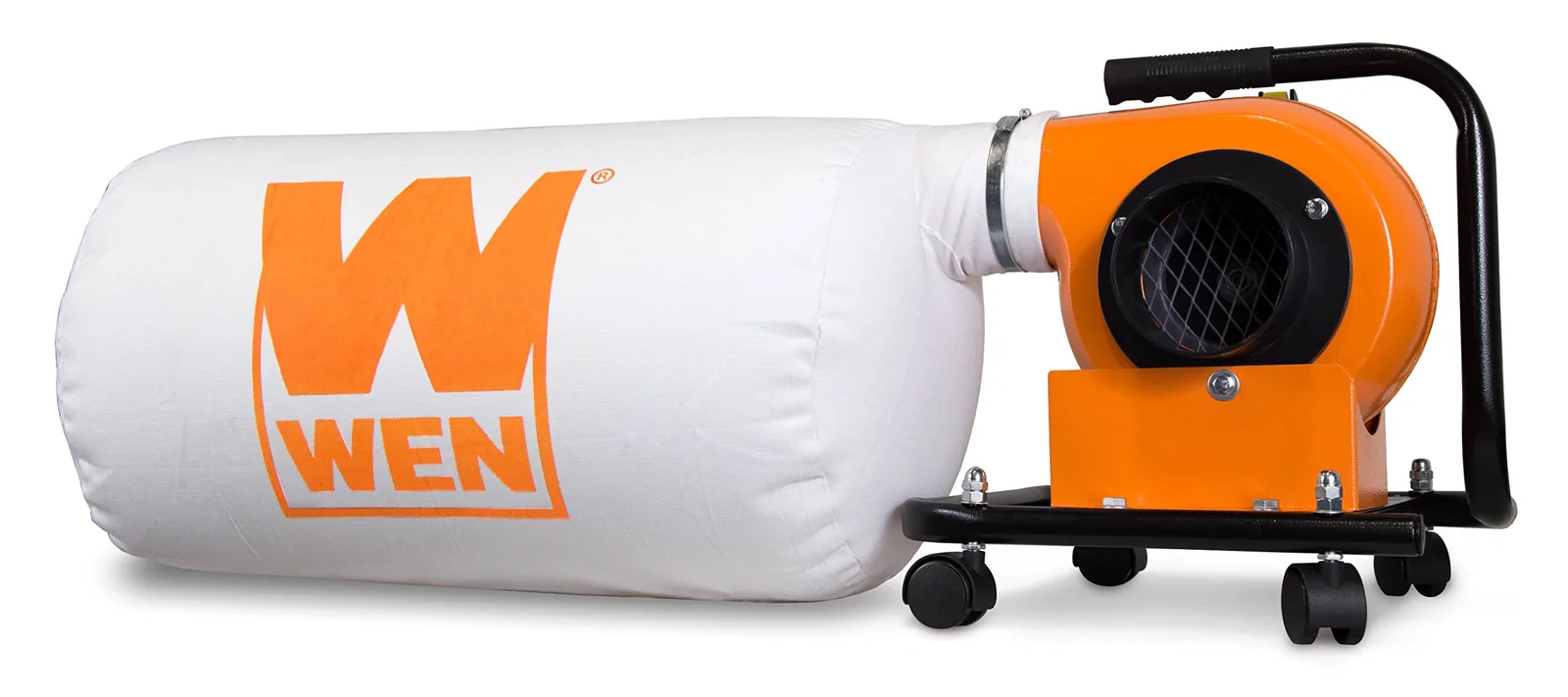
WEN Woodworking Dust Collector, 5.7-Amp Motor with 12-Gallon Bag, Mobile Base, and Optional Wall Mount (DC3401)
Product details
5.7-amp brushed motor combined with the 6-inch impeller moves up to 660 cubic feet of air per minute 4-inch dust port allows for connection to your favorite woodworking tools Compact design includes an onboard carrying handle for easy storage and transportation Measures in at 34.25 x 13 x 14.2 inches in size with a weight of 17 pounds Features lockable swivel casters, an optional wall mount, a 12-gallon 5-micron zippered collection bag, and a two-year warranty
- 5.7-amp brushed motor combined with the 6-inch impeller moves up to 660 cubic feet of air per minute
- 4-inch dust port allows for connection to your favorite woodworking tools
- Compact design includes an onboard carrying handle for easy storage and transportation
- Measures in at 34.25 x 13 x 14.2 inches in size with a weight of 17 pounds
- Features lockable swivel casters, an optional wall mount, a 12-gallon 5-micron zippered collection bag, and a two-year warranty
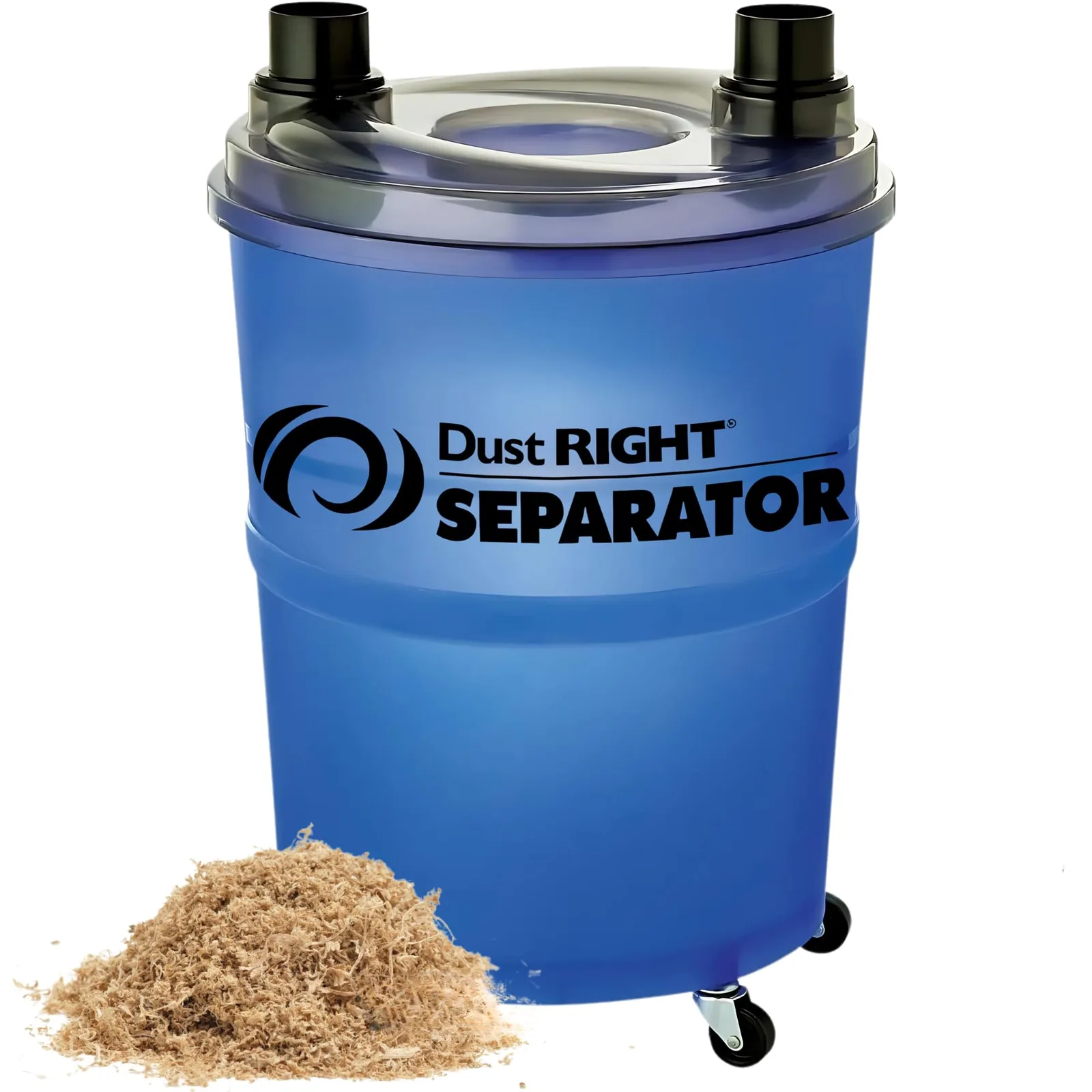
Dust Right Dust Separator + 36” Flex-Form Hose - Cyclone Dust Collector Separates Sawdust, Wood Chips, Debris, and More – 10-Gallon Translucent Bucket - Dust Collectors for Woodworking for Shop Vacs
Product details
Dust Cyclone Separator: Turn any shop vacuum with a 2-1/4” ID outlet into a 2-stage dust extractor and wood chip separator. Our dust cyclone separator captures sawdust, wood chips, and other debris before it enters your vacuum, preventing the loss of suction power caused by a clogged vacuum filter. Durable Filter Life: This dust extractor for woodworking extends the life of your filter and impellers by extracting the larger debris before it enters the dust cyclone separator. The vortex effect that is created prevents the loss of suction caused by prematurely clogged filters. Adapting Mounting: The five-caster base of the dust collector bucket makes it exceptionally stable and easy to maneuver around the shop. Our dust collector vacuum hoses connect inside the in/out ports, preventing unintentional disconnections. Maintain Airflow: The dust collector creates a cyclonic airflow that causes most wood dust particles and other materials that are heavier than air to separate, and our woodworking dust collector prevents them from being passed to the vacuum. Efficient Dust Collecting: Our 10-gallon translucent dust collector bucket is easy to empty and easy to tell when it's full. Also, this dust collection separator holds twice the capacity of competitor systems.
- Dust Cyclone Separator: Turn any shop vacuum with a 2-1/4” ID outlet into a 2-stage dust extractor and wood chip separator. Our dust cyclone separator captures sawdust, wood chips, and other debris before it enters your vacuum, preventing the loss of suction power caused by a clogged vacuum filter.
- Durable Filter Life: This dust extractor for woodworking extends the life of your filter and impellers by extracting the larger debris before it enters the dust cyclone separator. The vortex effect that is created prevents the loss of suction caused by prematurely clogged filters.
- Adapting Mounting: The five-caster base of the dust collector bucket makes it exceptionally stable and easy to maneuver around the shop. Our dust collector vacuum hoses connect inside the in/out ports, preventing unintentional disconnections.
- Maintain Airflow: The dust collector creates a cyclonic airflow that causes most wood dust particles and other materials that are heavier than air to separate, and our woodworking dust collector prevents them from being passed to the vacuum.
- Efficient Dust Collecting: Our 10-gallon translucent dust collector bucket is easy to empty and easy to tell when it's full. Also, this dust collection separator holds twice the capacity of competitor systems.