Dust Collector Sizing Calculator for Woodshops
Estimate required CFM, duct transport velocity, and duct pressure loss, then compare the result with a dust collector's published fan curve.
Dust collector sizing calculator
Enter the longest active duct run from one machine to the collector. Use the tool manufacturer’s required CFM when it is available.
Choose a collector whose fan curve supplies at least 450 CFM at the calculated duct loss, plus the manufacturer’s losses for the tool hood, filter, and separator.
Planning estimate only. Pressure-loss values represent air moving at roughly 4,000 FPM at sea level. Confirm the final design with equipment manuals or a qualified dust-collection designer. Sources: Oneida Air Systems pressure-loss table and Nordfab duct-velocity guidance.
Table of Contents
- Why CFM is the Golden Metric for Shop Safety
- The Dust Collection CFM Calculator: Step-by-Step
- Designing Your Ductwork for Maximum Efficiency
- Selecting the Right Dust Collector for Your Shop
- Common Mistakes in Workshop Dust Collection
- Frequently Asked Questions
Setting up a woodworking shop is an exciting journey, but nothing kills the joy of crafting faster than a layer of fine "shop flour" coating every surface—and your lungs. While many beginners start with a shop vacuum, they quickly realize that a vacuum is designed for high pressure but low volume. To truly keep a shop clean and safe, you need a dedicated dust collection system. Sizing this system correctly is the difference between a pristine workspace and an expensive machine that merely makes noise while dust escapes into the air.
In this guide, we will dive deep into the mechanics of airflow, specifically focusing on how to use a dust collection CFM calculator approach to determine exactly what your shop needs. We will move beyond guesswork and look at the physics of static pressure, duct diameter, and tool requirements. By the end of this article, you will have a clear blueprint for choosing a collector and designing a layout that ensures every chip and fine particle is captured at the source.
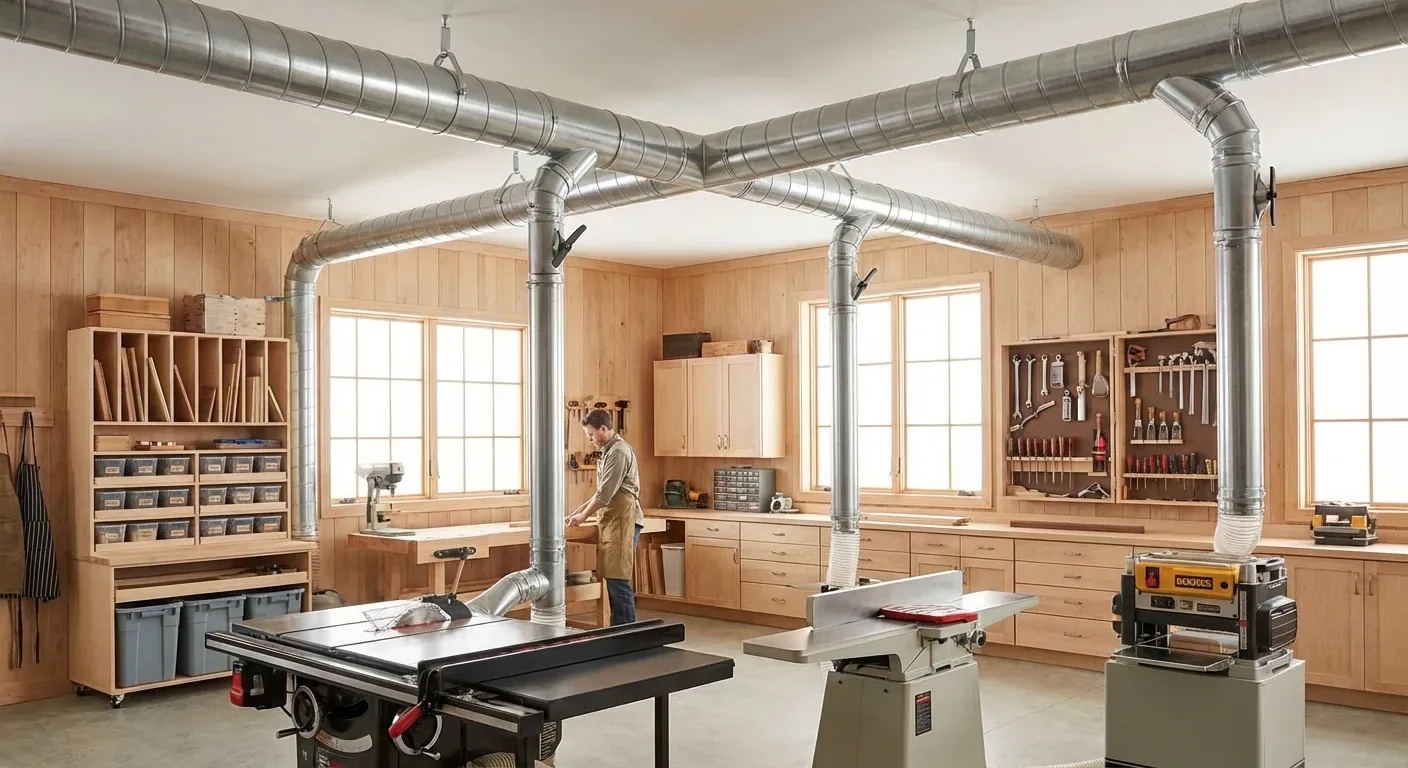
Why CFM is the Golden Metric for Shop Safety
Cubic Feet per Minute (CFM) is the measurement of the volume of air a dust collector can move. In the world of woodworking, CFM is the most critical number because it determines whether or not the machine can move enough air to keep wood particles suspended as they travel from the tool to the collection bag. If the CFM is too low, the air velocity drops, and sawdust begins to settle inside your pipes, eventually leading to clogs that can choke your entire system. This is especially dangerous with tools like thickness planers, which produce a massive volume of chips in a very short amount of time.
Beyond just moving chips, high CFM is essential for capturing "fine dust"—the microscopic particles that are invisible to the eye but most damaging to human health. These particles are often light enough to be carried by the ambient air currents in your shop. A high-CFM system creates a "zone of influence" around the tool's dust port, sucking in the air from the surrounding area and ensuring those fine particles never have a chance to drift toward your face. Without adequate volume, you are essentially only collecting the heavy stuff while leaving the most toxic elements behind.
Understanding the difference between the "rated CFM" and "actual CFM" is where many woodworkers get tripped up. Manufacturers often rate their machines based on the air moved at the intake with no hoses or filters attached. In a real-world scenario, the resistance from your ductwork, elbows, and the filter itself will significantly reduce that number. When we talk about sizing a system, we are always aiming for the "operating CFM"—the actual amount of air moving at the tool's port after accounting for all the friction in the system.
Finally, the goal of a well-sized system is to maintain a specific air velocity, usually measured in Feet Per Minute (FPM). For most woodworking debris, you need an air velocity of about 4,000 FPM in the branch lines to keep chips moving. If your CFM is too low for the diameter of the pipe you are using, the velocity will drop below this threshold. This is why a dust collection CFM calculator is so vital; it helps you balance the volume of air against the size of your pipes to maintain that "sweet spot" of velocity and volume.
The Dust Collection CFM Calculator: Step-by-Step
Identifying Tool Requirements
Every tool in your shop has a different "appetite" for airflow. A small orbital sander might only require 100 CFM, whereas a 15-inch thickness planer or a wide-belt sander could require 800 CFM or more to operate cleanly. To start your calculation, you must identify the tool in your shop that requires the highest CFM. This is your "worst-case scenario" tool. Since most hobbyist shops only run one machine at a time, you size your entire system to satisfy this single most demanding machine.
It is a common mistake to look at the dust port size on a tool and assume that dictates the CFM. For example, many table saws come with a 4-inch port, but a 4-inch port can realistically only handle about 350-400 CFM before the friction becomes too high. If your saw is kicking dust back at you, it might actually need 600 CFM, which would require upgrading the port to 5 or 6 inches. Always check the manufacturer's recommendations, but as a rule of thumb, plan for 450 CFM for table saws and 700-800 CFM for planers and jointers.
Calculating Static Pressure Loss
Static pressure is the resistance your dust collector must overcome to move air through the system. Think of it like drinking through a straw; the longer and thinner the straw, the harder you have to suck. In a dust collection system, every foot of pipe, every 90-degree elbow, and every inch of flexible hose adds "static pressure loss." Flex hose is the biggest offender, often creating three times as much resistance as smooth-walled rigid pipe.
To calculate your total loss, you need to map out the longest "run" in your shop—the distance from the collector to the furthest tool. You then add up the loss factors: for example, a 90-degree elbow might be equivalent to adding 5 to 10 feet of straight pipe. Once you have the total "effective length" of your run, you can use a static pressure chart to see how many inches of water column (WC) loss your system will face. Most hobbyist systems end up with a static pressure loss between 4 and 7 inches.
The Final Calculation and Fan Curves
Once you know your required CFM (e.g., 600 CFM for a table saw) and your estimated static pressure loss (e.g., 5 inches of WC), you need to look at the "fan curve" of the dust collector you are considering. A fan curve is a graph provided by reputable manufacturers that shows how much CFM the machine delivers at various levels of resistance. If a machine is rated at 1,200 CFM "max," the curve might show it only delivers 550 CFM when faced with 5 inches of static pressure.
If your calculated needs (600 CFM at 5" SP) are higher than what the machine provides on its curve, that collector is too small for your shop. You would either need to move to a more powerful motor (higher HP) or reduce the resistance in your system by using larger pipes or shorter runs. This is the core of the dust collection CFM calculator process: ensuring the machine's actual output under load matches the tool's requirement at the end of the longest pipe.
The JET DC-1100VX-5M is a powerhouse designed for the serious hobbyist or small professional shop. I recommend this unit because of its "Vortex Cone" technology, which effectively separates large chips from fine dust before they ever hit the filter. This prevents the dreaded "filter clogging" that kills CFM performance halfway through a big planing project.
This collector is best for woodworkers who have a dedicated shop space and run stationary tools like 12" jointers or 15" planers. The 1.5HP motor provides a consistent pull, and the 5-micron bag (or optional canister) ensures the air returning to your shop is significantly cleaner than entry-level models. The standout feature is the aforementioned Vortex Cone, which maintains high suction for longer periods by keeping the filter clear. One drawback is the footprint; it’s a tall unit, so those with low basement ceilings should measure twice. Compared to cheaper single-stage units, the JET offers much better long-term airflow stability.
Designing Your Ductwork for Maximum Efficiency
Ductwork is the "highway" for your sawdust, and its design can make or break even the most powerful dust collector. The most common mistake woodworkers make is using 4-inch thin-walled PVC or flexible hose for the entire system. While 4-inch pipe is easy to find at big-box stores, it severely limits the amount of air that can flow. For a 1.5HP to 2HP collector, a 6-inch "main trunk line" is almost always the better choice. A 6-inch pipe has more than double the cross-sectional area of a 4-inch pipe, allowing for much higher CFM with significantly less friction.
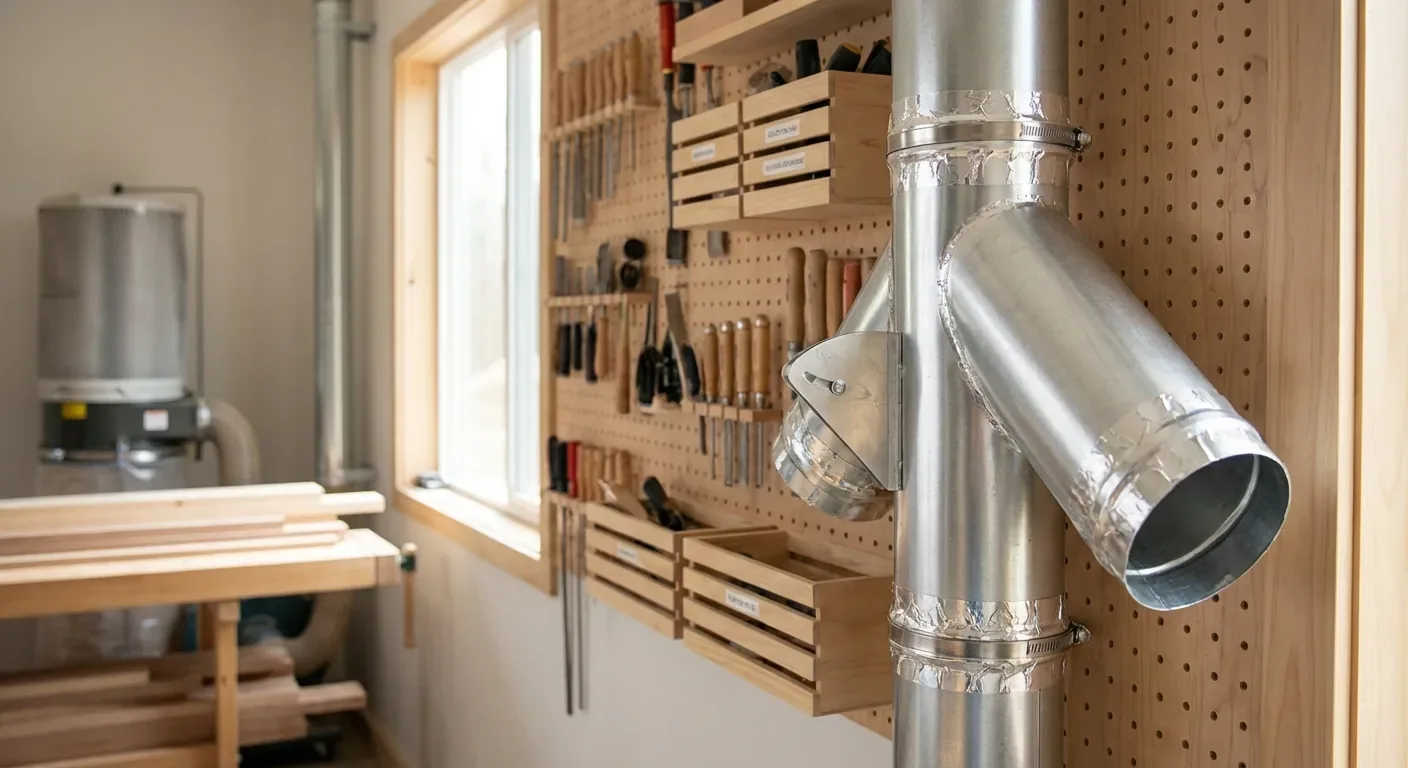
When laying out your ducting, the goal is to keep the air moving as straight as possible. Every time the air has to turn a corner, it loses energy. Instead of using a sharp 90-degree elbow, use two 45-degree elbows spaced apart to create a "long radius" turn. Similarly, when connecting a branch line to the main trunk, never use a T-junction. Always use a Wye-junction, which introduces the air at a 45-degree angle, preserving the momentum of the airflow. These small changes in geometry can save you 1-2 inches of static pressure, which translates directly into more suction at the tool.
The material of your pipes also matters. Smooth-walled pipes, like S&D (Sewer and Drain) PVC or rigid metal ducting, offer the least resistance. Flexible ribbed hose should be kept to an absolute minimum—ideally only the last 2-3 feet needed to connect the rigid pipe to the tool. If you have 10 feet of flex hose snaking across the floor, you are likely losing 30-40% of your potential suction. Secure all joints with foil tape or silicone to ensure the system is airtight; even a small leak can cause a whistle and a drop in performance.
Selecting the Right Dust Collector for Your Shop
Choosing between a single-stage and a two-stage (cyclone) collector is the first major decision. A single-stage collector pulls everything—chips, dust, and the occasional stray screw—directly through the impeller and into a bag or filter. These are more affordable and compact but lose suction quickly as the filter bag fills up. A two-stage cyclone system, on the other hand, uses centrifugal force to drop 99% of the debris into a drum before the air ever reaches the filter. This keeps your CFM consistent and makes emptying the "bin" much easier than wrestling with a dusty bag.
Horsepower (HP) is the most common way collectors are sold, but it can be misleading. A 1HP motor is generally only sufficient for a single tool with a very short hose (5-8 feet). For a shop with a piped-in ductwork system, a 1.5HP to 2HP motor is the minimum requirement to overcome the static pressure of the pipes. If you are running multiple machines simultaneously or have very long duct runs (over 30 feet), you will likely need to step up to a 3HP or 5HP unit. Always prioritize impeller size over HP; a larger impeller moves more air at lower RPMs, which is generally more efficient.
Filtration is the final piece of the puzzle. Old-school dust collectors came with 30-micron bags, which essentially acted as "dust distributors," catching the big chips but blowing the dangerous fine dust right back into the shop. Modern standards require at least a 1-micron filter, and many woodworkers prefer HEPA-rated canisters that capture 99.97% of particles down to 0.3 microns. While canister filters are more expensive, they offer more surface area than bags, which actually improves your CFM because the air can escape the filter more easily.
The WEN 3401 5.7-Amp 660 CFM Wall-Mounted Dust Collector is the perfect solution for the "garage warrior" or the small shop where floor space is at a premium. I recommend this for hobbyists who work primarily with one tool at a time and don't want to deal with a massive unit taking up a corner. It’s best for small-scale projects, table saws, and sanders in a 1-car garage setting.
The standout feature is the wall-mount capability, which keeps the floor clear for walking and moving material. Despite its small size, it pulls a respectable 660 CFM (at the intake), which is plenty for a short run of 4-inch hose. The main drawback is its limited capacity; the bag is small and will fill up quickly if you’re doing heavy planing. It also lacks the sophisticated filtration of larger units, so I recommend using it in conjunction with an ambient air cleaner. It’s a great entry-level choice that outperforms any shop vac for volume.
Common Mistakes in Workshop Dust Collection
One of the most frequent errors is the "choke point" mistake. This happens when a woodworker installs a beautiful 6-inch main line but then uses a 4-inch blast gate and a 2.5-inch reducer to connect to a tool. The airflow is only as strong as its narrowest point. If you must reduce the pipe size, do it as close to the tool as possible. Even better, modify your tools to accept larger ports. Upgrading a table saw from a 4-inch port to a 5-inch port can sometimes double the effective dust collection because it allows the system to actually "breathe."
Another pitfall is neglecting "make-up air." In a small, tightly sealed shop, a powerful dust collector can actually create a slight vacuum. If the air can't get back into the room, the collector has to work harder to pull air out, which reduces CFM. More dangerously, in shops with gas-fired water heaters or furnaces, a powerful dust collector can cause "back-drafting," pulling carbon monoxide out of the exhaust flues and into the shop. Always ensure there is a source of fresh air, such as a cracked window or a vent, when running a high-CFM system.
Finally, many woodworkers forget to account for the "filter tax." As a filter bag or canister gets coated in fine dust, its resistance increases dramatically. A system that starts at 800 CFM might drop to 400 CFM after just an hour of use if the filter isn't cleaned. Choosing a collector with an internal "flipper" or cleaning handle for the canister filter is a wise investment. Regularly "thumping" the filter to knock the dust cake into the collection bin ensures that your dust collection CFM calculator numbers remain accurate throughout your entire work session.
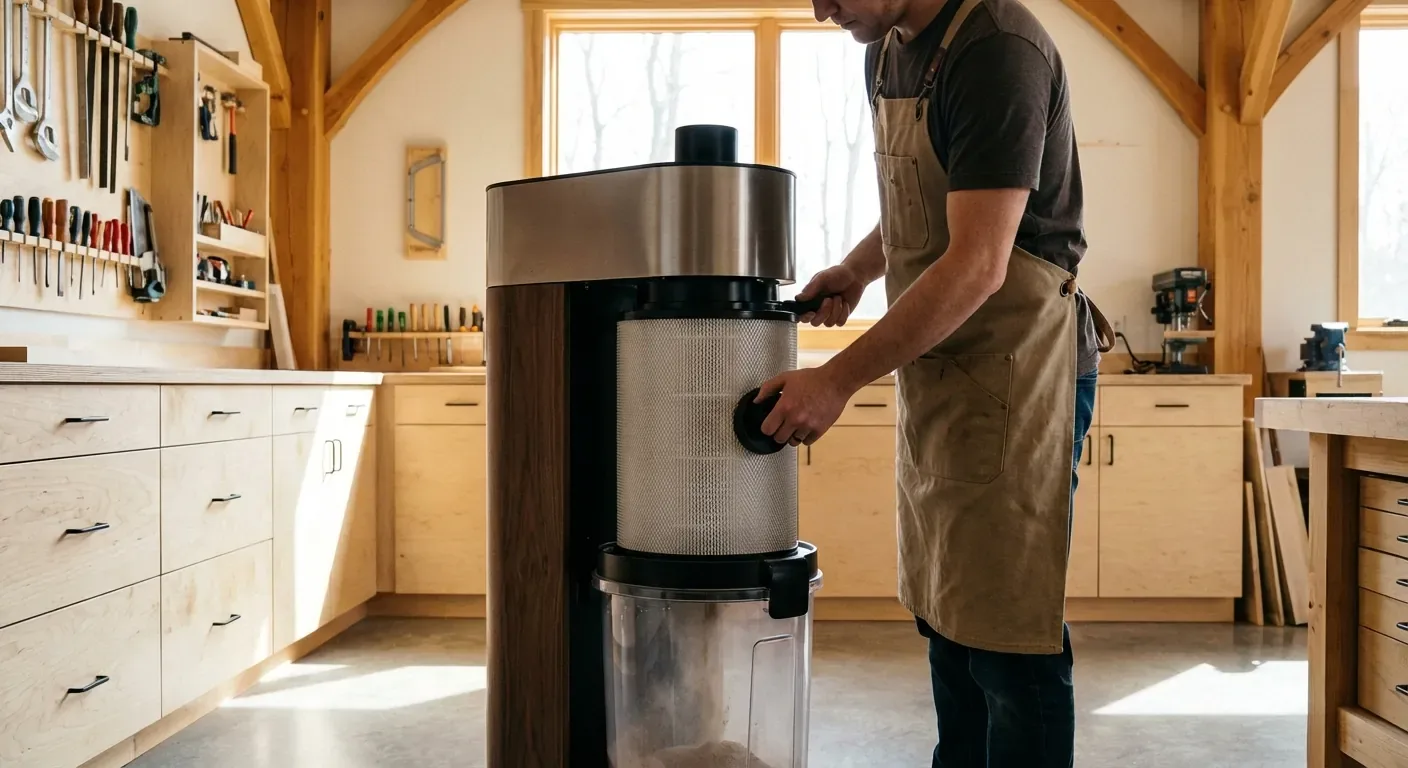
Shop-vac separator reviews
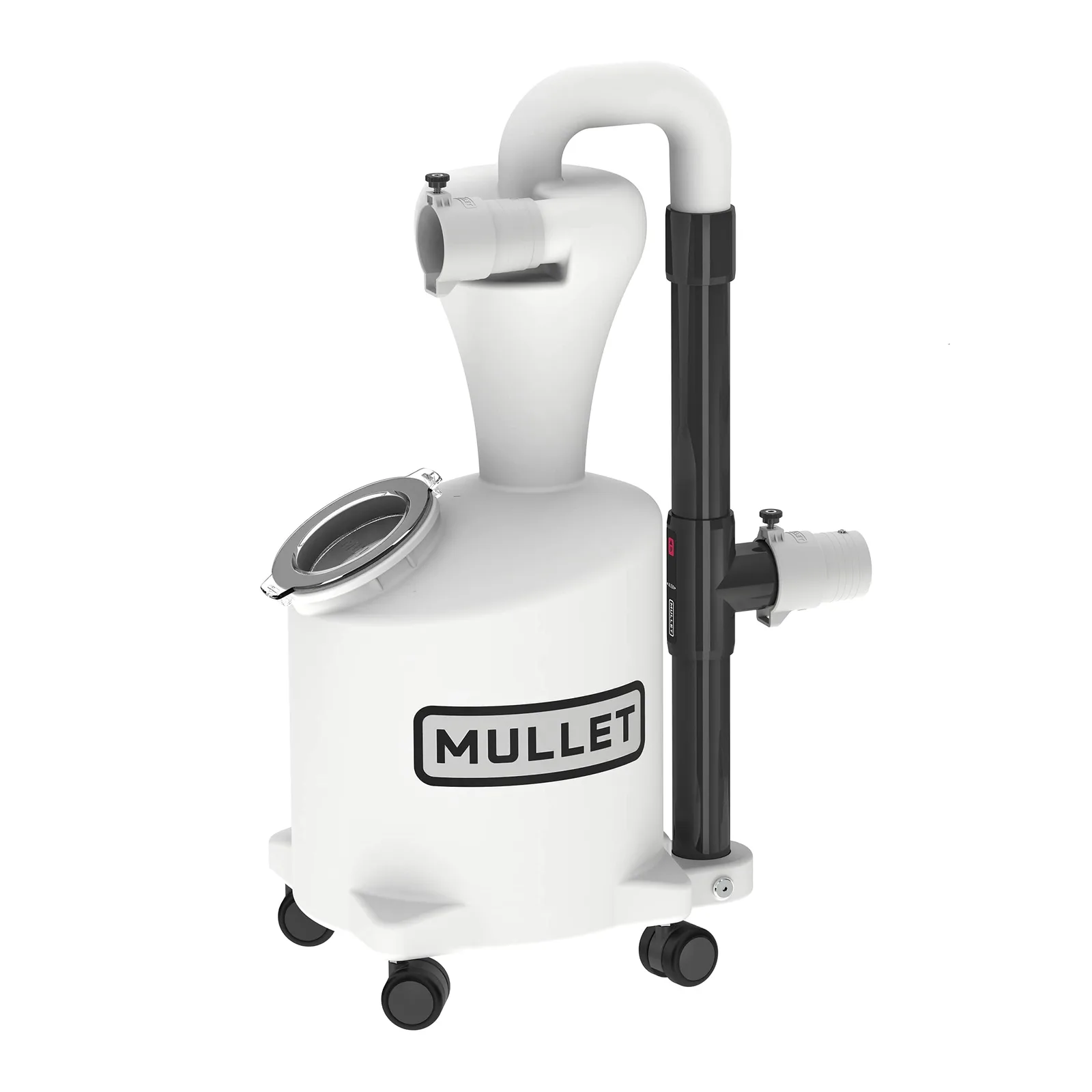
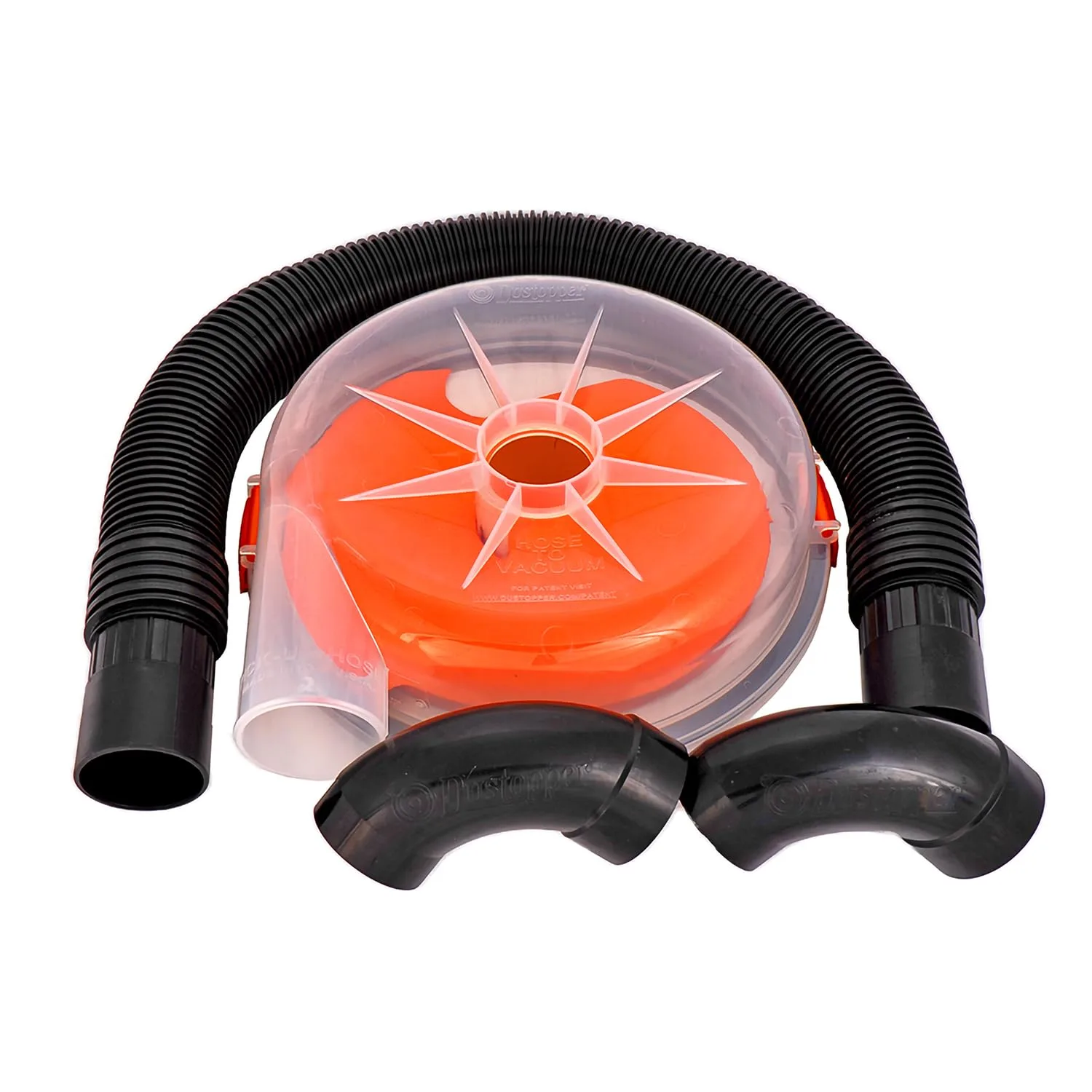
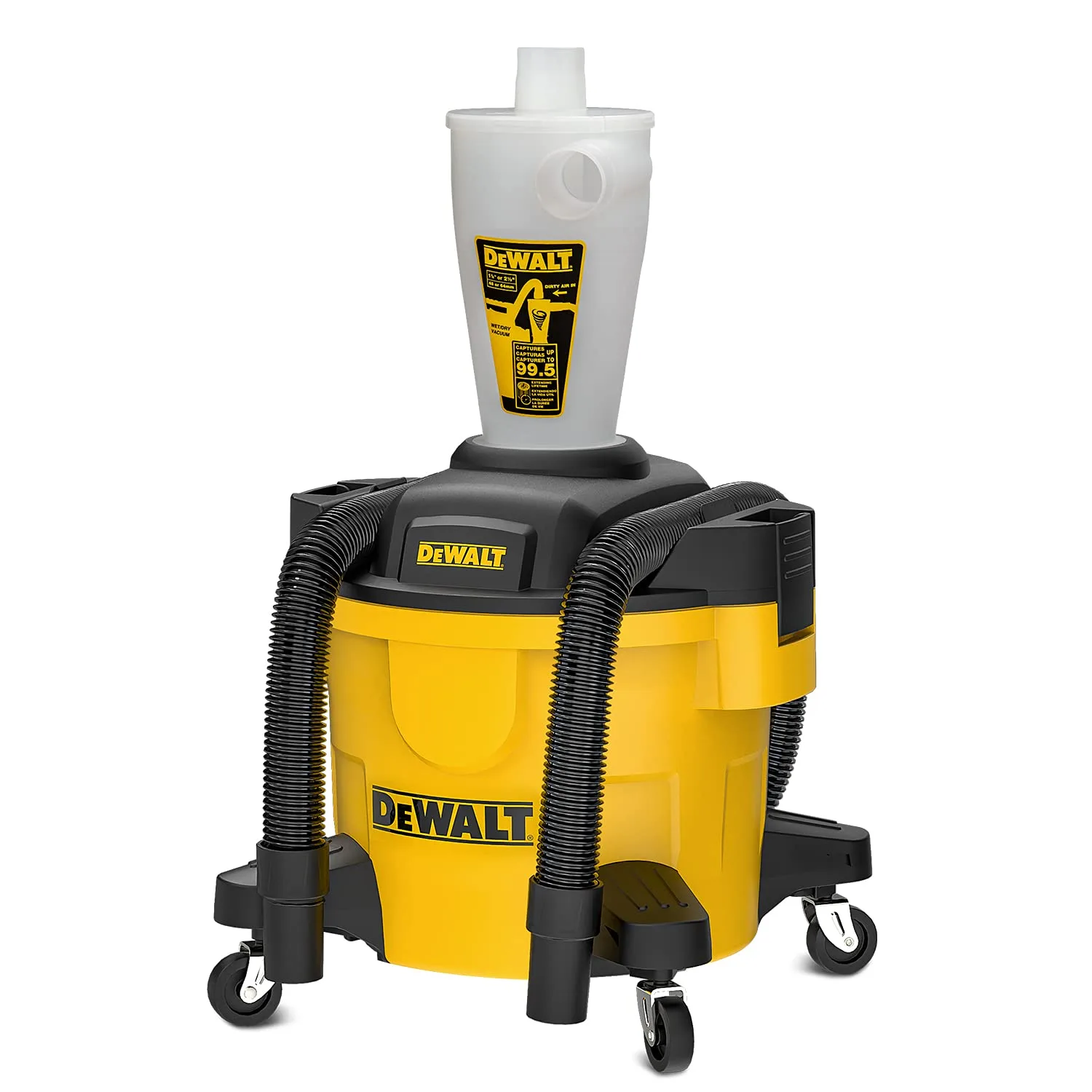
If your tool is designed for high-pressure extraction through a smaller hose, a pre-separator may be more useful than a larger dust collector. We have detailed reviews of the Mullet High-Speed Cyclone, Dustopper PRO, DEWALT DXVCS002, Oneida Dust Deputy 2.5, and Rockler Dust Right Separator. For a four-inch machine port, size a dust collector with the calculator above instead.
Frequently Asked Questions
If you are still deciding which type of system belongs in your shop, start with the complete woodworking dust collection guide. Compare dust collectors for one-car garages for stationary machines, shop vacs for fine wood dust for handheld tools, and workshop air-filtration systems for the dust that escapes source capture.
Can I use a shop vac for my table saw or planer? While a shop vac is great for small hand tools like sanders or biscuit joiners, it is generally inadequate for large stationary tools. Shop vacs move a small volume of air (around 100-150 CFM) at high pressure. A table saw needs a high volume of air (at least 400-500 CFM) to capture the dust cloud created by the spinning blade. Using a shop vac on a planer will almost certainly result in a clogged hose within seconds because the vac cannot move the massive volume of chips produced.
What is the best type of pipe to use for dust collection ducting? The "gold standard" is spiral metal ducting because it is smooth, fire-resistant, and dissipates static electricity well. However, it is expensive and difficult for DIYers to install. A more common choice for hobbyists is "S&D" (Sewer and Drain) PVC pipe (ASTM 2729). It is thinner and lighter than standard Schedule 40 PVC, making it easier to hang, and its smooth interior walls provide excellent airflow. Avoid corrugated flexible drainage pipe, as the ridges create massive turbulence and friction.
How do I calculate the CFM for my specific shop layout? To calculate your needs, first identify your most demanding tool (usually a planer) and its required CFM (let's say 700 CFM). Then, calculate the static pressure loss of your longest run by adding the resistance of the pipe (inches of water per 10 feet) plus the resistance of all elbows and flex hoses. Once you have a total static pressure (e.g., 6 inches), look at the fan curve of a dust collector. You need a machine that can provide 700 CFM at 6 inches of static pressure.
Do I really need to ground my PVC pipes to prevent explosions? This is a long-standing debate in the woodworking community. While flowing dust can create static electricity, which might give you a small zap, there has never been a documented case of a home shop explosion caused by static in PVC dust pipes. The concentration of dust required for an explosion is much higher than what is found in a typical hobbyist system. However, many woodworkers still run a copper wire through or along the pipe to prevent those annoying static shocks when they touch a machine.
Is a 1-micron filter enough, or do I need HEPA? A 1-micron filter is a massive upgrade over the standard 30-micron bags and will capture the vast majority of harmful dust. However, for those with allergies or respiratory issues, a HEPA filter (0.3 microns) is the safest choice. Keep in mind that HEPA filters are more restrictive, so you may need a slightly more powerful dust collector motor to maintain the same CFM you would have with a standard 1-micron canister.
Explore the recommendations.
Check Amazon for current product details, available options, and pricing.
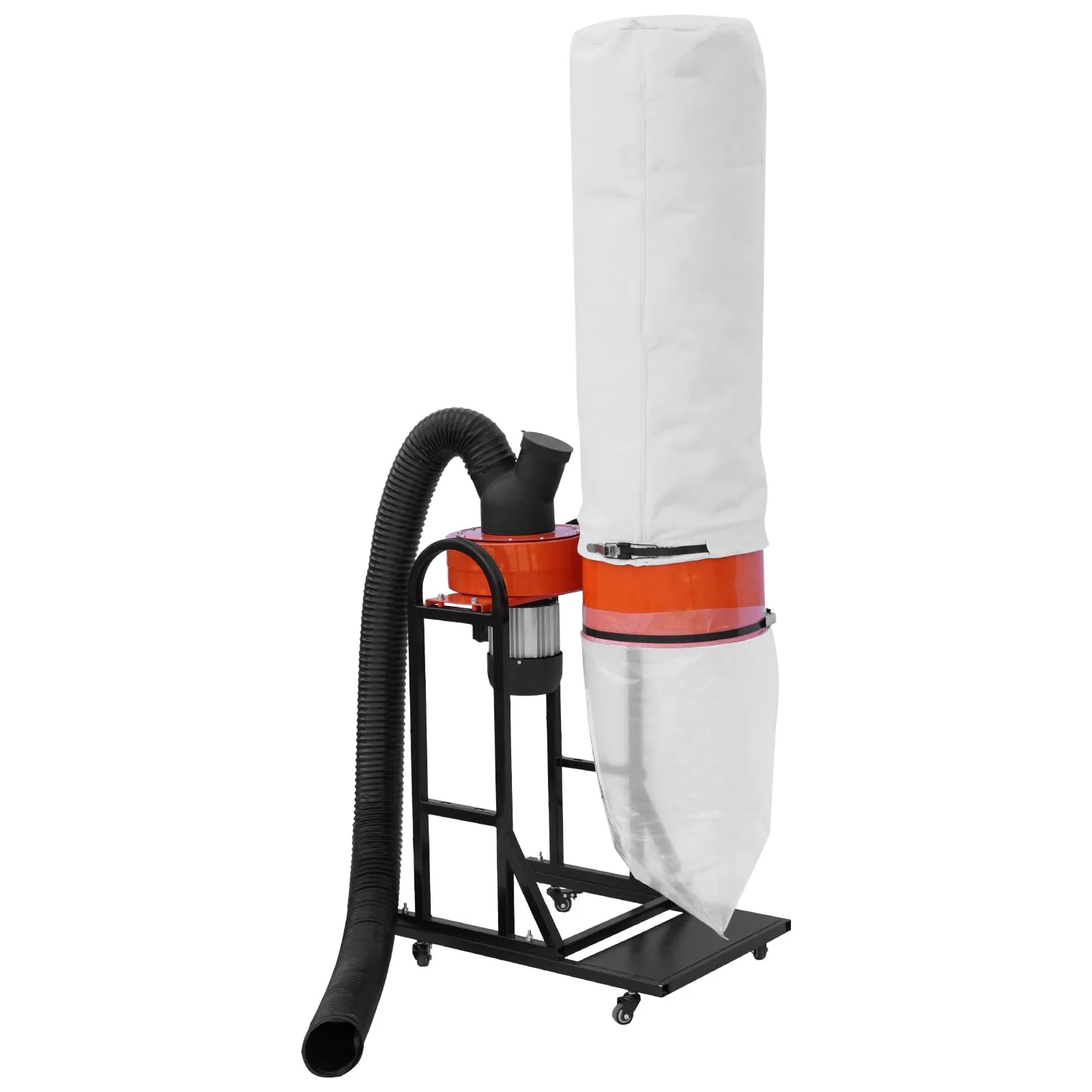
VEVOR 1.5 HP Dust Collector, 716 CFM, Portable Vortex Dust Collector, with 47 Gallon Collection Bag and Mobile Base, 120V, 3400 RPM, 5μm Canister Filter Kit, for Woodworking Dust Collection System
Product details
Excellent Suction Function: The 1.5 HP low noise motor creates a powerful 716 CFM airflow to exhaust dust and purify the air. Sound Rating: ≤85dB . After using, a clean work environment will come back again Advanced Separation Technology: Vortex cone technology of the cyclone dust collector improves chip separation and packing efficiency. The two-bag system drops the heavy chips into the lower bag, then sends the dirty air through the top bag (filter), giving cleaner air back Large Capacity Bags: The 47 Gallon/ 178 L Collection Drum has quick-release levers and independent casters for easy emptying. The canister filter captures 99% of 5μm particles, significantly increasing filtration effectiveness. The directly-mounted feature is time-saving and labor-saving Flexible and Portable: The dust collection system features a 6-inch inlet with a removable Y-fitting with two 4-inch openings, which can be used to branch lines to service more than one machine. A 78.7 in/2 m flexible hose ensures your long-distance work. There are four wheels. Among them, two are lockable, ensuring flexible and easy movement Wide Application: The cyclone dust collector is widely used in industries, such as machinery, textile, household appliances, food, coal, building materials, sweeper, dust removal equipment manufacturing, etc
- Excellent Suction Function: The 1.5 HP low noise motor creates a powerful 716 CFM airflow to exhaust dust and purify the air. Sound Rating: ≤85dB . After using, a clean work environment will come back again
- Advanced Separation Technology: Vortex cone technology of the cyclone dust collector improves chip separation and packing efficiency. The two-bag system drops the heavy chips into the lower bag, then sends the dirty air through the top bag (filter), giving cleaner air back
- Large Capacity Bags: The 47 Gallon/ 178 L Collection Drum has quick-release levers and independent casters for easy emptying. The canister filter captures 99% of 5μm particles, significantly increasing filtration effectiveness. The directly-mounted feature is time-saving and labor-saving
- Flexible and Portable: The dust collection system features a 6-inch inlet with a removable Y-fitting with two 4-inch openings, which can be used to branch lines to service more than one machine. A 78.7 in/2 m flexible hose ensures your long-distance work. There are four wheels. Among them, two are lockable, ensuring flexible and easy movement
- Wide Application: The cyclone dust collector is widely used in industries, such as machinery, textile, household appliances, food, coal, building materials, sweeper, dust removal equipment manufacturing, etc