Maximizing Space in a 10x10 Workshop
Lay out a 10-by-10 workshop with mobile tools, wall storage, safe working clearances, and flexible zones for cutting and assembly.
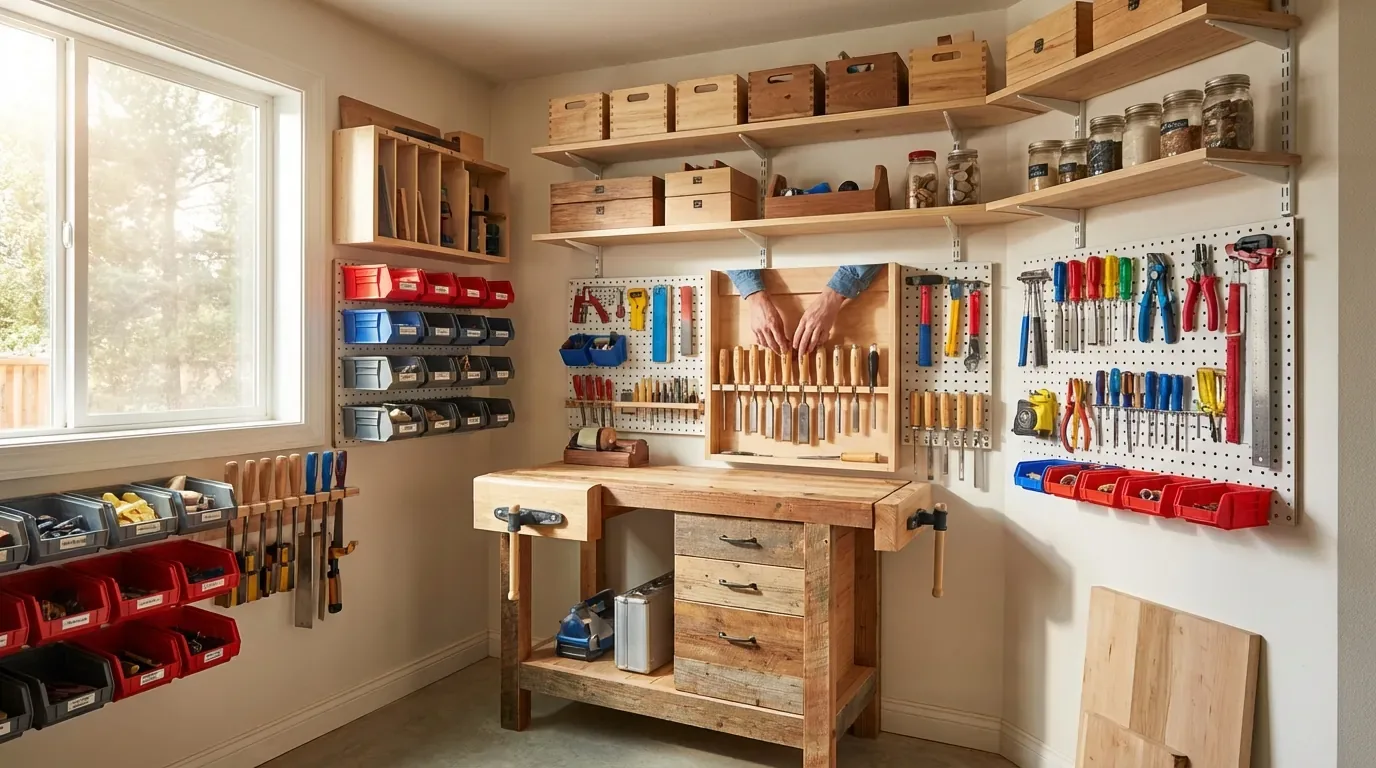
Table of Contents
- The Philosophy of the 100-Square-Foot Shop
- The Power of Mobility: Everything on Wheels
- Vertical Real Estate: Reaching for the Rafters
- The Multi-Functional Workstation Strategy
- Managing Dust and Debris in Tight Quarters
- Pro Tips and Common Pitfalls to Avoid
- Frequently Asked Questions
The Philosophy of the 100-Square-Foot Shop
Stepping into a 10x10 space with a table saw, a planer, and a stack of white oak can feel like trying to solve a Rubik's Cube where the pieces keep getting larger. A small woodworking shop presents a unique set of challenges that larger garages simply don't face. In a 100-square-foot environment, every inch is a premium commodity. You aren't just organizing tools; you are choreographing a dance between your machinery, your materials, and your own physical movement. The goal isn't just to fit everything inside, but to create a workflow that doesn't leave you feeling claustrophobic or frustrated.
The beauty of a 10x10 workshop lies in its efficiency. When everything is within arm's reach, you spend less time walking across a vast floor and more time actually making sawdust. However, this efficiency only happens by design, never by accident. You must adopt a "minimalist but capable" mindset, focusing on tools that offer the highest utility-to-footprint ratio. By prioritizing versatility over specialized machinery, you can produce furniture-grade work in a space that others might mistake for a garden shed.
In this guide, we will explore the fundamental strategies for maximizing a small woodworking shop. We'll cover why mobility is your best friend, how to reclaim the "dead space" on your walls and ceilings, and how to build workstations that pull double or triple duty. Whether you are converting a backyard shed or a spare bedroom, these principles will help you transform a cramped box into a world-class creative sanctuary.
The Power of Mobility: Everything on Wheels
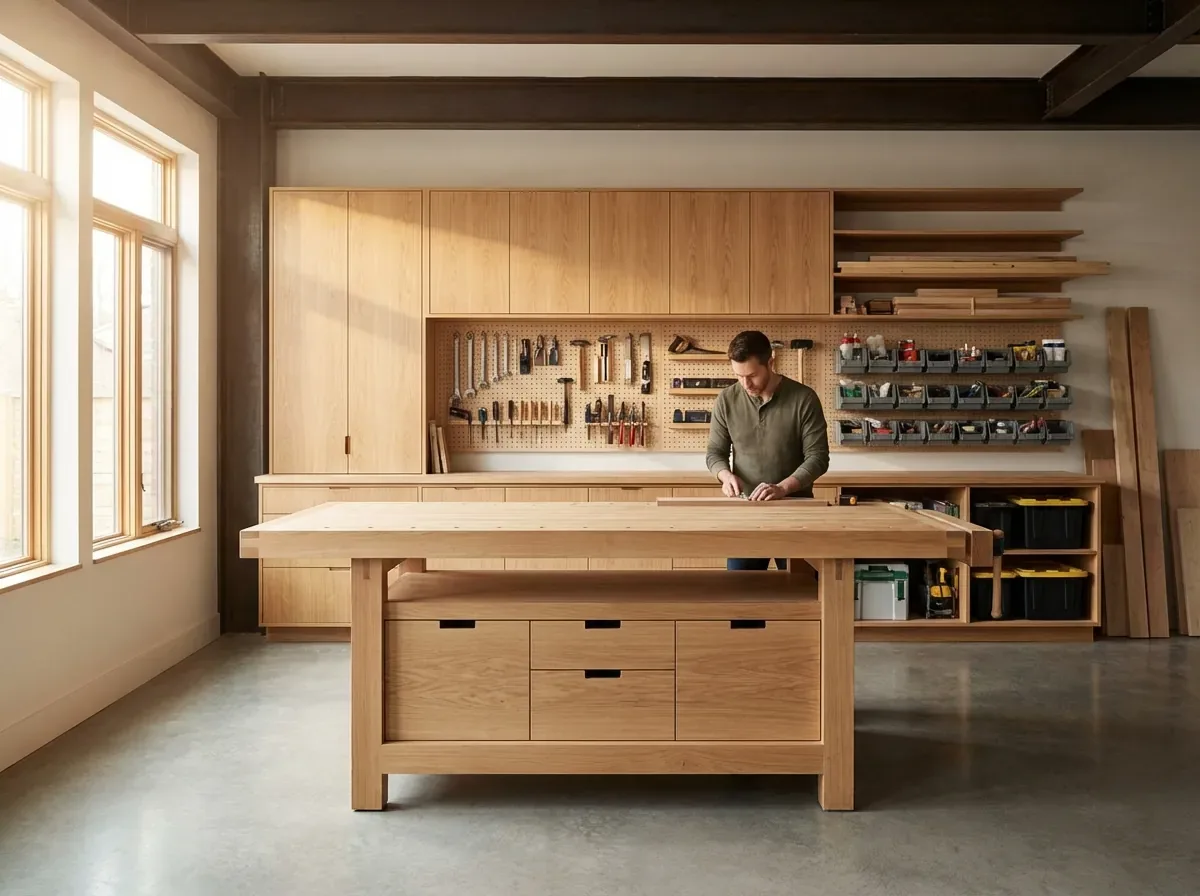
In a 10x10 workshop, the floor plan must be fluid. If your stationary tools—like a table saw or a bandsaw—are bolted to the floor, you have effectively paralyzed your shop. The "Golden Rule" of small-space woodworking is that every major tool must be mobile. This allows you to pull a machine into the center of the room to handle long boards and then tuck it back against the wall when the task is finished. Without mobility, you’ll find yourself unable to process any lumber longer than five or six feet.
When selecting mobile bases, look for high-quality locking casters that don't vibrate or "walk" during use. There is nothing more dangerous than a table saw that shifts while you are feeding a heavy sheet of plywood. Industrial-grade, foot-activated levers are preferred because they allow you to drop the machine onto its solid rubber feet for maximum stability. This transition from "mobile" to "stationary" should take seconds, ensuring that your workflow remains uninterrupted while maintaining the highest safety standards.
Furthermore, mobility isn't just for heavy machinery. Consider putting your scrap bins, assembly tables, and even your primary workbench on wheels. By doing so, you create a "Tetris-like" environment where the configuration of the shop changes based on the project phase. During the milling phase, the jointer and planer take center stage. During assembly, those tools move to the periphery to make room for a large flat surface. This adaptability is what makes a small woodworking shop truly functional.
I highly recommend the Bora Portamate PM-1100 Universal Mobile Base for anyone operating in a 10x10 shop environment. This kit is a game-changer because it allows you to customize the size of the base to fit any machine, from a small jointer to a heavy-duty cabinet saw. In a small shop, "one size fits all" rarely works, so the ability to bolt this to a custom-sized piece of plywood ensures you aren't wasting any footprint on oversized frames.
This product is best for the DIY woodworker who is converting older, stationary equipment into mobile units. The standout feature is the 400-lb weight capacity combined with the low-profile design; it keeps your tools close to the ground so the working height doesn't become uncomfortably high. The only real drawback is that you have to provide your own plywood and bolts, but for most woodworkers, this is a minor inconvenience compared to the flexibility it offers. Compared to pre-sized bases, the PM-1100 is far more space-efficient for tight corners.
Vertical Real Estate: Reaching for the Rafters
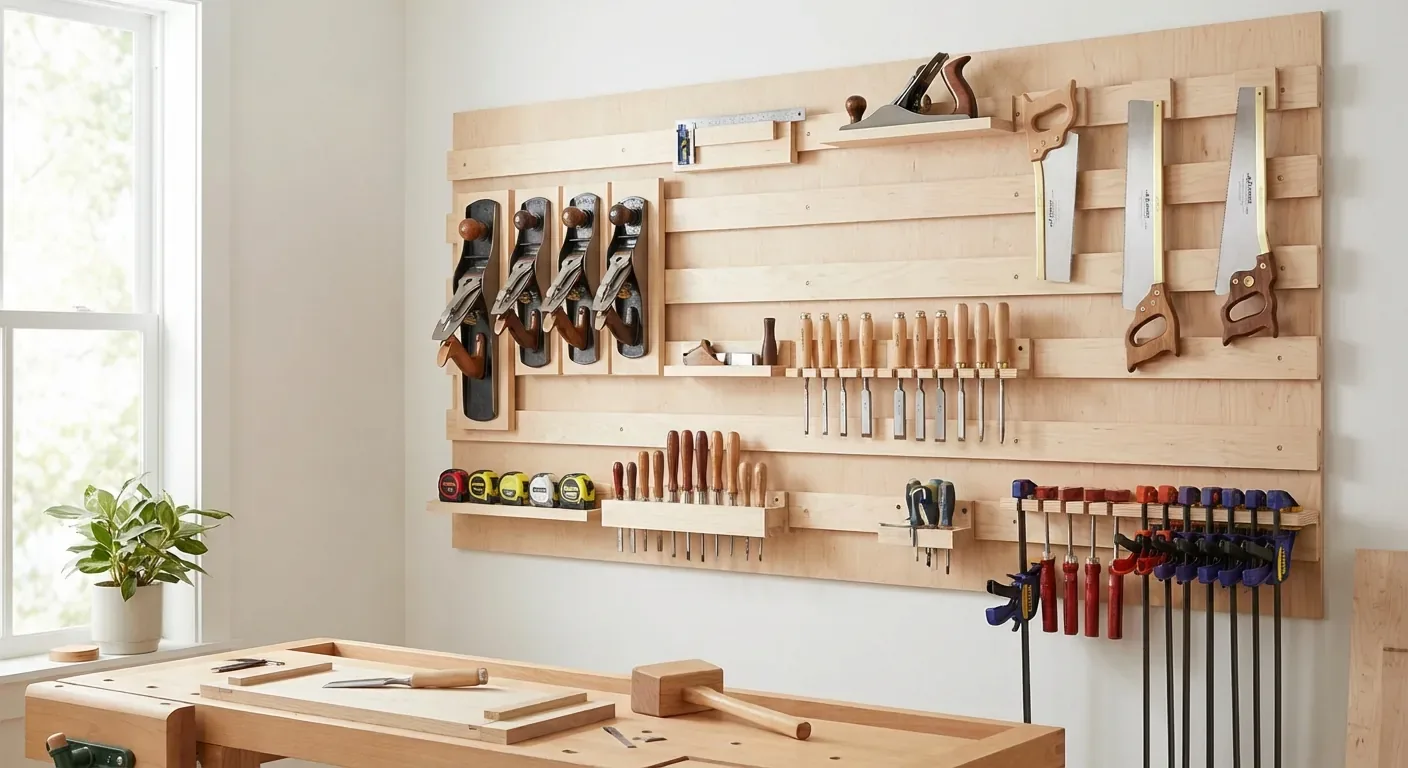
When the floor is full, look up. In a small woodworking shop, the walls are your most valuable storage assets. Many woodworkers make the mistake of using floor-standing cabinets, which eat up precious square footage. Instead, adopt a "wall-first" mentality. Every tool that can be hung should be hung. This keeps your horizontal surfaces clear for actual work and ensures that your most-used hand tools are always visible and accessible, reducing the time spent rummaging through drawers.
The French Cleat System
The French cleat system is the undisputed king of small shop organization. By mounting a series of 45-degree angled strips along your walls, you create a modular "plug-and-play" environment. If you buy a new tool or realize your chisels would be better placed next to the lathe, you simply lift the tool holder and move it. This flexibility is vital in a 10x10 shop where your needs will inevitably evolve as you take on different types of projects.
Beyond just hand tools, French cleats can support heavy items like air compressors, sandpaper organizers, and even small miter saw stations. By elevating these items, you keep the "dust zone" near the floor clear, making it much easier to sweep up at the end of the day. It also allows you to utilize the space under your wall-mounted tools for rolling carts or material storage, effectively doubling your usable area.
Overhead Lumber and Clamps
Ceiling storage is the final frontier of the small woodworking shop. Lumber is notoriously difficult to store in a 10x10 room because long boards take up so much horizontal space. By installing overhead racks, you can store your hardwood stash out of the way. Just be sure to mount these racks into the ceiling joists and keep them high enough that you won't bump your head while moving around the shop.
Similarly, clamps—the woodworker's most essential and awkward-to-store accessory—should live on the wall or the ceiling. A simple "comb" style rack mounted high on the wall can hold dozens of F-style or parallel clamps without taking up a single square inch of floor space. Keeping them vertical also prevents them from becoming a tangled mess, which is a common frustration in cramped quarters.
The Multi-Functional Workstation Strategy
In a 10x10 shop, every piece of furniture must justify its existence by performing at least two tasks. A dedicated miter saw station is a luxury few small shops can afford. Instead, woodworkers are turning to "flip-top" carts. These ingenious designs feature a rotating center platform that holds a miter saw on one side and perhaps a thickness planer or spindle sander on the other. When you need the planer, you simply unlock the top, flip it over, and lock it back into place.
Another pillar of the multi-functional strategy is the "all-in-one" workbench. Rather than having a separate assembly table, outfeed table, and workbench, you should combine them into one central hub. This workbench should be built to the exact height of your table saw so it can act as an outfeed support for long or wide cuts. By integrating T-tracks into the surface, the workbench also becomes a giant clamping jig, eliminating the need for specialized assembly tables.
Finally, consider "nesting" components. If you have a small CNC or a scroll saw, design a stand that allows a vacuum or a scrap bin to slide underneath it. In a small woodworking shop, "hollow" furniture is wasted space. Every stand and every table should have integrated drawers or open shelving to house the specific accessories for that tool. This keeps the shop looking organized and ensures that your blades, wrenches, and jigs are always where you need them.
The WEN Multi-Purpose Work Bench is an excellent starter unit for those who need a dedicated space for small tasks but don't want to build a massive permanent structure. I recommend this for hobbyists who are just beginning to outfit their 10x10 shop. It features a built-in power strip and a pegboard back, which hits our requirement for multi-functionality right out of the box.
The standout feature is the integrated light and the heavy-duty steel frame which provides a surprising amount of stability for its footprint. It’s best for light assembly, electronics, or fine detail work. The drawback is that the work surface is somewhat small for large-scale furniture projects, and the drawer is a bit shallow. However, as a secondary station that can be tucked into a corner, it provides a lot of organized storage and utility for a very reasonable price.
Managing Dust and Debris in Tight Quarters
Dust management is not just about cleanliness; in a 100-square-foot room, it’s a matter of health and safety. Fine sawdust can reach explosive concentrations in small, unventilated spaces, and breathing in those particles in a confined area is significantly more hazardous than in a large garage. A standard shop vac is a start, but it often lacks the filtration necessary to trap the "invisible" dust that causes long-term respiratory issues.
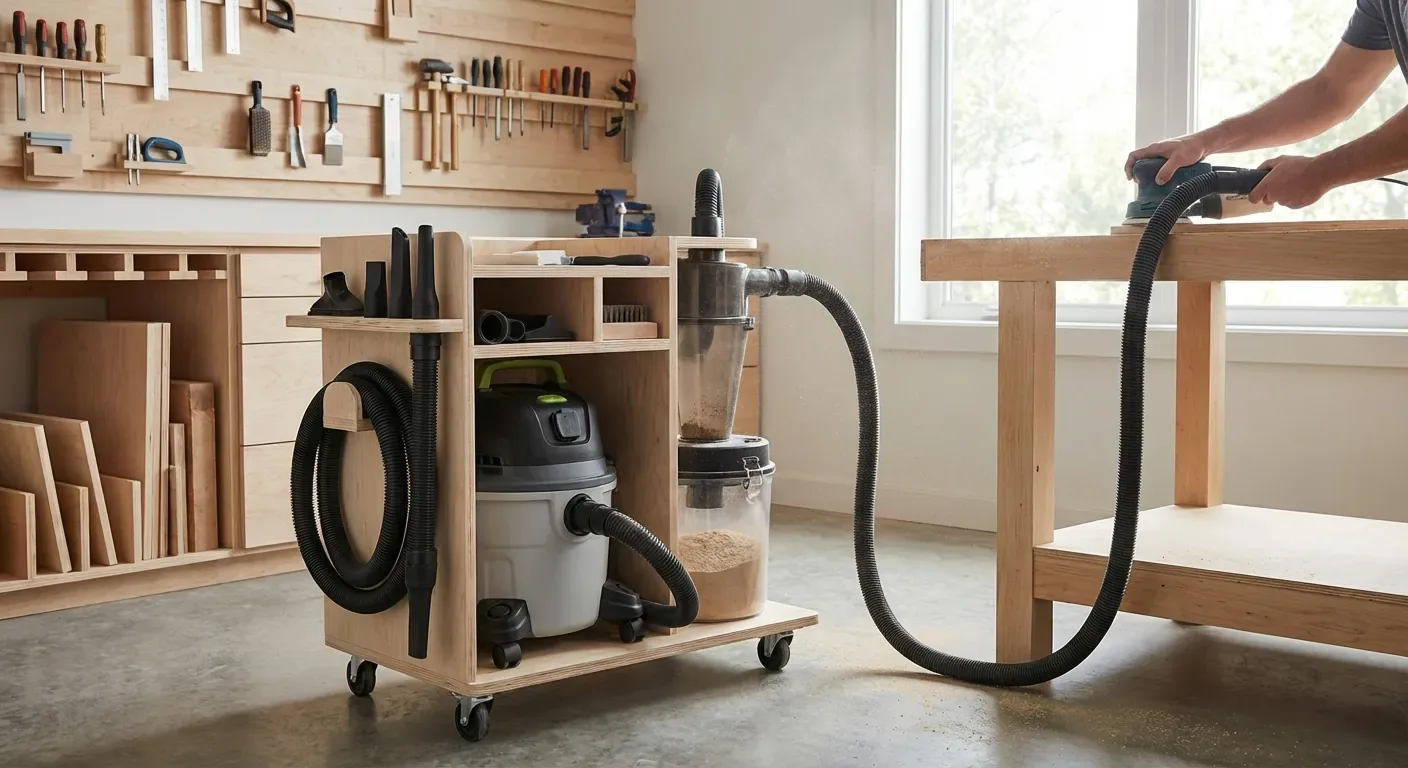
In a 10x10 shop, a full-sized cyclone dust collector is usually too bulky. The solution is a two-stage system using a compact vacuum paired with a cyclone separator (like a Dust Deputy) mounted on a small rolling cart. This setup captures 99% of the heavy chips before they ever reach your vacuum filter, maintaining high suction and extending the life of your equipment. Because it's on a cart, you can wheel it from the table saw to the sander as needed.
Additionally, you should consider an overhead air filtration unit. These "air scrubbers" hang from the ceiling—taking up zero floor space—and constantly cycle the air in the room, trapping fine particles that your primary dust collector misses. In a 10x10 room, a small unit can scrub the entire volume of air several times an hour. This keeps your surfaces cleaner and, more importantly, keeps your lungs clear, making the small shop experience much more enjoyable.
Pro Tips and Common Pitfalls to Avoid
One of the most common mistakes in a small woodworking shop is "over-tooling." It is tempting to buy every new gadget or specialized machine, but in a 10x10 space, you must be a ruthless editor. Before buying a tool, ask yourself: "Can I do this job with a tool I already own?" For example, a track saw can often replace both a table saw and a miter saw for many tasks, saving a massive amount of floor space while providing professional results.
Another tip is to prioritize lighting. Small shops often feel smaller because they are poorly lit, which also creates safety hazards. Use high-output LED shop lights to eliminate shadows. When you can see every corner of the room clearly, the space feels more open and less oppressive. Consider painting your walls a bright white or light grey; this reflects the light and makes the 100-square-foot area feel significantly larger than it actually is.
Finally, stay on top of your scrap management. In a large shop, a pile of offcuts in the corner is a minor nuisance. In a 10x10 shop, it’s a tripping hazard that consumes 5% of your floor space. Implement a "one-in, one-out" rule for scraps. If a piece isn't large enough for a specific future project, get rid of it immediately. Keeping your floor clear of clutter is the simplest and most effective way to maximize the utility of a small workspace.
Frequently Asked Questions
Can I really build furniture in a 10x10 shop?
Yes, absolutely. Some of the world’s finest luthiers and furniture makers work in spaces even smaller than 100 square feet. The key is to focus on the scale of your projects and the order of operations. You may not be able to build a 12-foot dining table comfortably, but chairs, end tables, cabinets, and boxes are all perfectly feasible. You simply have to be diligent about moving tools out of the way to create "assembly zones" when the time comes to put the pieces together.
The limitation isn't the size of the room, but how you manage the lumber. By using a track saw to break down large sheets of plywood outside or in a driveway before bringing them into the shop, you bypass the biggest space constraint. Once the parts are cut to manageable sizes, a 10x10 shop provides more than enough room for joinery, sanding, and finishing.
What is the best flooring for a small workshop?
In a small shop, comfort and cleanliness are the priorities. If your 10x10 space is on a concrete slab, your legs will tire quickly. Anti-fatigue rubber mats are a great addition, but they can be difficult to sweep. A popular solution is interlocking foam tiles or a high-quality "shop grade" vinyl plank flooring. These provide a bit of cushion, are easy to clean, and—most importantly—protect your sharp chisels or plane irons if they accidentally fall off the bench.
Avoid carpet at all costs, as it traps sawdust and becomes a fire hazard. If you are on a budget, simply painting the concrete with a high-durability epoxy can make sweeping much easier. Just ensure the finish isn't too slippery; a little bit of "grit" in the paint will help you maintain your footing when pushing heavy stock through a saw.
How do I handle long boards in such a short space?
Handling an 8-foot board in a 10-foot room leaves you with only one foot of clearance on either end—practically impossible for milling. The solution is diagonal orientation and "pass-throughs." Position your primary machines so that the "path of the board" runs diagonally across the room, which gives you about 14 feet of clearance. If your shop has a window or a door, you can also position your saw so that the outfeed or infeed extends through the opening.
Another strategy is to use "work supports" or roller stands. Instead of a massive outfeed table, use a small, foldable roller stand that can be tucked away when not in use. This allows you to support long stock during a cut without committing to a permanent piece of furniture that would block your movement in the shop.
Is a table saw too big for a 10x10 shop?
A full-sized cabinet saw with a 52-inch rip capacity is likely too large, but a compact "jobsite" saw or a contractor saw with a 30-inch fence is perfectly manageable. Many woodworkers in small shops actually prefer a high-quality band saw for most of their ripping tasks, as it has a much smaller footprint and is safer for many operations. If you do choose a table saw, ensure it is on a mobile base so you can shove it against the wall when it's not the star of the show.
Alternatively, many small-shop woodworkers are moving toward "hybrid" setups where a track saw handles the heavy lifting of breaking down sheet goods, and a smaller table saw is used only for precision joinery or small parts. This reduces the need for a massive "wing" on the table saw, saving you several square feet of space.
How do I keep the shop from getting too hot or cold?
In a 10x10 space, temperature shifts happen quickly. Because the volume of air is small, a simple space heater or a small window AC unit can change the temperature in minutes. However, you must be careful with dust. Standard household heaters with exposed coils can be a fire risk in a dusty shop. Look for oil-filled radiators or "shop-rated" heaters that are designed for dirty environments.
Insulation is your best friend. If your 10x10 shop is a standalone shed, taking the time to insulate the walls and ceiling will make it much easier to maintain a comfortable temperature. This also helps with sound dampening, which your neighbors will appreciate if you are running a loud planer or router late into the evening.
Explore the recommendations.
Check Amazon for current product details, available options, and pricing.
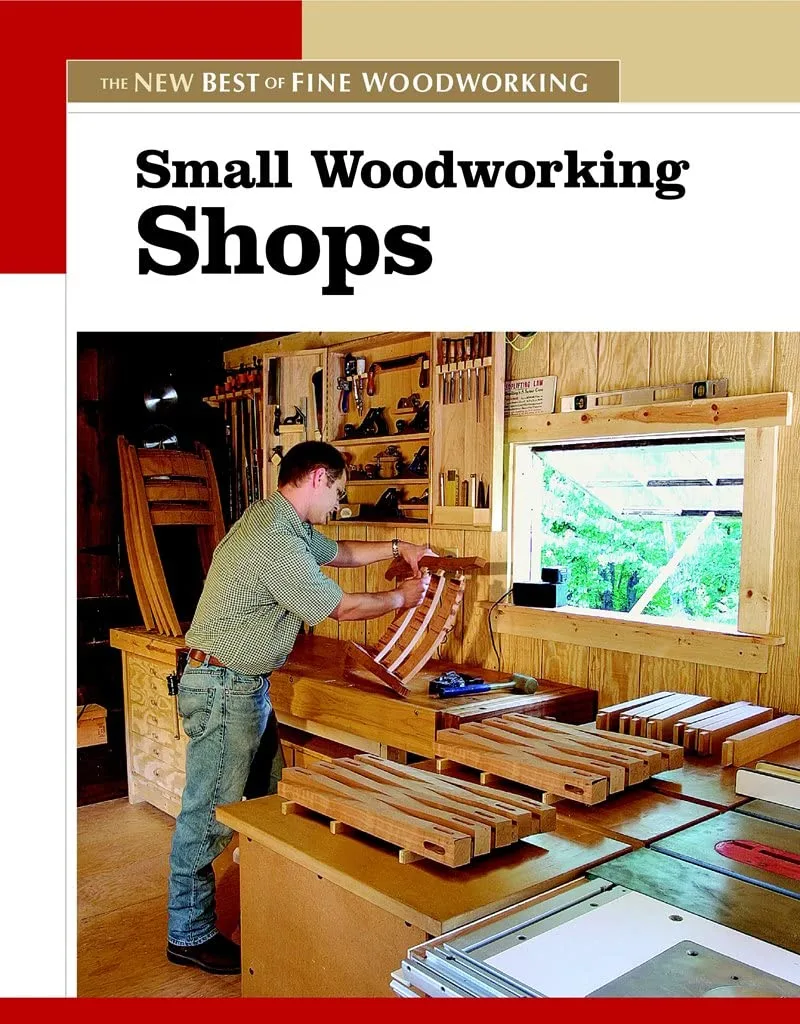
Small Woodworking Shops (New Best of Fine Woodworking)
Product details
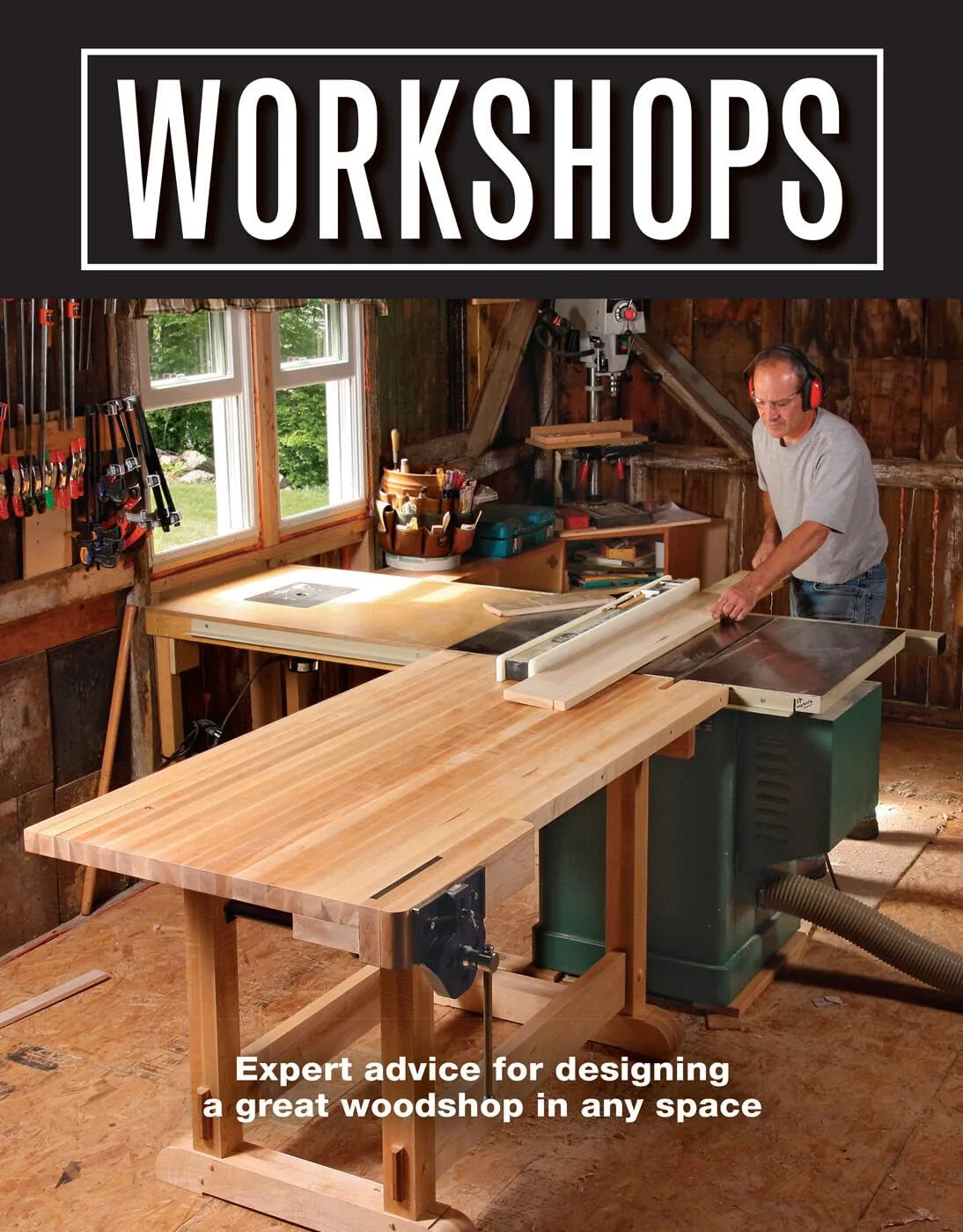
Workshops: Expert Advice for Designing a Great Woodshop in Any Space
Product details