Modular Tool Cabinet Build Plans
Plan modular workshop cabinets with adaptable dimensions, drawer and shelf options, durable joinery, and layouts that can grow with your tools.
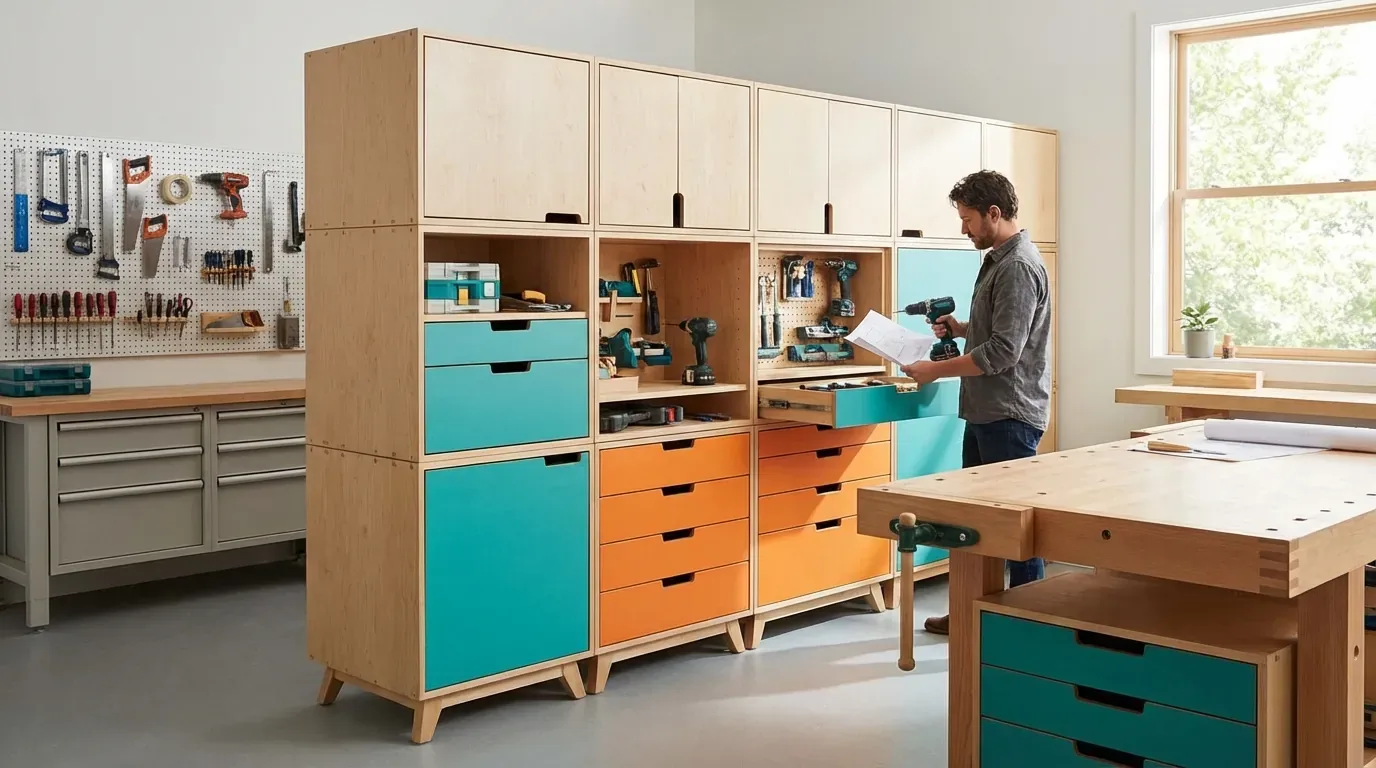
Table of Contents
- The Dream of a Perfectly Organized Woodshop
- The Frustration of the "Shop Shuffle"
- Introducing the Modular Tool Cabinet System
- Why You Can Trust These Plans
- Get Your Free Modular Tool Cabinet Build Plans
- Pro Tips for Customizing Your Modular Cabinets
- Frequently Asked Questions
The Dream of a Perfectly Organized Woodshop
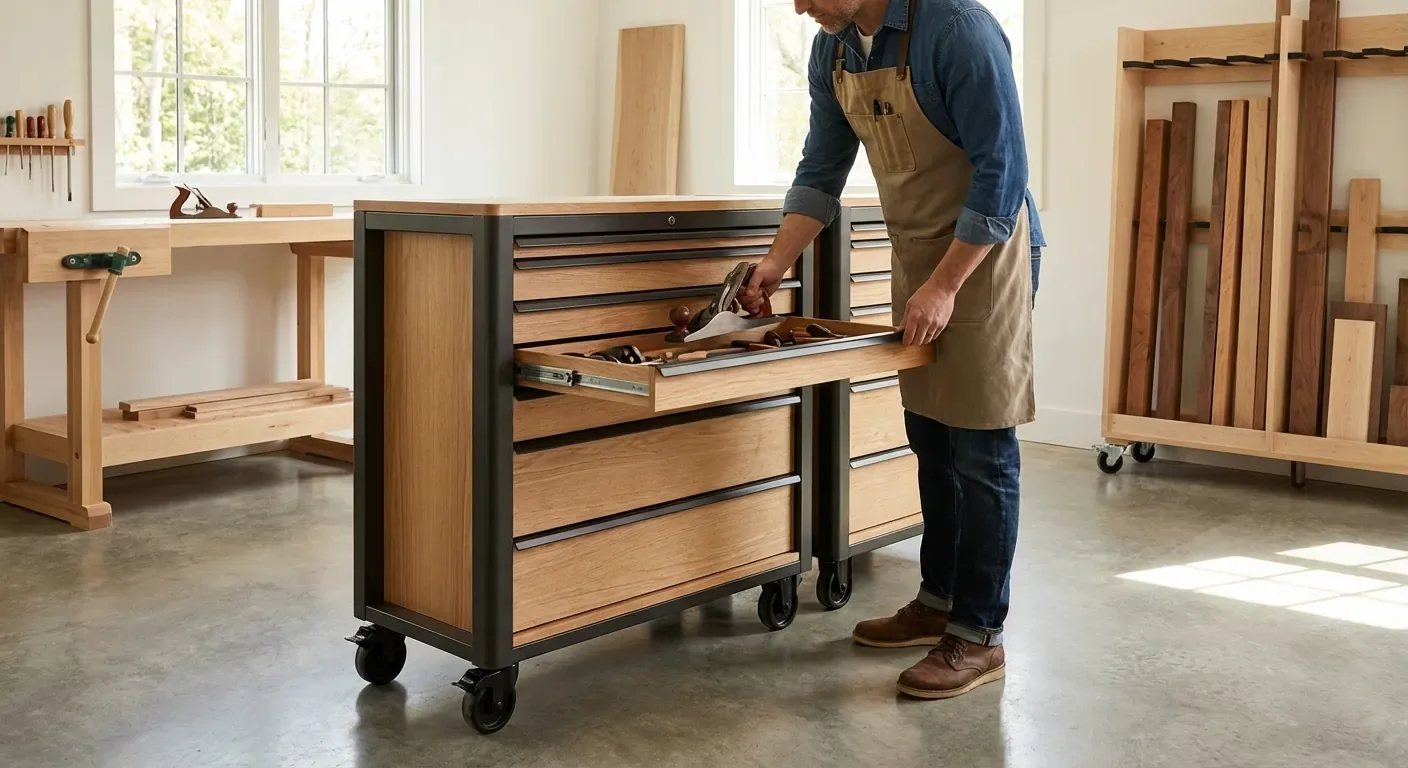
Imagine walking into your workshop and knowing exactly where every chisel, router bit, and hand plane is located. There is a profound sense of calm that comes with a workspace where "everything has a place and everything is in its place." When your environment is organized, your creativity can actually flourish because you aren't spending twenty minutes hunting for a marking gauge or clearing off a cluttered workbench just to make a single crosscut. A truly organized shop isn't just about aesthetics; it is about the "flow" of your craft, allowing you to move seamlessly from milling to assembly without the friction of a chaotic environment.
The ultimate goal for any woodworker, whether a weekend hobbyist or a professional maker, is to have a shop that works for them rather than against them. A modular tool cabinet system is the cornerstone of this philosophy. By creating mobile, specialized storage units that can be rearranged as your tool collection grows, you are essentially future-proofing your workspace. This level of organization transforms the woodworking experience from a series of frustrations into a streamlined process where the only thing you have to focus on is the wood and the joinery.
The Frustration of the "Shop Shuffle"
Most woodworkers suffer from what I call the "Shop Shuffle." This is the tedious process of moving three heavy machines and five stacks of lumber just to reach the one tool you actually need. In a small shop, space is the most precious commodity, yet we often waste it with stationary, bulky workbenches that don't offer enough storage. This lack of organization leads to "horizontal surface syndrome," where every flat area becomes a magnet for clutter, sawdust, and half-finished projects. When your shop is in this state, starting a new project feels like a chore rather than an exciting opportunity.
Beyond the physical clutter, a disorganized shop is a safety hazard. Tripping over extension cords or struggling to find the proper push stick for a table saw cut can lead to dangerous situations. Furthermore, the mental fatigue of working in a mess is real. Research into productivity shows that visual clutter competes for our attention, leading to increased stress and decreased focus. If you find yourself avoiding your shop because the mess feels overwhelming, or if you are constantly buying duplicates of tools you know you have but can't find, it is time to stop the shuffle and start building a system that restores order.
Introducing the Modular Tool Cabinet System
The Modular Tool Cabinet Build Plans were designed to solve the specific problems of the modern woodworker. This isn't just a box with drawers; it is a scalable system built using 3/4" plywood and efficient joinery techniques that ensure durability without requiring a master's degree in furniture making. The plans provide a standard footprint (24" wide by 24" deep) that allows multiple cabinets to sit flush against one another or tuck neatly under a standard-height workbench. This uniformity is the secret to a professional-looking shop that can grow and change as your needs evolve.
Comprehensive Cut Lists and 3D Diagrams
One of the most valuable aspects of these plans is the detailed breakdown of materials. We provide a "parts map" for every sheet of plywood, ensuring you get the maximum yield from your materials with minimal waste. Each step is accompanied by high-resolution 3D exploded views that show exactly how the pieces fit together, from the carcase assembly to the drawer slides. This eliminates the guesswork that often leads to "oops" cuts and wasted trips to the lumberyard, making the build process smooth and enjoyable.
Customization for Your Specific Toolset
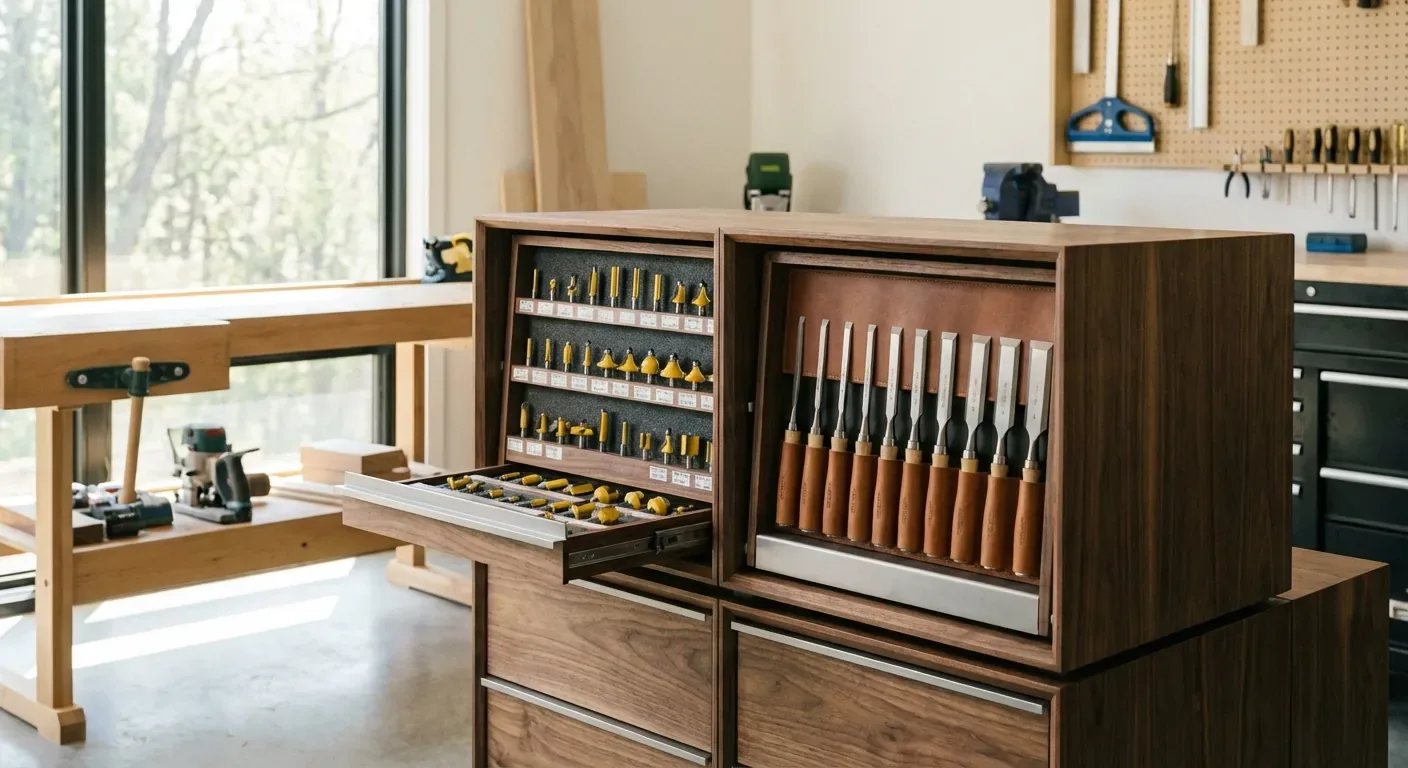
We recognize that no two woodworkers have the same tool collection, which is why these plans include three different interior configurations. You can choose to build a cabinet with five shallow drawers for hand tools, a combination of deep drawers and open shelving for power tools, or a dedicated "pull-out" rack for cordless drills and chargers. The plans guide you through the process of adjusting the drawer heights and internal dividers, giving you the freedom to create a bespoke storage solution that fits your specific workflow perfectly.
Why You Can Trust These Plans
At Workshop Tips, we have spent years testing different storage solutions in real-world shop environments. We’ve built the "fancy" cabinets and the "quick and dirty" ones, and we’ve learned what actually holds up under the weight of heavy cast-iron tools and the vibration of a workshop. These plans are the result of dozens of iterations, incorporating feedback from our community of over 50,000 woodworkers. We don't just design these on a computer; we build them, use them, and refine them until they are as efficient as possible.
The feedback from our early testers has been overwhelmingly positive. One user, a hobbyist with a single-car garage shop, reported that building just two of these modular units cleared up 30% of his floor space and allowed him to finally park his car inside again. Another professional maker noted that the structural integrity of the pocket-hole and glue construction was more than enough to handle his 80-pound bench grinder. When you download these plans, you aren't just getting a PDF; you are getting a proven system that has been "shop-tested" by people who understand the unique demands of woodworking.
Get Your Free Modular Tool Cabinet Build Plans
Ready to stop searching for your tools and start using them? We are offering our complete Modular Tool Cabinet Build Plans for free to our community members. These plans include everything we’ve discussed: the optimized cut lists, the 3D assembly diagrams, the hardware recommendations, and the customization guides. By downloading these plans, you are taking the first step toward a shop that inspires you to create your best work.
To get your copy, simply enter your email address below. We’ll send the PDF directly to your inbox so you can print it out and take it right to your workbench. Along with the plans, you’ll join our weekly newsletter where we share more shop organization hacks, tool reviews, and woodworking tips to help you master your craft. We value your privacy and will never spam you—just high-quality woodworking content delivered once a week.
Pro Tips for Customizing Your Modular Cabinets
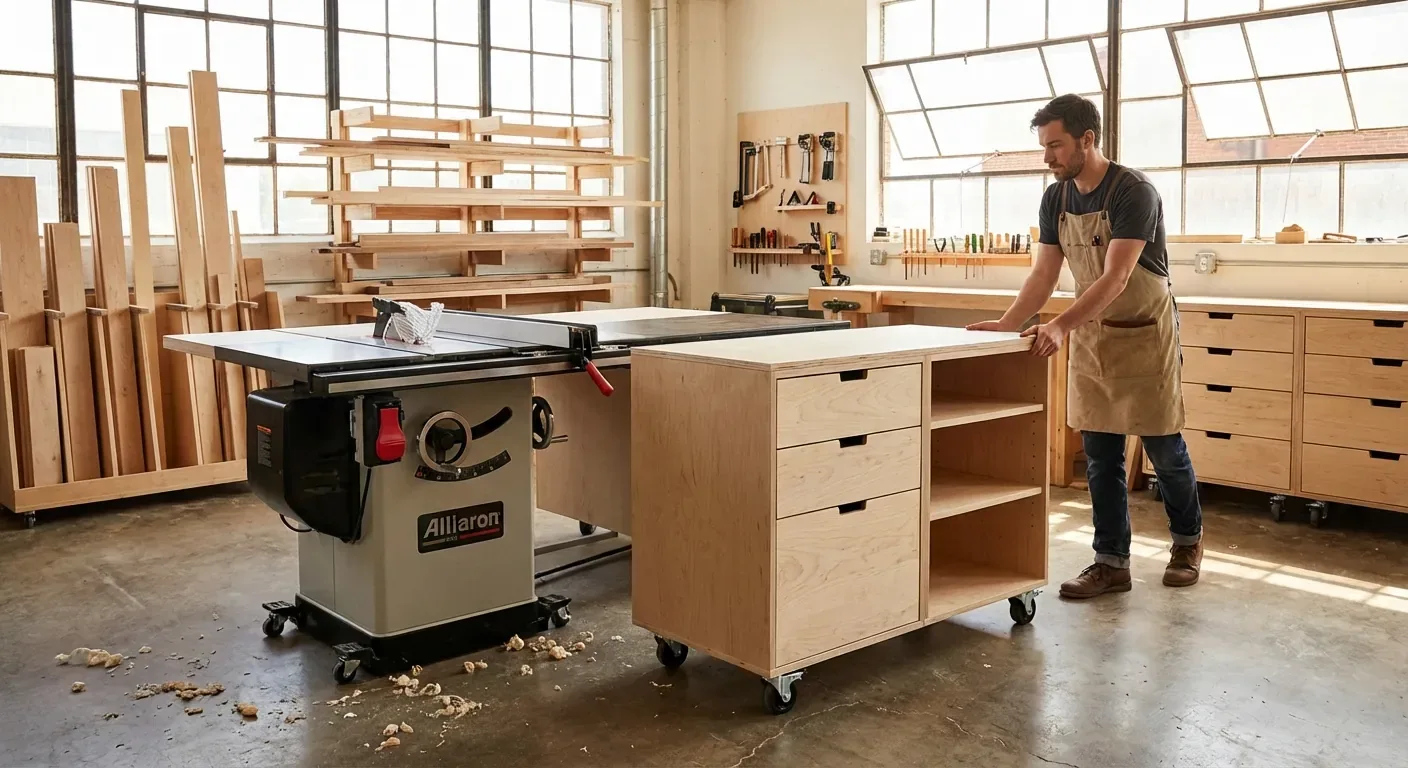
While the base plans provide a rock-solid foundation, the real magic happens in the customization. One of the best upgrades you can make is adding a "sacrificial" top to your cabinets. By attaching a layer of 1/2" MDF or hardboard to the top of the plywood carcase, you create a replaceable work surface. When it inevitably gets covered in glue drips or saw scars, you can simply swap it out for a few dollars, keeping your cabinets looking brand new for years. This also allows you to bolt specific tools, like a bench vise or a miter saw, directly to the top of individual modules.
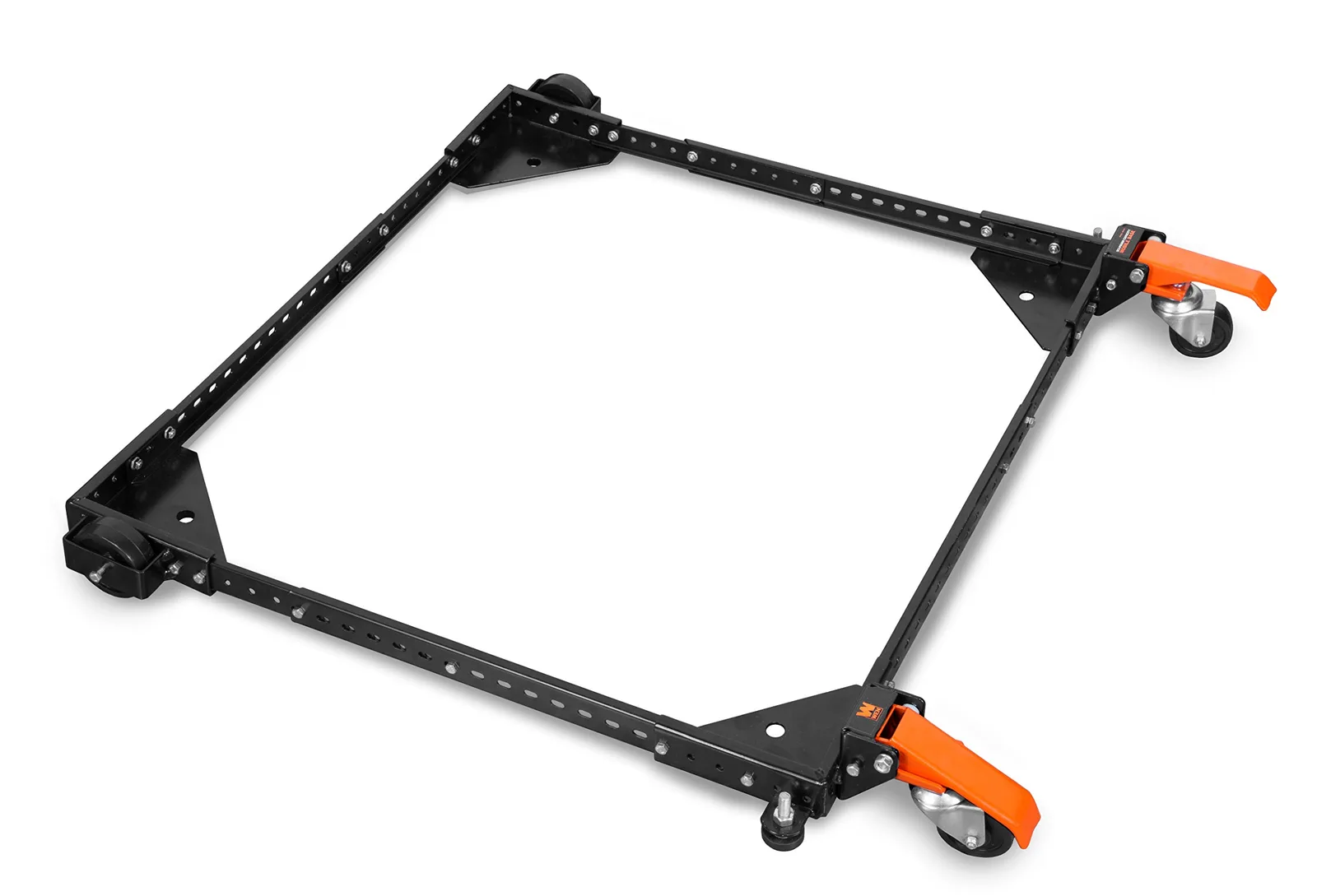
Another pro tip is to invest in high-quality mobility. Standard casters often develop "flat spots" if left in one place too long under heavy loads. I highly recommend using total-lock casters, which lock both the wheel rotation and the swivel mechanism. This ensures that when you are hand-planing a board on top of your cabinet, the unit doesn't shift or wobble. Additionally, consider adding a power strip to the side of one of your modules. This turns a simple storage cabinet into a mobile power station, allowing you to bring your tools and your electricity exactly where the work is happening.
Essential Hardware for Your Build
To get the most out of your modular cabinets, the hardware you choose makes all the difference. For the drawers, I always recommend full-extension ball-bearing slides. There is nothing more frustrating than a drawer that only opens two-thirds of the way, leaving your tools buried in the dark back corner. Full-extension slides allow you to see every single item in the drawer at a glance. For the mobility aspect, look for casters with polyurethane wheels; they are non-marring and roll smoothly over sawdust and small wood chips without getting stuck.
I highly recommend the Accuride 3832E Series Full Extension Drawer Slides for this modular cabinet build. These slides are the industry standard for a reason; they offer a 100-lb load rating which is essential when you are filling drawers with heavy metal hand planes or power tool batteries. The "stay-closed" feature is particularly important for mobile cabinets, as it prevents the drawers from sliding open while you are moving the unit across the shop floor.
These are best for any woodworker who wants a "build it once" solution. While cheaper friction slides exist, they often bind or sag over time. The standout feature here is the lever disconnect, which makes it incredibly easy to remove the drawers for cleaning or organization. One minor drawback is that they require precise 1/2" clearance on each side of the drawer box, so you must be accurate with your measurements during the build. Compared to budget alternatives, the smoothness of the ball-bearing action is immediately noticeable and adds a professional feel to your shop furniture.
Frequently Asked Questions
What is the best type of plywood to use for these cabinets? For a balance of cost and durability, I recommend using Baltic Birch plywood or a high-quality "Shop Grade" maple plywood. Baltic Birch is superior because it has more layers (plies) than standard construction-grade plywood, which makes it incredibly stable and less prone to warping. It also has very few internal voids, meaning your screws and pocket-hole joinery will have a much stronger "bite" into the wood.
If you are on a tighter budget, you can use ACX sanded pine plywood from a big-box store. While it won't be as pretty and may have some voids, it is structurally sufficient for workshop furniture. Avoid using MDF (Medium Density Fiberboard) for the main carcase, as it is very heavy and doesn't hold screws well over time, especially in a mobile unit that will be moved frequently.
Do I really need to use casters on every cabinet? While you don't have to make every unit mobile, I strongly recommend it for at least 75% of your shop furniture. The ability to rearrange your shop in minutes is a game-changer, especially when you are working with long boards that require extra infeed or outfeed support. Mobility allows your shop to be "liquid," adapting to the specific needs of the project you are currently working on.
If you prefer a more permanent feel, you can build the cabinets with a recessed toe-kick and use heavy-duty leveling feet. This gives you the stability of a stationary bench but allows you to compensate for uneven garage floors. However, most woodworkers find that once they experience the convenience of mobile modules, they never want to go back to fixed cabinetry.
Can these plans be adapted for different heights? Absolutely. The plans are designed with a standard height of 34-1/2" (including 4" casters), which matches the height of most table saws. This allows the cabinets to act as outfeed support. However, if you are particularly tall or short, you can easily adjust the height of the side panels in the cut list to suit your ergonomic needs.
When adjusting the height, just be sure to account for the height of your chosen casters. If you want the cabinets to fit under an existing workbench, measure that clearance first and subtract the caster height and the thickness of the top to find your side panel dimension. This flexibility is the core benefit of a DIY modular system over pre-made metal tool chests.
What tools are required to complete this build? You don't need a massive shop to build these cabinets. The primary tools required are a circular saw (with a straight-edge guide) or a table saw for breaking down the plywood sheets. For joinery, a pocket-hole jig is the fastest and most accessible method, though you could also use a router to cut dadoes if you prefer traditional joinery.
In addition to saws and a drill, you will need a set of clamps to hold the pieces square during assembly and a basic sander to smooth out the edges. Because the plans are so detailed, you can even have your local lumberyard do the major "breakdown" cuts for you, allowing you to transport the materials in a standard car and finish the fine cutting at home with basic hand-held power tools.
Explore the recommendations.
Check Amazon for current product details, available options, and pricing.
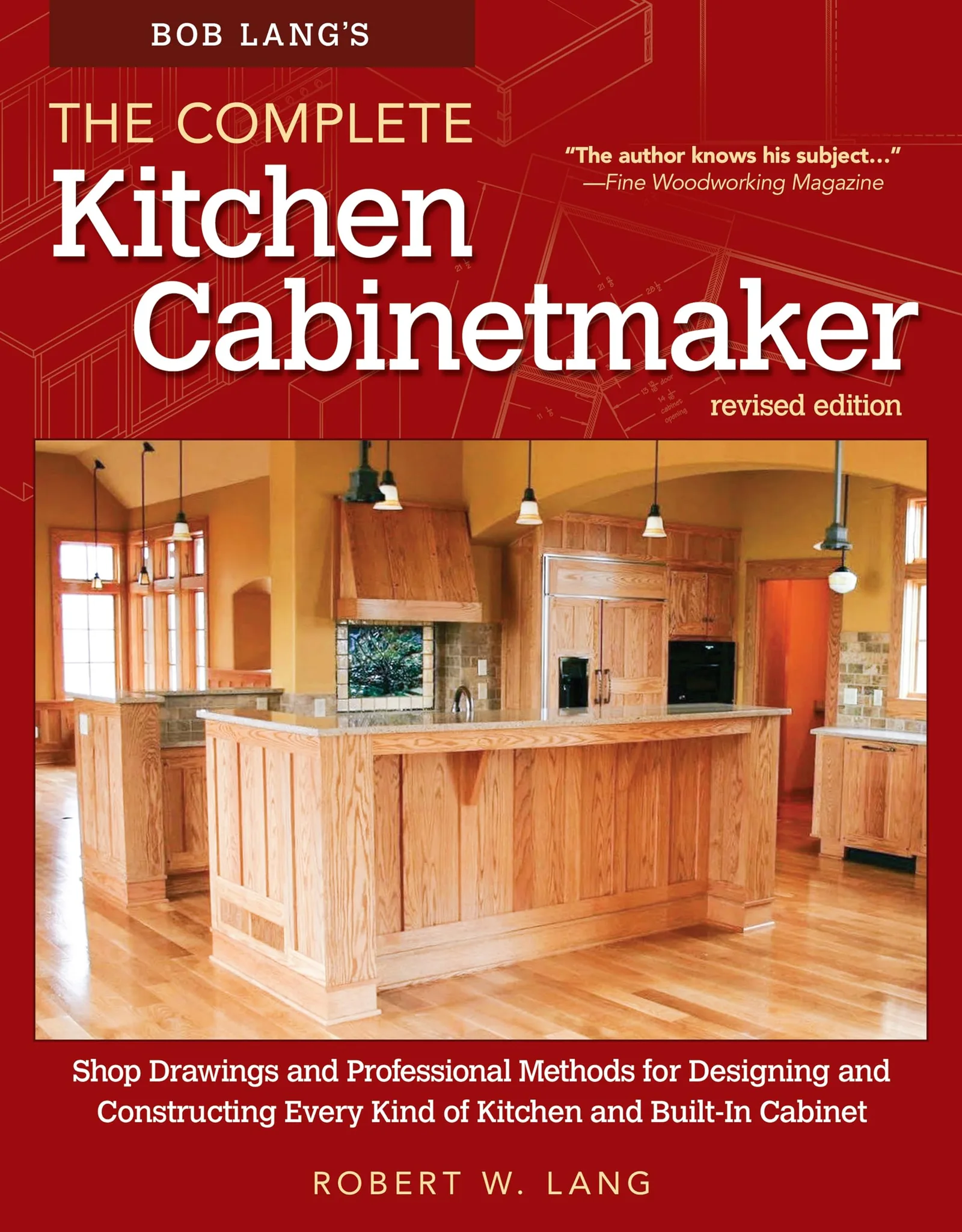
Bob Lang's The Complete Kitchen Cabinetmaker, Revised Edition: Shop Drawings and Professional Methods for Designing and Constructing Every Kind of Kitchen and Built-In Cabinet (Fox Chapel Publishing)
Product details
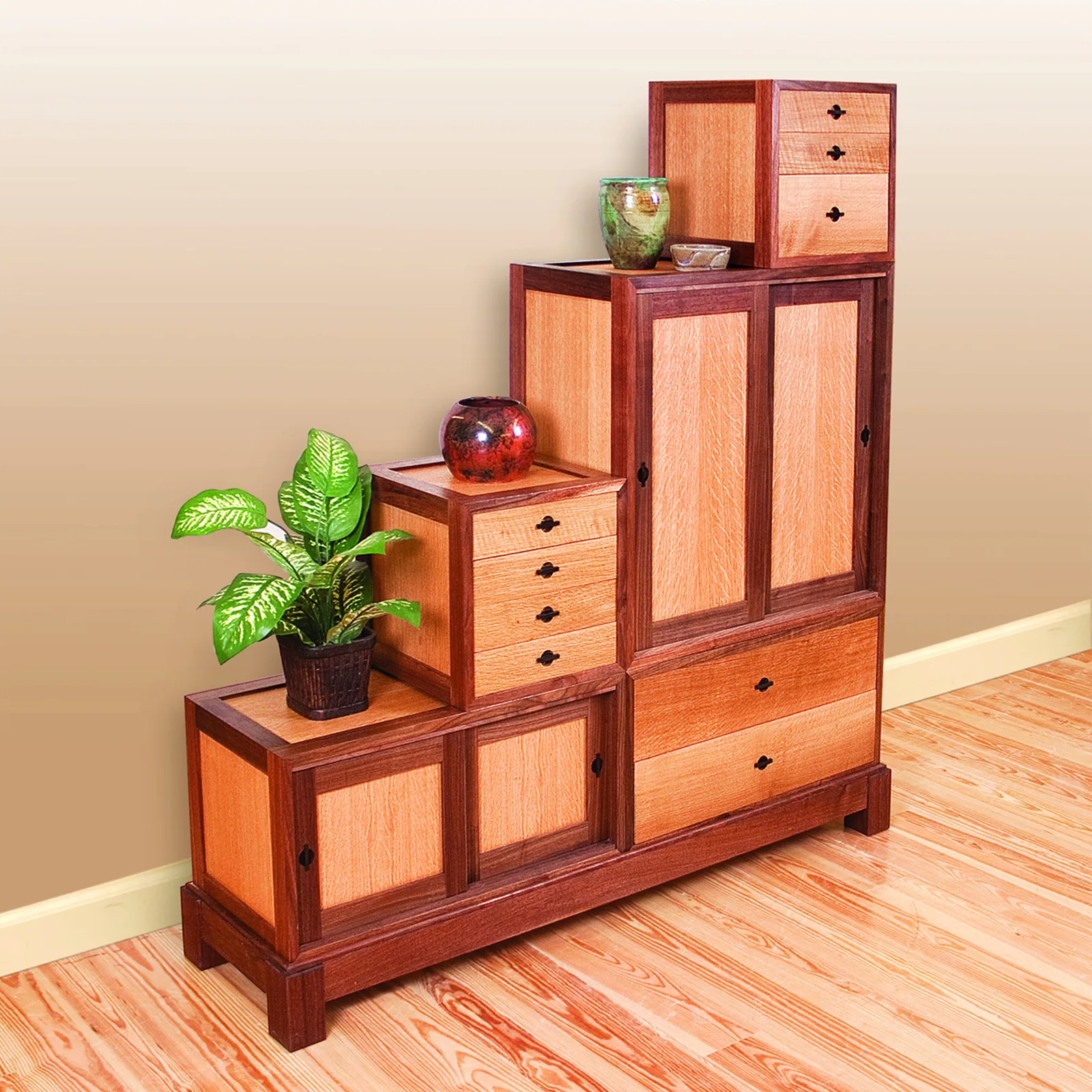
Woodcraft Project Paper Plan To Build Tanzu Storage Chest - Material Not Included
Product details
MATERIALS NOT INCLUDED, PAPER PLAN ONLY Build it yourself! Stack of modular cabinets (or boxes) filled with drawers and sliding doors Commonly found in peasant and artisan homes of 18th and 19th century Japan - This modern version serves as a woodworker's take on the Japanese tansu called Kaidan-dansu Woodcraft is proud to be America’s leading supplier of high-quality woodworking hand tools, power tools, domestic and exotic wood, shop supplies, project plans and kits, plus so much more! Offering first-rate products for all your woodworking needs and designed to help you make wood work. Our family of brands include WoodRiver high-quality tools and supplies, Highpoint professional-grade fasteners and hardware, precision-engineered Pinnacle tools and Woodcraft Magazine.
- MATERIALS NOT INCLUDED, PAPER PLAN ONLY
- Build it yourself!
- Stack of modular cabinets (or boxes) filled with drawers and sliding doors
- Commonly found in peasant and artisan homes of 18th and 19th century Japan - This modern version serves as a woodworker's take on the Japanese tansu called Kaidan-dansu
- Woodcraft is proud to be America’s leading supplier of high-quality woodworking hand tools, power tools, domestic and exotic wood, shop supplies, project plans and kits, plus so much more! Offering first-rate products for all your woodworking needs and designed to help you make wood work. Our family of brands include WoodRiver high-quality tools and supplies, Highpoint professional-grade fasteners and hardware, precision-engineered Pinnacle tools and Woodcraft Magazine.