Safety Tips for Workshop Dust Management
Reduce wood-dust exposure with source capture, air filtration, safe cleanup, respiratory protection, and practical maintenance habits.
Sawdust is often seen as a badge of honor in a busy woodshop—a sign of productivity and hard work. However, that fine coating of "workshop glitter" on your tools and rafters is more than just a cleaning chore; it represents a significant health and safety risk. Fine particulate matter, especially the invisible dust created by sanding and sawing, can hang in the air for hours, deep-seated in your lungs long after you’ve turned off the lights for the day. Managing this risk is an essential part of workshop organization and longevity as a maker.
In this guide, we will dive deep into the most effective workshop safety tips for dust management. You will learn about the "three-tiered approach" to air quality, the difference between source collection and ambient filtration, and how to select the right personal protective equipment. Whether you are a weekend hobbyist in a garage or a professional with a dedicated studio, these strategies will help you breathe easier and keep your workspace pristine.
Table of Contents
- The Hidden Dangers of Wood Dust
- Tier 1: Source Collection Strategies
- Tier 2: Ambient Air Filtration Systems
- Tier 3: Personal Protective Equipment (PPE)
- Workshop Organization for Dust Control
- Maintenance and Pro Tips
- Frequently Asked Questions
The Hidden Dangers of Wood Dust
When we think of workshop safety, we often think of blade guards and push sticks. While those are vital, respiratory health is a long-term safety concern that many woodworkers overlook until symptoms appear. Wood dust is classified as a Group 1 carcinogen by the IARC. Beyond the long-term risks, fine dust particles (specifically those 2.5 microns and smaller) can cause immediate irritation, allergic reactions, and chronic respiratory issues like occupational asthma. Certain woods, such as walnut, cedar, and many exotic species, contain oils and compounds that are particularly toxic when inhaled or even when they come into contact with skin.
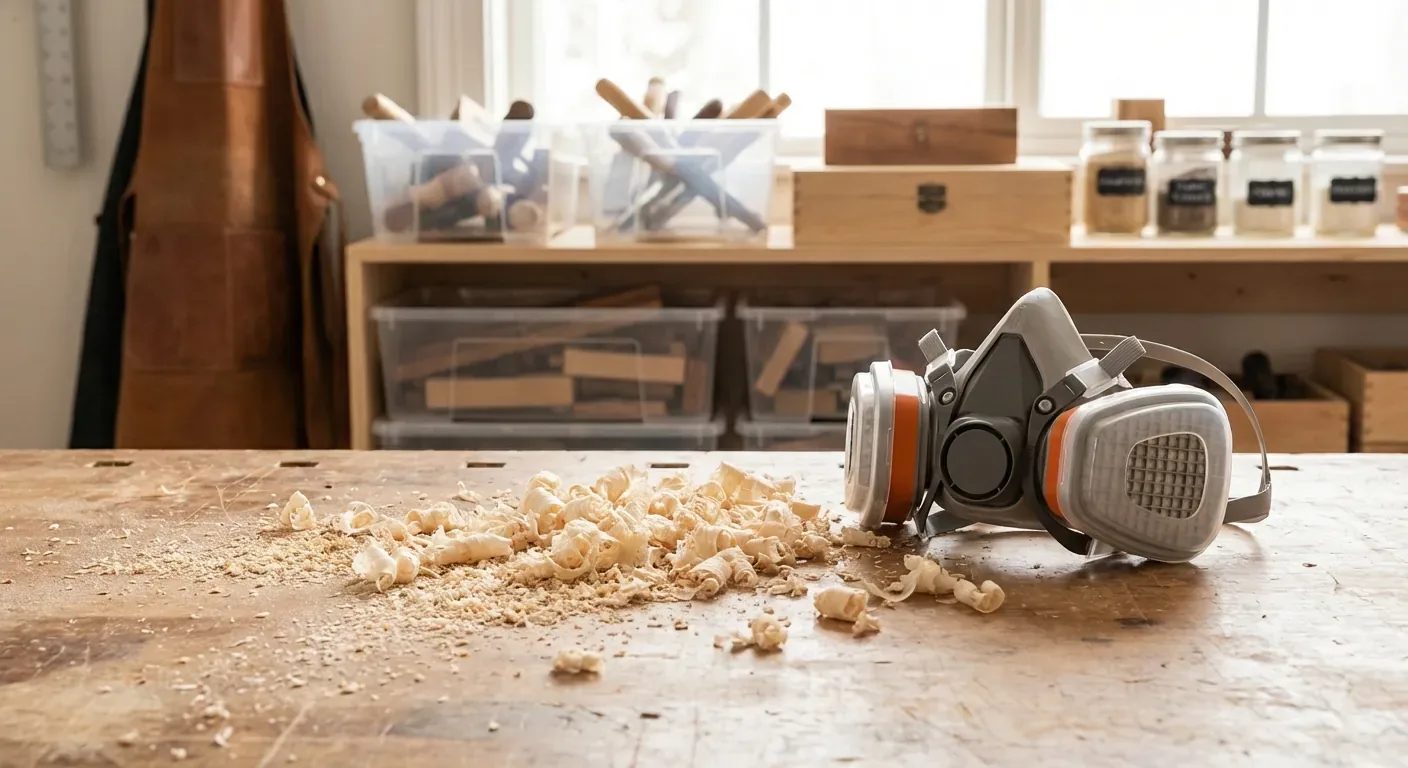
Furthermore, dust management is a matter of fire safety. A thick layer of fine dust on horizontal surfaces, light fixtures, and electrical outlets acts as a tinderbox. In extreme cases, a high concentration of suspended dust in a confined space can lead to a dust explosion if a spark occurs. While this is rare in home shops, the fire hazard of "dust bunnies" near high-heat tools or faulty wiring is very real. Keeping your shop clean isn't just about aesthetics; it's about reducing the fuel load in your workspace and ensuring that your equipment doesn't overheat due to clogged vents.
Finally, managing dust protects your investment in your tools and your finishes. Fine dust is abrasive; when it gets into the bearings of your table saw or the motor of your drill press, it causes premature wear and tear. If you are a woodworker who enjoys finishing projects with oil, lacquer, or polyurethane, you know that airborne dust is the enemy of a smooth surface. By implementing a rigorous dust management plan, you ensure that your machinery lasts longer and your final projects look professional and blemish-free.
Tier 1: Source Collection Strategies
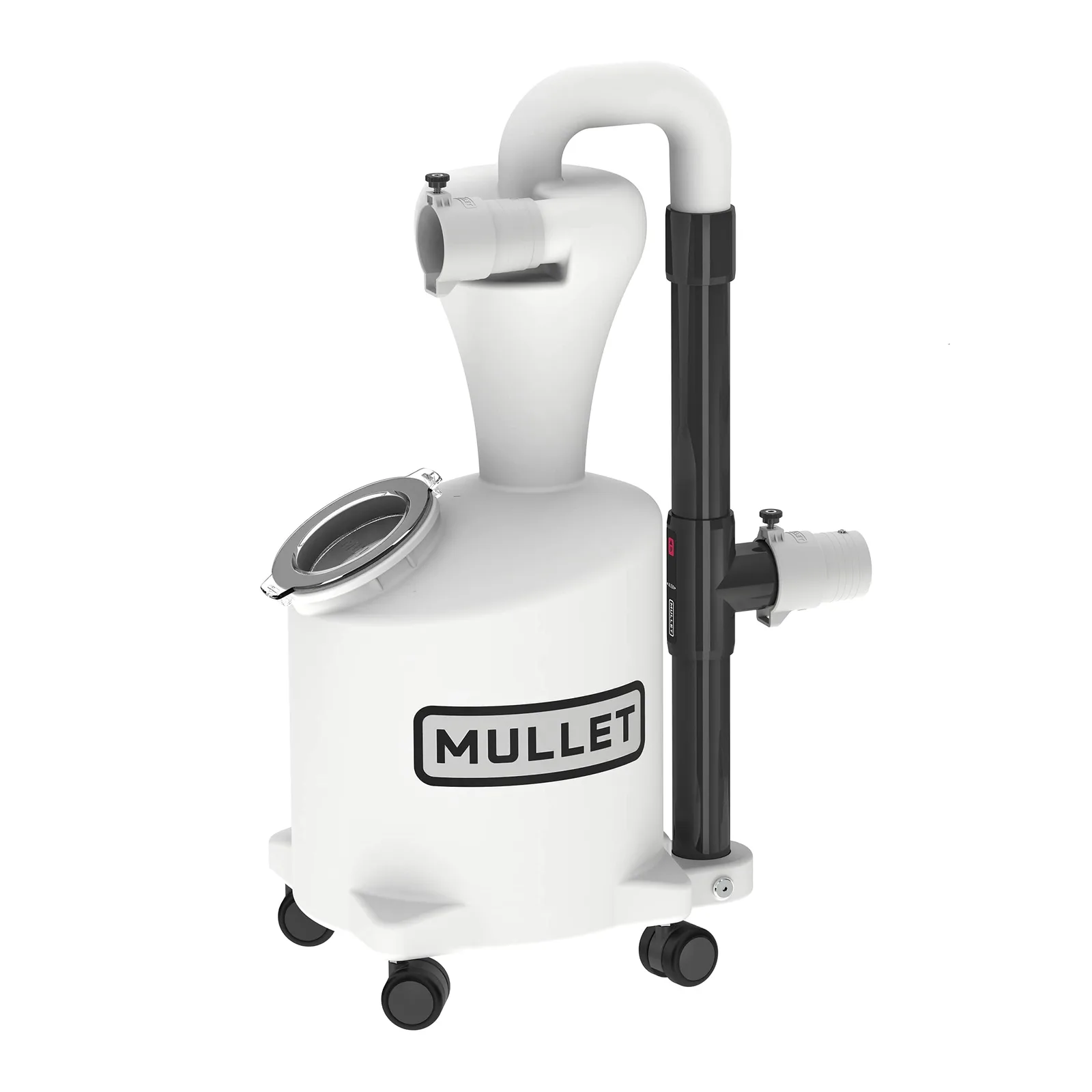
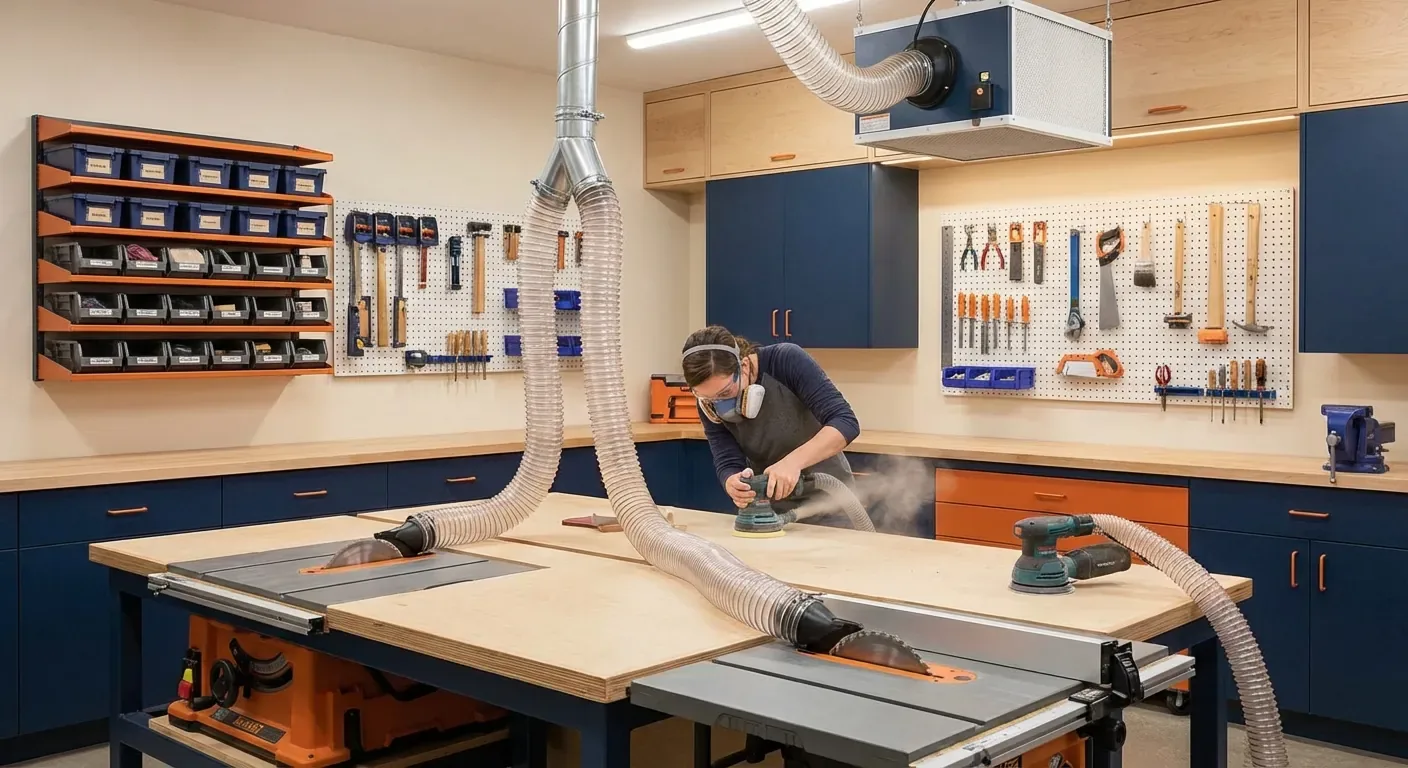
The most effective way to manage dust is to catch it at the source before it ever enters the air you breathe. This is known as source collection. For most hobbyist shops, this involves a two-pronged approach: using a high-quality shop vacuum for small power tools and a dedicated dust collector for larger machinery like planers and table saws. The goal is to create a "closed loop" where the waste material travels directly from the blade or sandpaper into a sealed container.
Vacuum-Based Collection for Handheld Tools
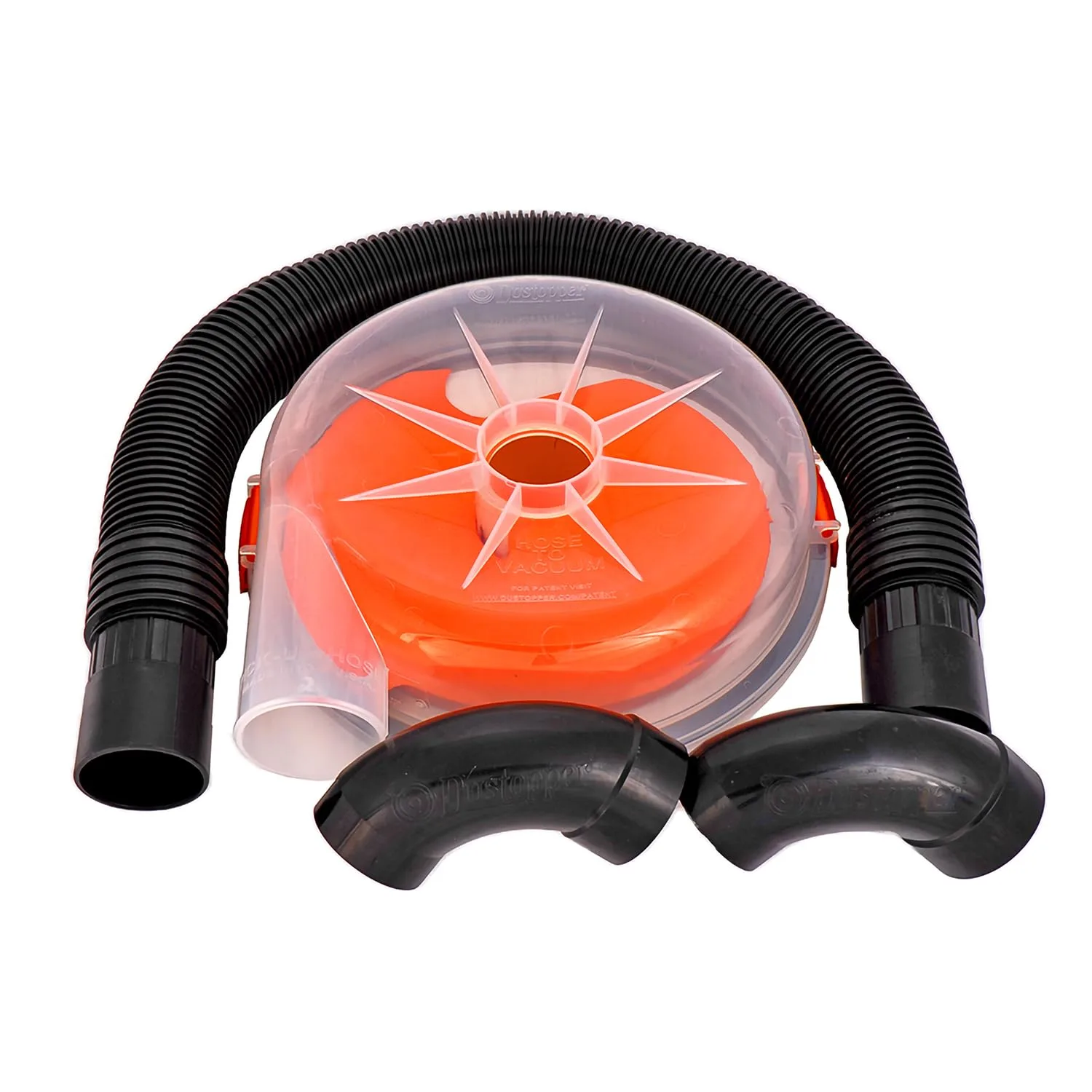
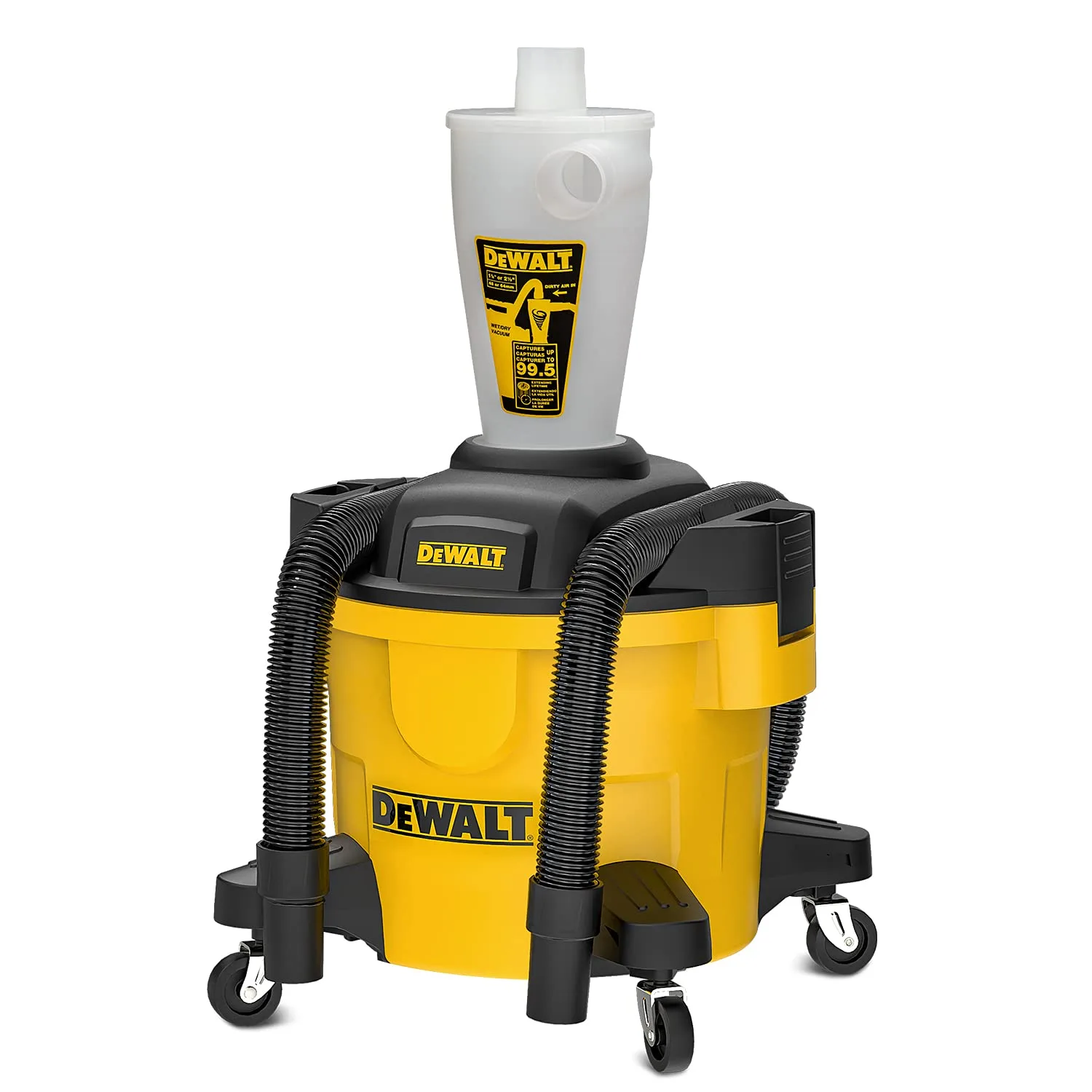
Handheld power tools, such as random orbital sanders and routers, produce some of the finest and most dangerous dust in the shop. A standard shop vacuum is often the first line of defense here, but not all vacuums are created equal. To be truly effective for workshop safety, your vacuum should be equipped with a HEPA filter capable of capturing particles down to 0.3 microns. Without a high-quality filter, a vacuum might simply suck up the large chips and "spray" the dangerous fine dust back out through the exhaust, making the air quality worse than if you hadn't used a vacuum at all.
I highly recommend the WEN 3410 3-Speed Remote-Controlled Air Filtration System for any shop owner looking to bridge the gap between source collection and clean air. This unit is best for small to medium-sized garage shops (up to 400 square feet) where dust tends to linger. The standout feature is the 5-micron outer filter and 1-micron inner filter, which ensures that even the particles you can't see are scrubbed from the air.
While it doesn't replace a vacuum at the tool, it works alongside your tools to cycle the air in a standard shop several times an hour. One drawback is that it can be a bit noisy on the highest setting, but the remote control and timer functions allow you to leave it running for 1-2 hours after you leave the shop, ensuring the air is clean when you return. Compared to expensive industrial units, this provides the best "bang for your buck" for the average woodworker.
Large Scale Dust Collection
For larger stationary tools, a shop vacuum lacks the "CFM" (Cubic Feet per Minute) necessary to move the massive volume of air and chips produced. This is where a dedicated dust collector comes in. These machines use large-diameter hoses (typically 4 inches) to move air at lower pressure but higher volume. A critical tip for workshop safety is to keep your hose runs as short and straight as possible. Every bend in a flex-hose creates friction and reduces the suction power at the tool, allowing fine dust to escape into the room.
Tier 2: Ambient Air Filtration Systems
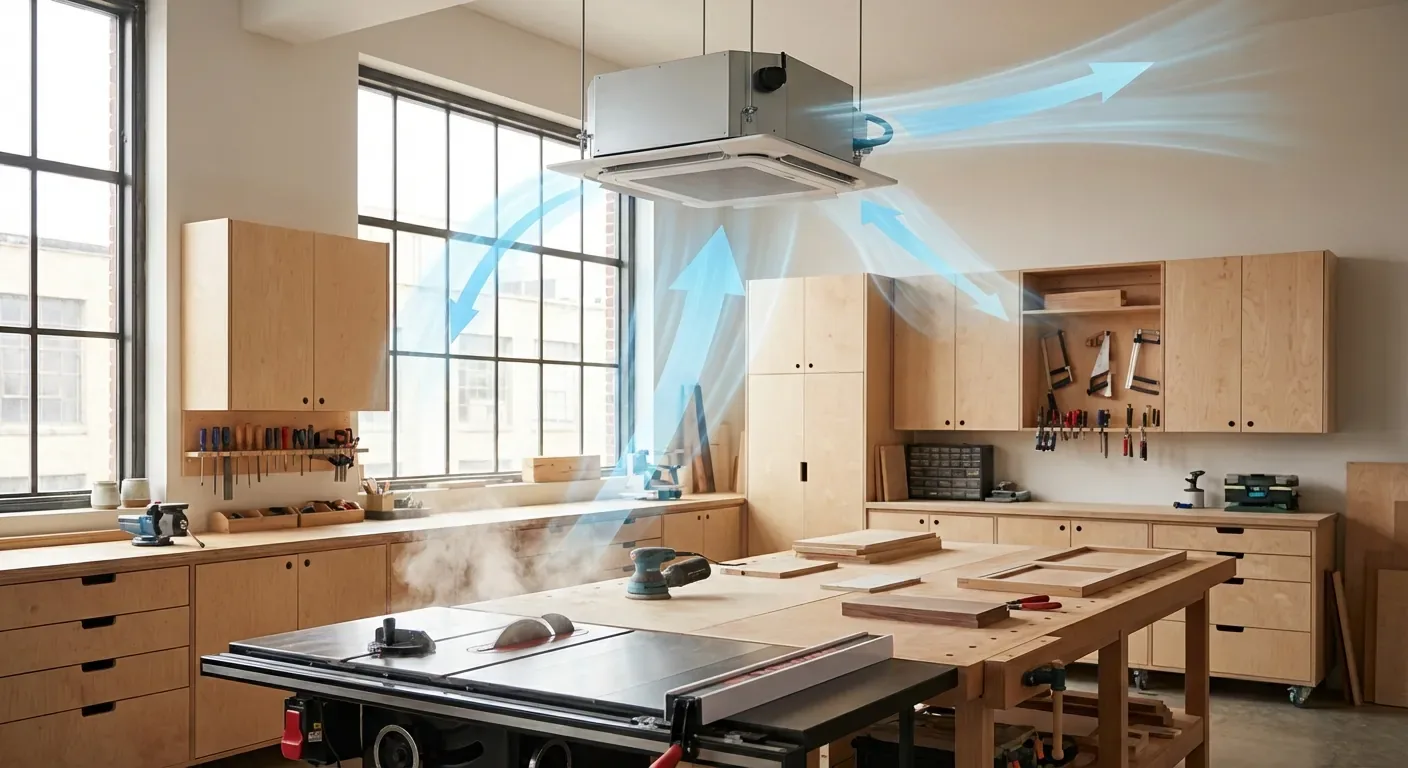
Even with the best source collection, some dust will inevitably escape. This is where Tier 2—ambient air filtration—comes into play. These units are typically box-shaped fans mounted to the ceiling that draw air through a series of filters. They are designed to "scrub" the air in the entire room. For maximum efficiency, you should position your air filtration unit so that it aids the natural circular airflow of the room, typically near the center or along a long wall, away from corners where air can become stagnant.
Understanding Micron Ratings
When selecting an air filtration system, the micron rating is the most important spec to watch. A "micron" is a unit of measurement equal to one-millionth of a meter. Human hair is about 70 microns thick, while the dust that causes the most respiratory damage is 2.5 microns or smaller. An effective shop system should have a secondary inner filter rated for at least 1 micron. If your system only filters down to 5 or 10 microns, it is only catching the "nuisance" dust and leaving the most hazardous particles in the air.
Proper Placement for Maximum Safety
Placement is key to ensuring your air filter is doing its job. You want to create a "race track" of air moving around your shop. Avoid placing the unit directly above a dust-producing machine, as the intake can actually pull the dust up past your face before it enters the machine. Instead, place it where it can pull air from the general workspace and exhaust it toward the other side of the room. This constant circulation ensures that "dead spots" of stagnant, dusty air don't form in the corners of your workshop.
Tier 3: Personal Protective Equipment (PPE)
The final line of defense is PPE. No matter how good your dust collector or air filter is, when you are performing high-dust tasks like sanding or power carving, you are in the "immediate danger zone." PPE ensures that the air you inhale is filtered immediately before it enters your body. This is the most critical of all workshop safety tips because it is the only method that provides 100% certainty of what you are breathing.
Choosing the Right Respirator
Forget the cheap, single-strap paper masks found at hardware stores. These rarely provide a proper seal around the nose and mouth, meaning dusty air just leaks in through the gaps. For real woodworking safety, you need a dual-strap N95 mask at a minimum, or ideally, a reusable half-mask respirator with replaceable P100 filters. P100 filters are rated to catch 99.9% of particles, including oil-based aerosols, making them the gold standard for shop safety.
The 3M Rugged Comfort Quick Latch Half Facepiece Respirator is my top recommendation for woodworkers who spend long hours in the shop. It is best for those who wear glasses or safety goggles, as the exhaust valve points downward to prevent fogging. The standout feature is the "Quick Latch" system, which allows you to drop the mask down your chest for a quick break or to talk to someone without removing your head straps or safety glasses.
The silicone face seal is incredibly comfortable and doesn't dig into your skin like cheaper rubber models. The only drawback is that it can feel a bit heavy after four or five hours of continuous use. Compared to disposable masks, this respirator is more cost-effective over time and provides a significantly better seal, which is the most important factor in respiratory protection.
Eye and Ear Protection Integration
Dust isn't just a respiratory hazard; it's an irritant for the eyes. Fine dust can cause corneal abrasions or lead to chronic dry eye. When managing dust, ensure your eye protection has a foam gasket or fits closely to your face to prevent floating particles from getting behind the lenses. Furthermore, many woodworkers forget that dust collection systems themselves are loud. Always wear hearing protection when running your shop vac or dust collector, as the high-pitched whine of these machines can contribute to long-term hearing loss.
Workshop Organization for Dust Control
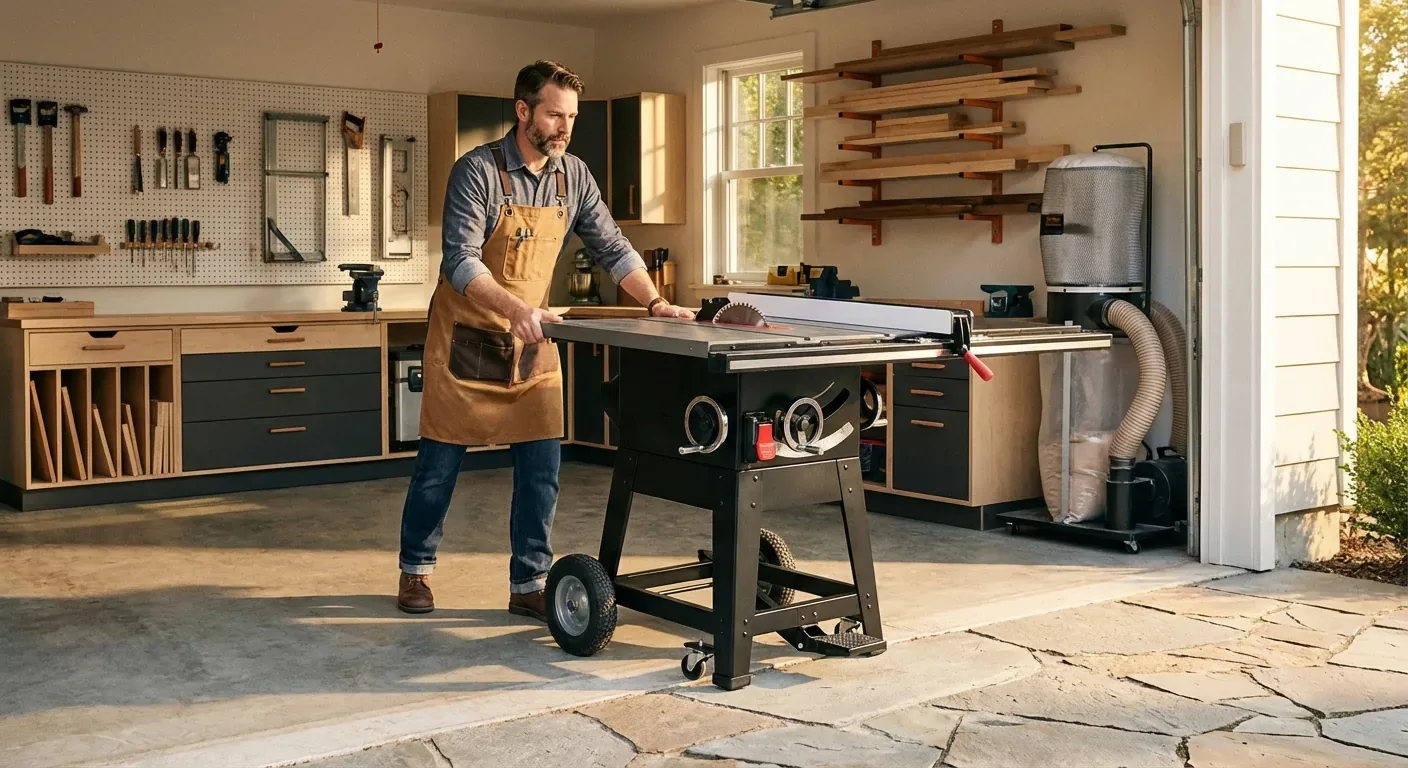
A well-organized shop is a cleaner shop. Dust management should be baked into your workshop layout. For example, grouping your "dirty" tools (like the miter saw and sander) in one area makes it easier to run dedicated ducting or place a localized air scrubber. Using mobile bases for your tools also allows you to pull them into the center of the room for better airflow or take them outside for particularly messy tasks like routing or heavy sanding.
Another organizational tip is to minimize horizontal surfaces where dust can collect. Open shelving is a magnet for sawdust; consider using cabinets with doors or covering your storage bins with lids. This doesn't just keep your shop looking better—it prevents "re-entrainment," which is when dust that has settled on a shelf gets kicked back into the air by a draft or a leaf blower. If you can't cover everything, a regular "top-down" cleaning schedule is essential.
Finally, consider the flooring. While many woodworkers love the look of wood floors, smooth concrete is much easier to keep clean. Avoid using rugs or carpets in a woodworking environment, as they trap fine dust that is nearly impossible to remove with a vacuum. A smooth, sealed surface allows you to use a sweeping compound or a high-efficiency vacuum to clear the floor without kicking dust back into your breathing zone.
Maintenance and Pro Tips
Regular maintenance of your dust management system is just as important as the initial setup. A common mistake is waiting until a dust collector bag is bulging before emptying it. As the bag fills, the surface area for air to escape decreases, which puts back-pressure on the motor and significantly reduces suction at the tool. Empty your bags or canisters when they are about half to two-thirds full to maintain peak performance.
The "Blower" Mistake
One of the biggest mistakes woodworkers make is using compressed air or a leaf blower to "clean" their shop. This is a major safety hazard. All this does is take settled dust and launch it back into the air, where it will stay suspended for hours. Instead, always use a vacuum with a brush attachment for cleaning surfaces. If you must use air to clean out a tight spot in a machine, ensure you are wearing your respirator and have your air filtration unit running on high.
Check Your Seals
Over time, the gaskets and hose connections in your dust system will leak. A small leak might not seem like much, but it creates turbulence that drops the efficiency of the entire system. Once a month, do a "leak check" by running your hand along the joints while the vacuum is on. Use high-quality foil tape or hose clamps to seal any gaps. Keeping the system airtight ensures that every bit of suction is being used to protect your lungs.
Frequently Asked Questions
How often should I change my workshop air filters? The frequency depends on how often you use your shop, but a good rule of thumb is to check the outer pre-filter once a month. If it looks grey or caked with dust, it’s time to clean or replace it. Most outer filters can be blown out with compressed air (outdoors!) or vacuumed. The inner 1-micron filter usually lasts 6–12 months. If you notice a decrease in airflow or the unit sounds strained, that is a clear sign the filters are loaded and need immediate attention.
Is a shop vac enough for a table saw? Generally, no. A table saw produces a high volume of large chips and a significant amount of fine dust from the bottom of the cabinet. A shop vac has high suction (static pressure) but low air volume (CFM). While it might catch some dust, it won't move enough air to clear the cabinet effectively. For a table saw, a dedicated 1-HP or larger dust collector with a 4-inch hose is the standard recommendation for safety and cleanliness.
Can I use a regular house air purifier in my woodshop? While it's better than nothing, home air purifiers are not designed for the high volume of heavy dust found in a woodshop. The filters will clog almost instantly, and the motors aren't built to handle the resistance of wood particulates. Workshop-specific units use "bag" or "pocket" filters that have much more surface area, allowing them to handle the heavy load of a woodworking environment without burning out.
What is the best way to clean up fine dust on the floor? The best way is to use a vacuum with a HEPA filter and a wide floor nozzle. If you must sweep, use a sweeping compound (a waxy, sawdust-like material) that you sprinkle on the floor first. This compound binds to the fine dust and prevents it from becoming airborne while you use a broom. However, a vacuum is always the safer choice for maintaining respiratory health.
Do I really need a respirator if I have a dust collector? Yes, absolutely. Even the best dust collectors miss about 10-15% of the finest dust, especially during tasks like sanding or using a router. Think of the dust collector as the system that keeps the shop clean, and the respirator as the system that keeps you safe. Using them in tandem is the only way to ensure you are fully protected from the long-term effects of wood dust inhalation.
Explore the recommendations.
Check Amazon for current product details, available options, and pricing.

100 Tips to Workshop Safety
Product details

How to Use Power Tools: A DIY Guide to Selecting, Operating, and Maintaining Workshop Tools Safety, Beginner's Workshop Manual (Master Your Workshop)
Product details