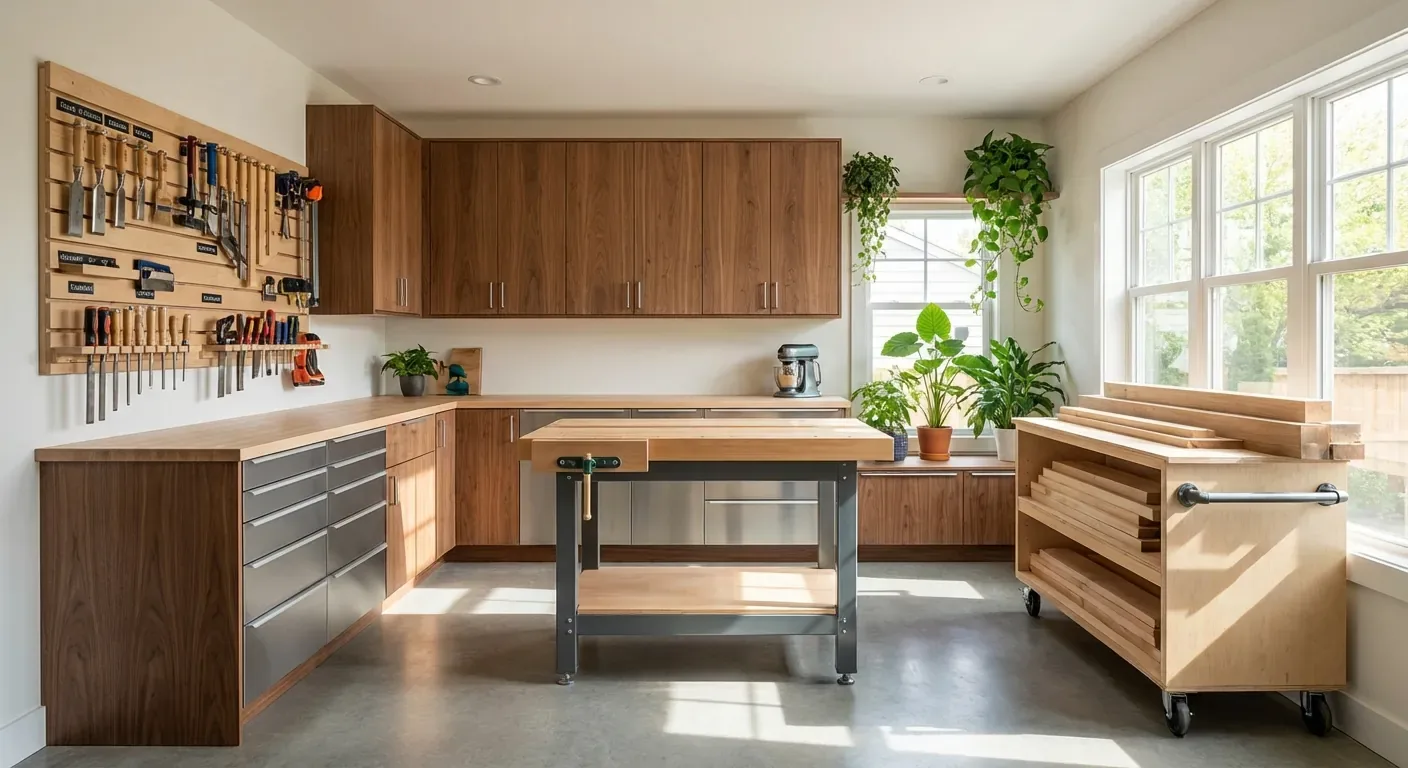
The 30-Day Workshop Cleanup Challenge
Reset a cluttered workshop in 30 manageable sessions covering tools, hardware, lumber, surfaces, safety, storage, and maintenance routines.
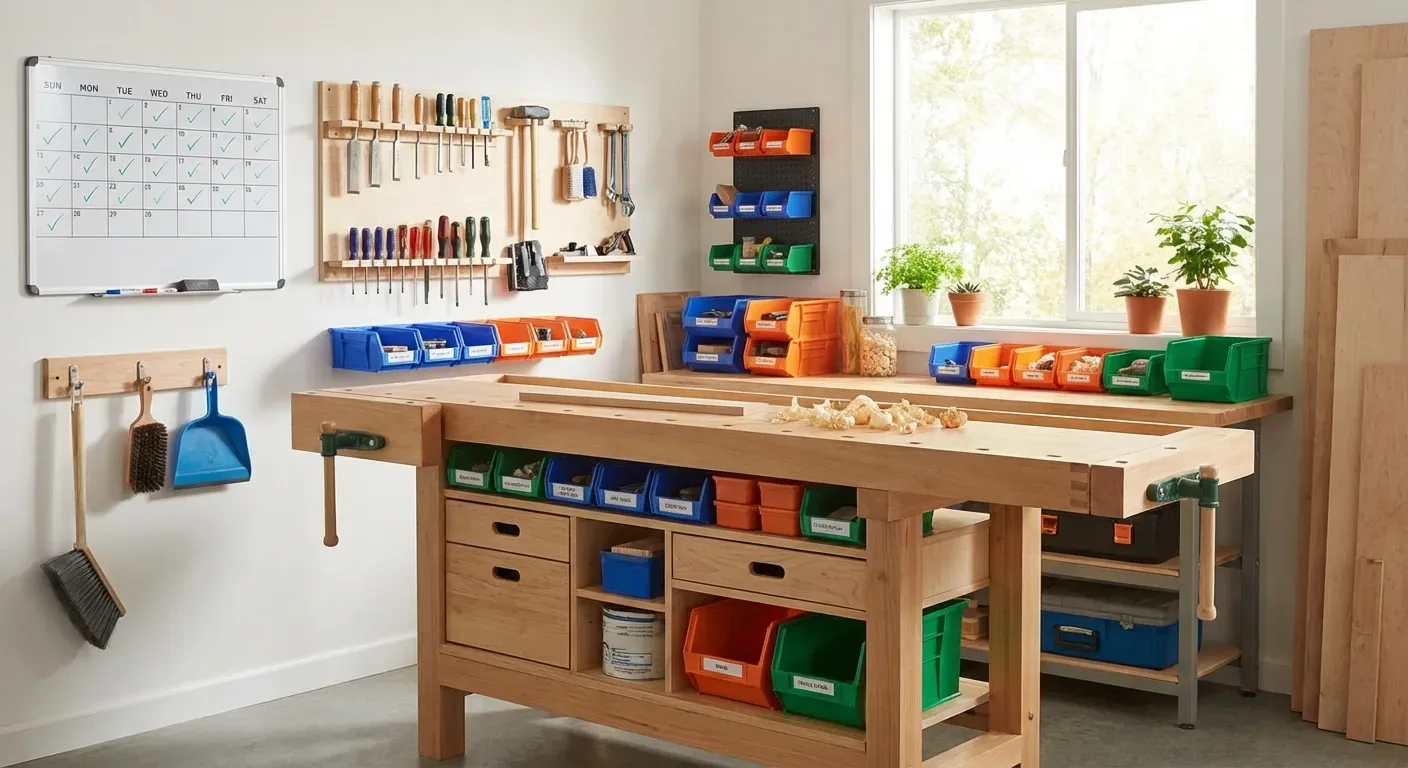
Table of Contents
- The Hidden Cost of a Cluttered Workshop
- Why Traditional Cleaning Fails Woodworkers
- Inside the 30-Day Workshop Cleanup Challenge
- A Proven System for Shop Transformation
- Claim Your Free 30-Day Cleanup Checklist
- Essential Tools for a Successful Cleanup
- Frequently Asked Questions
The Hidden Cost of a Cluttered Workshop
Walking into a workshop buried in sawdust, offcuts, and misplaced hand tools does more than just slow down your project; it creates a mental barrier that kills creativity before you even flip a power switch. Many woodworkers don't realize that a messy shop acts as a "clutter tax" on every single hour spent at the bench. You spend fifteen minutes hunting for a specific Forstner bit, another ten clearing off a square foot of assembly space, and by the time you're ready to make a cut, your focus has evaporated. This constant friction leads to mistakes, frustration, and eventually, a reluctance to even start new projects.
Beyond the mental fatigue, a disorganized shop is a genuine safety hazard. Tripping over extension cords, slipping on "marbles" of sawdust, or reaching over a pile of scrap wood near a running table saw are recipes for disaster. When your workspace is crowded, you are forced to use awkward body positions to complete tasks, increasing the likelihood of kickback or tool slips. A clean shop isn't just about aesthetics; it’s about creating a predictable environment where the only thing you have to worry about is the grain of the wood.
Finally, there is the financial impact of disorganization. How many times have you purchased a box of 1-1/4 inch pocket hole screws because you couldn't find the three half-full boxes buried under a pile of sandpaper? Over a year, these duplicate purchases can add up to hundreds of dollars—money that could have been spent on high-quality lumber or that new router you’ve been eyeing. By reclaiming your space, you are essentially giving yourself a raise and ensuring that every tool and consumable you own is working for you, not hiding from you.
Why Traditional Cleaning Fails Woodworkers
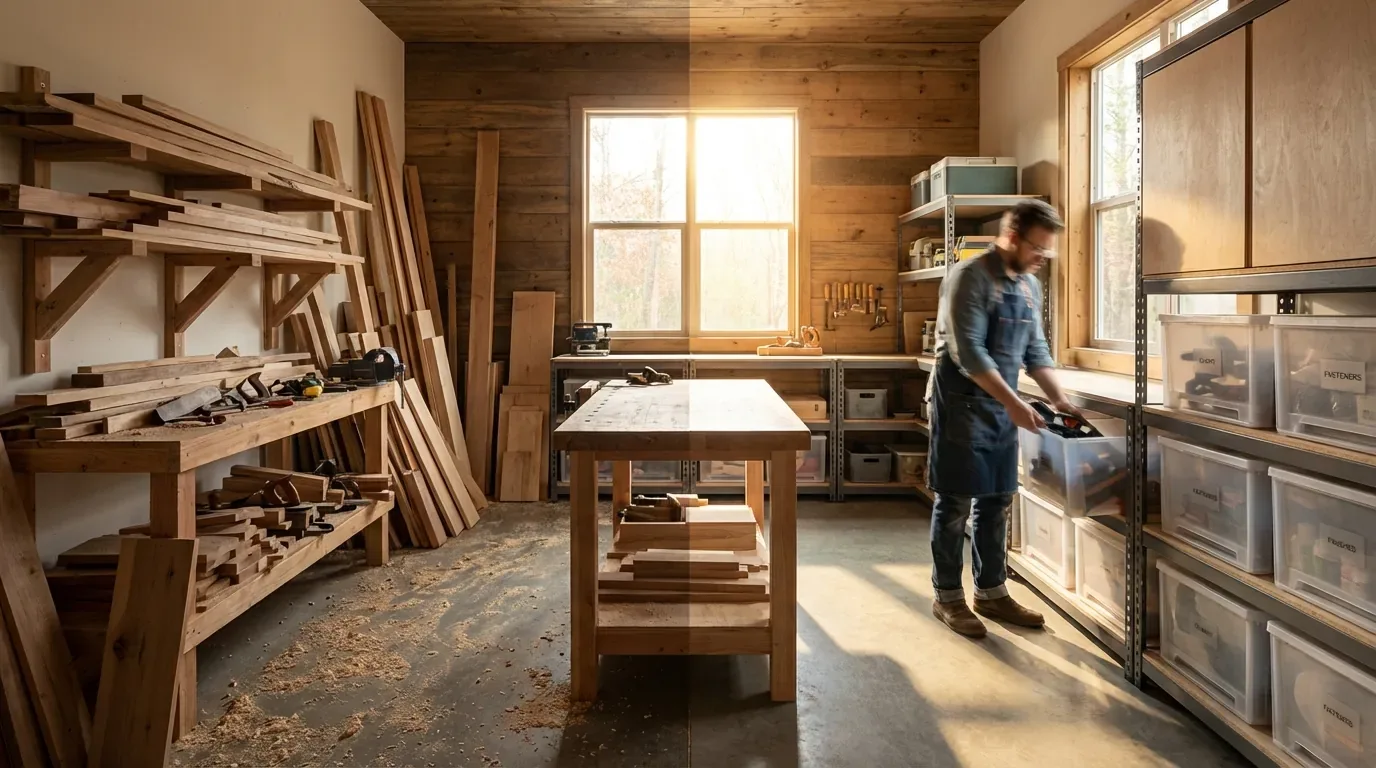
Most woodworkers approach cleaning as a "marathon" event. They wait until the shop is completely unusable, then spend an entire Saturday dragging everything into the driveway, sweeping, and shoving it all back in. The problem with this "burn and churn" method is that it focuses on tidying rather than system-building. Within two weeks, the shop usually returns to its chaotic state because the underlying issues—lack of dedicated storage, poor workflow, and "homeless" tools—were never addressed. You’ve cleaned the surfaces, but you haven't organized the soul of the shop.
Traditional cleaning also fails because it doesn't account for the unique nature of woodworking debris. Sawdust isn't just "dirt"; it's a pervasive byproduct that requires specific management systems. If you don't have a plan for dust collection and scrap management, any cleaning effort is temporary. Woodworkers need a systematic approach that integrates cleaning into the workflow, making it a sustainable habit rather than a quarterly chore. Without a structured plan, the sheer volume of "stuff" in a workshop becomes overwhelming, leading to "decision paralysis" where you spend more time looking at the mess than fixing it.
Our 30-Day Workshop Cleanup Challenge is designed to break this cycle by focusing on incremental, high-impact changes. Instead of asking you to lose a full weekend, we break the process down into manageable 15-to-20-minute daily tasks. This approach builds momentum and allows you to see immediate progress without burning out. We focus on creating "zones" and "homes" for every item, ensuring that once the shop is clean, it stays clean. It’s about moving away from the "big clean" and toward a professional-grade shop environment that supports your craft.
Inside the 30-Day Workshop Cleanup Challenge
The 30-Day Workshop Cleanup Challenge is a comprehensive roadmap designed to take you from chaos to clarity. We have divided the month into four distinct phases, each targeting a specific area of shop efficiency. During the first week, we focus on "The Purge and Sort." This is where we tackle the hardest part: deciding what actually belongs in your shop. We provide specific criteria for evaluating scrap wood piles, broken jigs, and those "I might use this someday" hardware bins that occupy valuable real estate.
In the second week, we shift our focus to "Surface Sovereignty." Your workbenches, assembly tables, and machine tops are the most valuable areas in your shop, yet they often become magnets for clutter. We teach you how to implement vertical storage solutions and "off-bench" staging areas so that your primary work surfaces remain clear for actual woodworking. By the end of this week, you’ll have the breathing room necessary to handle large sheet goods or complex glue-ups without moving a dozen coffee mugs and hand planes first.
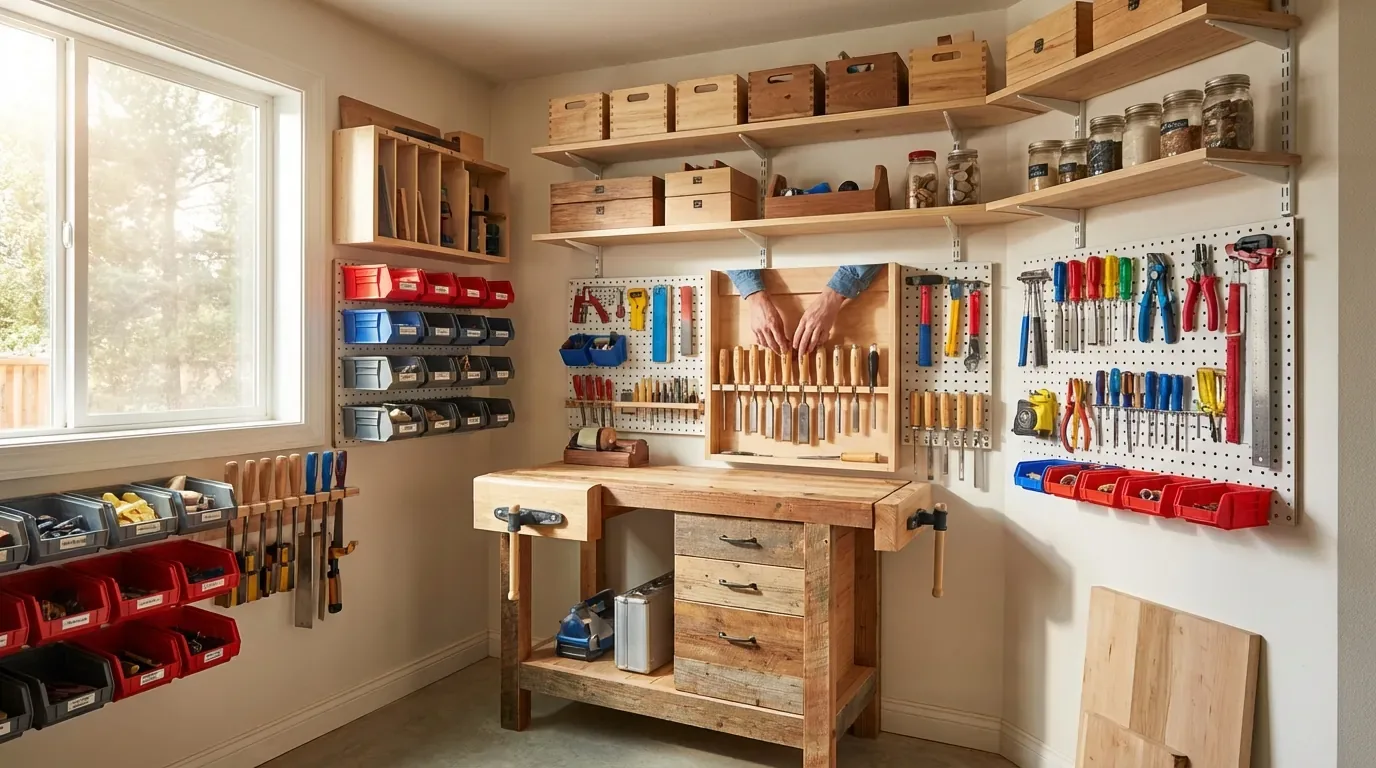
The final two weeks are dedicated to "Systematizing and Sustaining." We dive deep into tool organization using French cleats, foam inserts, and mobile bases. This phase ensures that every tool is located exactly where it is used, minimizing footsteps and maximizing efficiency. We also help you establish a "Five-Minute Reset" routine. This simple daily habit is the secret weapon of professional shops, ensuring that you start every morning with a clean slate. You aren't just cleaning your shop for a day; you are building an environment that maintains itself.
A Proven System for Shop Transformation
This challenge isn't based on abstract organizational theory; it’s built on the real-world experiences of professional cabinet makers and hobbyists who have reclaimed their space. I have spent over a decade in various shop environments, from cramped one-car garages to 5,000-square-foot commercial spaces. The one constant I’ve observed is that a woodworker's output is directly proportional to the organization of their environment. When your tools are sharp and in their place, your work reflects that precision.
We have seen hundreds of woodworkers go through this process and come out the other side with a renewed passion for their hobby. One participant, a retired engineer, noted that after completing the 30-day challenge, he was able to complete a dining table build in 30% less time simply because he wasn't constantly searching for his marking gauges and squares. Another hobbyist shared that the "Scrap Management System" we teach saved her enough floor space to finally fit a dedicated band saw into her small shop. These aren't just stories; they are the tangible results of applying a systematic approach to shop maintenance.
The beauty of the 30-Day Challenge is its adaptability. Whether you are working in a basement corner or a dedicated outbuilding, the principles remain the same. We don't advocate for expensive, "one-size-fits-all" storage cabinets. Instead, we show you how to build your own storage solutions that fit your specific tool kit and workflow. This process empowers you to become the architect of your own efficiency, creating a space that feels personal, professional, and prepared for any project you can dream up.
Claim Your Free 30-Day Cleanup Checklist
Are you ready to stop fighting your shop and start enjoying your craft again? We have condensed the entire 30-Day Workshop Cleanup Challenge into a printable, easy-to-follow PDF checklist. This resource breaks down every single daily task, provides "Pro-Tips" for difficult organizational hurdles, and includes a "Shop Layout Grid" to help you visualize your new, optimized workspace. No more guessing where to start or feeling overwhelmed by the mess—just check off one box a day and watch your shop transform.
By signing up for this challenge, you aren't just getting a PDF; you’re joining a community of like-minded makers committed to better woodworking through better organization. We’ll send you weekly encouragement and deep-dives into specific organizational projects, like building the ultimate mobile sander station or mastering the art of the French cleat. Your information is safe with us; we hate spam as much as we hate a dull chisel. We only send high-value content designed to make your time in the shop more productive and enjoyable.
Don't let another month go by where you're tripping over scrap wood and hunting for your tape measure. Take the first step toward the shop you've always wanted. Download the checklist, print it out, and pin it to your shop door. Tomorrow is Day 1 of your workshop's new life. Let's get to work.
Essential Tools for a Successful Cleanup
To make the most of the 30-Day Challenge, you’ll need a few key tools to help manage the mess and create new systems. While we advocate for building your own jigs, some commercial solutions are simply too efficient to ignore. Here are two products we highly recommend to assist in your shop's transformation.
The DEWALT DXV06P 6-Gallon Poly Wet/Dry Vacuum is an essential companion for any workshop cleanup. I recommend this specific model because it strikes the perfect balance between portability and power. For a 30-day challenge, you need a vacuum that can follow you into tight corners under workbenches and behind stationary tools. This unit features a powerful 4-peak HP motor that handles heavy sawdust and wood chips without straining.
This vacuum is best for small to medium-sized shops or as a secondary "dedicated" vac for specific stations. The standout feature is the oversized, rubberized wheels and the long 10-foot power cord, which allow for incredible mobility. It also features a built-in blower port, which is surprisingly useful for clearing dust out of the motor housings of your power tools. One drawback is that the 1-7/8" hose can occasionally clog with larger plane shavings, so you'll want to clear those by hand first. Compared to smaller "bucket" vacs, this offers significantly better filtration and longevity.
The Akro-Mils 10144 44-Drawer Plastic Parts Storage Hardware and Craft Cabinet is the gold standard for tackling the "Hardware Chaos" phase of our challenge. I recommend this because it provides a visual inventory of all your fasteners, which is the fastest way to stop buying duplicate screws. It is best for any woodworker who finds themselves digging through coffee cans or cardboard boxes for that one specific hinge or finishing nail.
The standout feature here is the combination of small and large drawers, allowing you to store everything from tiny brass wood screws to larger items like shelf pins or drawer pulls. The drawers are clear, which is vital for quick identification, and the frame is rugged enough to be wall-mounted or sat on a bench. A minor drawback is that the drawers do not come with dividers (those are sold separately), so you may want to cut some thin plywood inserts yourself. Compared to cheap "big box" alternatives, the Akro-Mils drawers slide smoothly and don't become brittle over time in unheated shops.
Frequently Asked Questions
How much time do I really need to commit each day?
The 30-Day Workshop Cleanup Challenge is designed to be completed in just 15 to 20 minutes a day. We know that most woodworkers have full-time jobs, families, and other commitments, so we intentionally broke the tasks into "micro-goals." For example, one day might simply be "Clear all horizontal surfaces of the table saw," while another might be "Sort one drawer of hand tools." The goal is consistency over intensity. By doing a little bit every day, you avoid the burnout that comes with massive cleanup projects, and you slowly train your brain to maintain the shop as you go.
If you find yourself on a roll, you can certainly combine days or spend more time, but the system is built to work even on your busiest days. Many of our participants find that these 20 minutes actually become a relaxing "wind-down" period after work. It allows them to step into their creative space without the pressure of starting a complex project, while still feeling a sense of accomplishment. Over the course of the month, those 20-minute sessions add up to 10 full hours of focused organization—enough to transform almost any shop.
My shop is a total disaster; is 30 days really enough?
Yes, but the key is understanding that "organized" doesn't mean "perfect." The 30-day timeline is designed to establish the systems that lead to a professional-grade shop. By the end of the month, you will have cleared the major hurdles: the floor will be clear, your most-used tools will have homes, and your scrap pile will be under control. Even if you have a massive amount of accumulated "stuff," the challenge teaches you the decision-making framework needed to process it. You'll learn how to prioritize what stays and what goes, which is the most important skill in shop management.
For extremely cluttered shops, the 30-day mark is often the "tipping point" where the shop becomes functional again. You might still have some deep-storage bins to go through or a back corner that needs attention, but the core of your workspace—the "Action Zone"—will be optimized. Most people find that once they see the dramatic results of the first 30 days, they are motivated to keep going. The challenge provides the momentum and the roadmap; you just have to provide the 20 minutes a day to follow it.
Do I need to buy expensive storage systems to do this?
Absolutely not. In fact, we encourage you to build as much of your storage as possible. A woodworking shop is the perfect place to practice your skills by building French cleat tool holders, custom drawer dividers, and mobile bases. The 30-Day Challenge focuses on the logic of organization—grouping tools by task, optimizing reach, and managing dust—rather than the brand of the bins you use. While we do recommend a few high-quality items like a good shop vac or hardware bins, the majority of your transformation can be done with scrap plywood and basic fasteners.
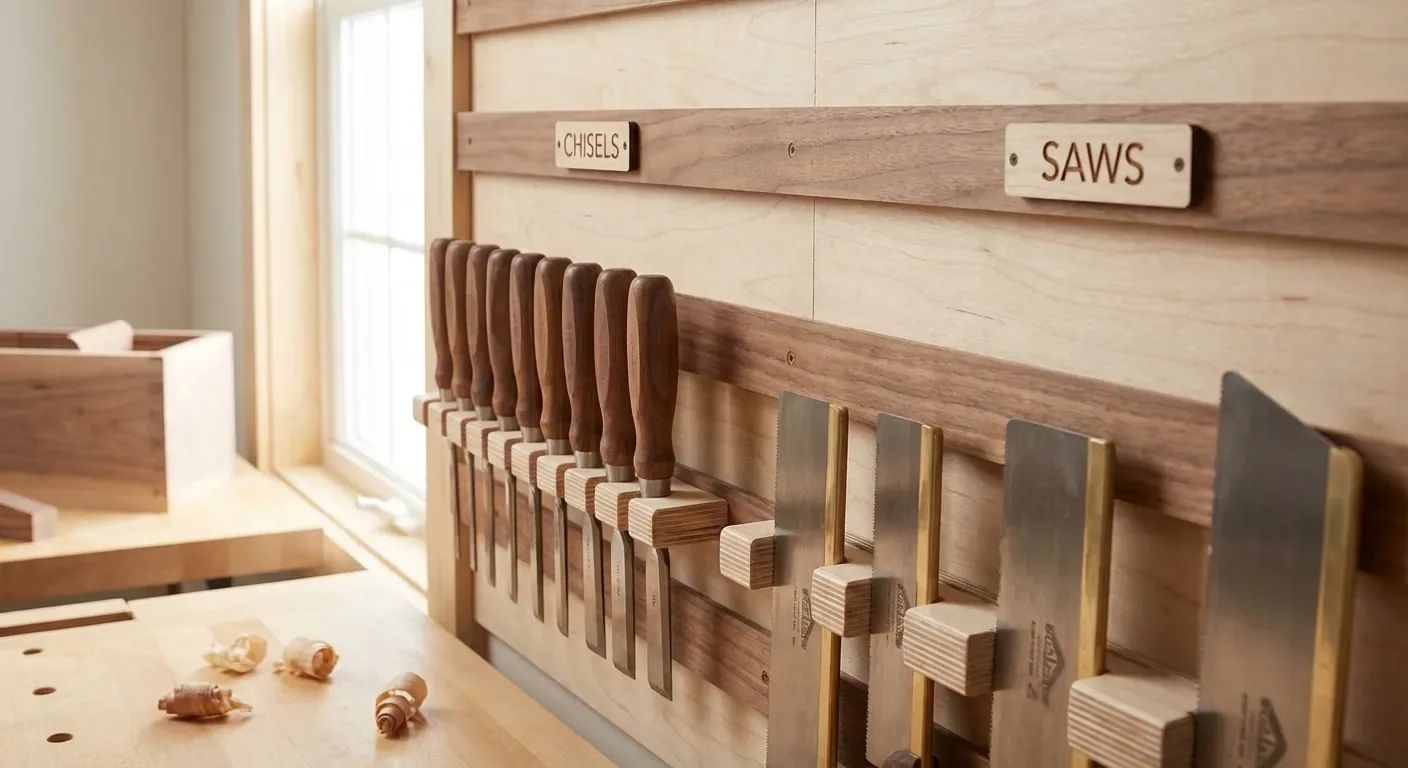
One of the core principles we teach is "First-Order Retrievability," which means you should be able to grab your most-used tools without moving anything else. You can achieve this with a simple piece of plywood and some custom-cut blocks to hold your chisels and saws. Buying expensive, pre-made cabinets often forces you to adapt your tools to the cabinet, whereas building your own allows you to adapt the storage to your specific tools. This challenge is about making your shop work for you, not making it look like a showroom.