Best Shop Vacs for Fine Wood Dust: HEPA Picks Compared
Compare shop vacs and dust extractors for sanding and fine wood dust, including filtration, capacity, hose fit, noise, and best use.
Table of Contents
- Introduction to Fine Dust Control
- Quick Comparison Table
- Best Overall: Festool CT 26 E HEPA Dust Extractor
- Best Performance Value: DEWALT 12 Gallon Poly Wet/Dry Vac
- Best for Small Shops: Makita VC4210L Dust Extractor
- Best Cordless Option: Milwaukee M18 FUEL 6 Gallon Wet/Dry Vac
- How We Evaluated These Shop Vacuums
- Woodworking Shop Vacuum Buying Guide
- Frequently Asked Questions
Introduction to Fine Dust Control
In any woodworking shop, the "invisible" dust is often the most dangerous. While a large dust collector handles the heavy chips from your planer or jointer, it is the shop vacuum that bears the burden of managing fine particulate from sanders, miter saws, and routers. Finding the best shop vac for woodworking isn't just about raw horsepower; it’s about filtration efficiency and the ability to maintain suction even when the filter is coated in microscopic wood flour. Without proper dust extraction at the source, these fine particles linger in the air for hours, posing long-term respiratory risks and making a mess of your finishing projects.
A high-quality shop vacuum designed for woodworking differs significantly from the standard utility vac you might find at a big-box hardware store. The primary difference lies in the filtration system. Woodworking-specific extractors often feature HEPA-certified filters capable of capturing 99.97% of particles down to 0.3 microns. Furthermore, they often include "tool-triggered" outlets, allowing the vacuum to turn on and off automatically with your power tools. This convenience ensures that you never "forget" to turn on the dust collection, keeping your workspace cleaner and your lungs safer throughout the day.
When selecting the products for this guide, we focused on three critical metrics: suction consistency, filtration grade, and ease of integration into a workshop workflow. We looked for vacuums that could handle the high-volume output of a thickness planer while also providing the delicate, adjustable suction required for an orbital sander. Whether you are a hobbyist in a garage or a professional in a dedicated studio, the right vacuum acts as the lungs of your shop, and investing in a unit that excels at fine dust control is one of the smartest upgrades you can make for your craft.
Quick Comparison Table
Prices and marketplace ratings in this imported comparison were captured January 16, 2026 and may have changed. Check the retailer for current details.
| Product Name | Price | Rating | Best For |
|---|---|---|---|
| Festool CT 26 E HEPA Dust Extractor ↗ | $$$ | 4.8/5 | Professional Dust Extraction |
| DEWALT 12 Gallon Poly Wet/Dry Vac ↗ | $ | 4.7/5 | Budget-Minded Power |
| Makita VC4210L Dust Extractor ↗ | $$$ | 4.6/5 | Automatic Filter Cleaning |
| Milwaukee M18 FUEL 6 Gallon Wet/Dry Vac ↗ | $$ | 4.5/5 | Cordless Mobility |
Best Overall: Festool CT 26 E HEPA Dust Extractor
The Festool CT 26 E is widely considered the gold standard for fine dust control in the woodworking community. Unlike standard vacuums that simply pull air through a bucket, the CT 26 E is engineered as a dedicated dust extractor. It features a flat-top design that integrates with Festool’s Systainer storage system, allowing you to stack your sanders directly on top of the vacuum. This integration makes it a mobile workstation that is exceptionally efficient for tasks like finish sanding where organization and clean air are paramount.
One of the standout features of the CT 26 E is its adjustable suction control. While high suction is great for cleaning the floor, it can actually be detrimental when using an orbital sander, as it can cause the sander to "stick" to the workpiece and create swirl marks. The Festool allows you to dial back the power to the perfect level for the tool in use. Additionally, the large wheels and low center of gravity make it incredibly stable, preventing the tipping issues common with taller, cheaper vacuums when pulled across a shop floor cluttered with cords and hoses.
I highly recommend the Festool CT 26 E for professional woodworkers or serious hobbyists who prioritize air quality and workflow. It is best for those who use hand-held power tools like sanders and routers frequently. The standout features include its HEPA-certified filtration, which is essential for working with hazardous woods or MDF, and its ultra-quiet operation, which reduces shop fatigue. The tool-triggered start is incredibly responsive and includes a delayed shut-off to clear the hose of any remaining dust.
The primary drawback is the high entry price and the cost of proprietary filter bags. While the bags are high-capacity and act as a pre-filter, they represent an ongoing expense. However, compared to alternatives like the Bosch or Makita extractors, the Festool offers a more polished ecosystem of accessories and a superior hose design that is ribbed to prevent snagging on workpieces. If your budget allows, this is the most refined dust control solution on the market.
Best Performance Value: DEWALT 12 Gallon Poly Wet/Dry Vac
For many woodworkers, the DEWALT 12 Gallon Poly Wet/Dry Vac represents the perfect middle ground between a basic utility vacuum and a high-end extractor. While it lacks the sophisticated tool-triggered electronics of a Festool, it makes up for it with raw CFM (Cubic Feet per Minute) and a massive 12-gallon capacity. This vacuum is a "workhorse" in the truest sense, capable of swallowing piles of sawdust from a table saw or cleaning up a water spill after a plumbing mishap. It is built with a heavy-duty poly tub that resists denting and corrosion.
The filtration system on this DeWalt model is surprisingly robust for its price point. While it comes with a standard cartridge filter, it is compatible with DeWalt’s high-efficiency fine dust bags and HEPA replacement filters. Using these upgrades transforms the machine into a capable fine dust collector that won't blow a cloud of dust back into the room the moment you turn it on. The oversized drain port is a nice touch for wet cleanup, and the built-in blower port adds versatility for clearing off workbenches or outdoor spaces.
I recommend this vacuum for the weekend warrior or the woodworker on a budget who needs a single machine that can "do it all." It is best for those who need high suction power for floor cleanup or for connecting to larger benchtop tools like a lunchbox planer. The standout features are the 5.5 peak HP motor and the exceptionally long power cord, which provides a wide radius of movement without needing an extension cord. The tank is also very easy to empty compared to smaller, more cramped units.
The main consideration here is the noise level; it is significantly louder than a dedicated dust extractor. Additionally, the lack of an onboard power outlet for tool actuation means you’ll have to turn the vacuum on manually every time you sand. However, when compared to other budget vacuums, the DeWalt’s build quality and the availability of high-quality replacement filters make it a superior choice for woodworking where fine dust is a concern.
Best for Small Shops: Makita VC4210L Dust Extractor
The Makita VC4210L is a powerhouse specifically designed to compete with high-end European extractors. Its most significant feature is the automatic filter cleaning system. Every 15 to 30 seconds, the vacuum reverses the airflow through the filters to knock off accumulated dust. This "thumping" sound is the hallmark of a machine designed for constant, high-volume fine dust. If you have ever noticed your vacuum losing suction halfway through a sanding session, this feature is the solution to that problem.
Beyond the filter cleaning, the Makita offers a very high CFM rating, making it one of the most powerful 11-gallon extractors available. It is fully HEPA-certified when used with the appropriate filters, ensuring that even the finest silica or wood dust is trapped securely. The flat-top design is compatible with Makita’s "Makpac" storage cases, but many users have found ways to adapt it for other tool brands as well. It is a rugged, well-thought-out machine that bridges the gap between portability and industrial performance.
This vacuum is best for woodworkers who deal with high volumes of fine dust, such as those using a CNC router or doing extensive sanding on large furniture pieces. I recommend it because the automatic filter cleaning significantly extends the life of the filters and ensures consistent performance without manual intervention. The standout features include the low-noise motor and the flow sensor that alerts you if the suction drops below a safe level, which is a critical safety feature for maintaining air quality.
The drawback is that the "thumping" sound of the automatic cleaning can be startling if you aren't expecting it, and it can be slightly annoying in a very quiet shop. It is also quite heavy when the tank is full. Compared to the Festool, it offers more raw suction power and a more aggressive filter cleaning mechanism, making it perhaps a better choice for heavy-duty grinding or routing tasks where dust volume is extremely high.
Best Cordless Option: Milwaukee M18 FUEL 6 Gallon Wet/Dry Vac
As battery technology has improved, cordless shop vacuums have moved from being "toys" to legitimate shop tools. The Milwaukee M18 FUEL 6 Gallon vacuum is the prime example of this evolution. Powered by the M18 battery platform, this vacuum offers suction that rivals many corded units. For a small shop where space is at a premium or for a woodworker who frequently works on-site or in a driveway, the ability to ditch the power cord is a massive quality-of-life improvement.
The M18 FUEL vacuum is designed with a highly efficient brushless motor that maximizes runtime. When paired with a High Output 12.0 Ah battery, it can handle significant cleanup tasks or several sanding sessions on a single charge. The square footprint makes it very stable and easy to store under a workbench or in a cabinet. It also features a reinforced hose that is resistant to kinking and crushing, which is a common failure point on more affordable cordless models.
I recommend the Milwaukee M18 FUEL for woodworkers who prioritize mobility or those already invested in the Milwaukee battery ecosystem. It is best for small-scale projects, quick benchtop cleanups, or use with cordless sanders. The standout features are the impressive suction power for a battery-operated tool and the organized onboard storage for all attachments. It is remarkably compact, making it the perfect "secondary" vacuum for a larger shop.
The obvious drawback is the limited runtime compared to a corded unit; it is not the right choice for all-day sanding sessions. Furthermore, to get the best performance, you need to use the more expensive High Output batteries. However, compared to other cordless vacuums on the market, the Milwaukee offers a level of durability and suction that is currently unmatched in the 18V/20V category.
How We Evaluated These Shop Vacuums
This is a research-based comparison using manufacturer airflow and water-lift figures, filtration certifications, capacity, hose and accessory details, published noise levels, and recurring owner feedback. We have not meter-tested every vacuum or measured its exhaust with a particle counter.
We prioritized verified HEPA configurations, fine-dust bag availability, sustained filtration, hose fit, tool-trigger support, capacity, noise, and mobility. Manufacturer peak horsepower does not provide a useful comparison by itself; use published airflow and suction data, and confirm that the exact filter-and-bag combination meets your needs.
Woodworking Shop Vacuum Buying Guide
When looking for the best shop vac for woodworking, the first thing you should consider is the "Water Lift" vs. "CFM" rating. CFM (Cubic Feet per Minute) measures the volume of air the vacuum moves, which is important for picking up large chips. Water Lift measures the "pulling force" or static pressure, which is critical for pulling fine dust through a HEPA filter or through the small ports of a palm sander. For woodworking, a balance of both is ideal, but high static pressure is often more important for hand-tool dust extraction.
The second factor is the filtration system. A standard paper filter will quickly clog when exposed to fine wood dust, leading to motor strain and loss of suction. Look for vacuums that offer multi-stage filtration, ideally involving a high-quality fleece bag and a HEPA-rated cartridge filter. Fleece bags are superior to paper because they don't clog as easily and act as a pre-filter, significantly extending the life of your more expensive HEPA filter. If you do a lot of sanding, an automatic filter cleaning feature (like that found on the Makita) is worth the extra investment.

Lastly, consider the ergonomics and integration. A vacuum that features an onboard power outlet for your tools (auto-start) is a game-changer for workshop efficiency. Also, pay attention to the hose diameter and length. A 1.25-inch hose is standard for most small power tools and provides higher air velocity, while a 2.5-inch hose is better for floor cleanup. Many of the best woodworking vacuums come with anti-static hoses, which prevent the annoying static shocks that can occur when dry wood dust moves through plastic tubing at high speeds.
Add a separator without guessing the fit
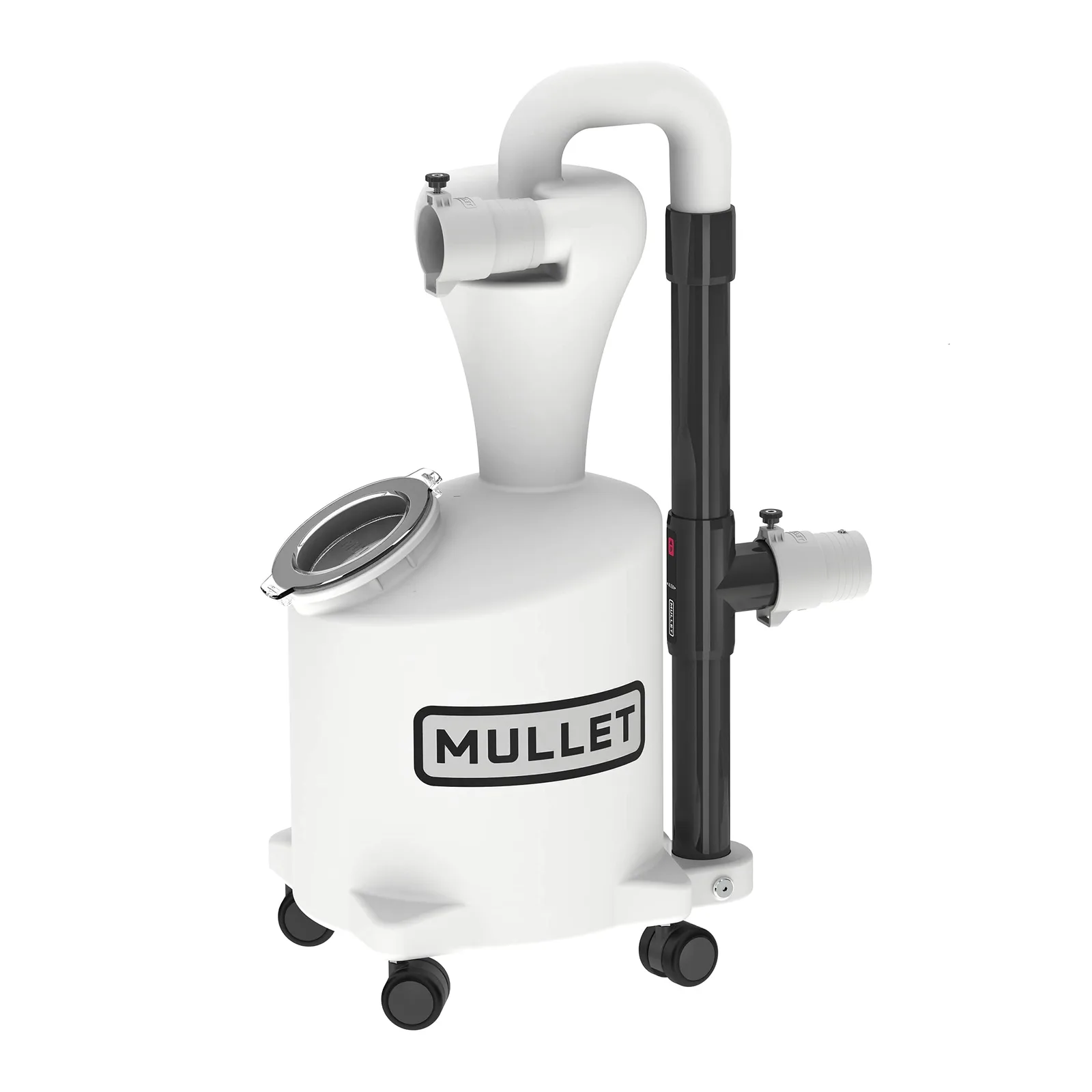
A cyclone can reduce filter loading, but its port size, height, collection capacity, and movement pattern need to match the vacuum. Compare the Mullet High-Speed Cyclone, Dustopper PRO, DEWALT DXVCS002, Oneida Dust Deputy 2.5, and Rockler Dust Right Separator before buying adapters or building a cart.
Frequently Asked Questions
A shop vacuum works best on handheld tools and small ports. For stationary machines and longer duct runs, use the dust collector sizing calculator and the complete dust collection guide. An ambient air-filtration system complements source capture; it does not replace it.
What is the difference between a shop vac and a dust extractor?
While the terms are often used interchangeably, a dust extractor is specifically designed to capture fine dust at the source (the tool). Dust extractors usually have higher filtration standards (HEPA), adjustable suction, and tool-triggered starts. A shop vac is a more general-purpose tool designed for high-volume cleanup of larger debris and liquids. For fine woodworking, a dust extractor is generally the safer and more efficient choice for your lungs and your finish.
Dust extractors are also engineered to run for longer periods without overheating. Shop vacuums often rely on the air they suck in to cool the motor; if the airflow is restricted (like when attached to a sander), the motor can burn out over time. Dust extractors usually have a separate cooling fan for the motor, allowing them to handle the high static pressure of small-diameter hoses without damage.
Do I really need a HEPA filter for woodworking?
If you are sanding or using a router, a HEPA filter is highly recommended. Standard filters often capture the large particles but allow the microscopic "fine" dust to pass right through the vacuum and back into your shop air. This fine dust is what stays in your lungs and causes health issues. A HEPA filter ensures that 99.97% of those tiny particles are trapped inside the vacuum.
Furthermore, many woods, such as walnut, cedar, and various exotics, contain natural oils and chemicals that can be toxic or cause allergic reactions. When these woods are turned into fine dust, the risk increases. A HEPA filter provides an essential layer of protection against these specific hazards, making your shop a much healthier place to work.
Can I use a cyclone separator with these shop vacuums?
Yes, adding a cyclone separator (like a Dust Deputy) is one of the best upgrades you can make to a shop vacuum setup. The cyclone uses centrifugal force to drop 99% of the dust and chips into a separate bucket before they ever reach your vacuum's filter. This keeps your suction at 100% for much longer and drastically reduces the amount you spend on replacement filters and bags.
Using a cyclone is particularly effective when you are using tools that produce a lot of waste, like a thickness planer or a jointer. It essentially turns your shop vac into a two-stage dust collection system. While it makes the setup less portable, the benefits in terms of filter longevity and consistent suction power are well worth the trade-off for most stationary shop setups.
How often should I change my shop vac filter?
For woodworking, you should check your filter every time you empty the tank. If you are using a bag, change the bag when it is about 75% full; overfilling the bag can lead to it bursting or significantly reducing suction. If you are using a cartridge filter without a bag, you should clean it by gently tapping it against the inside of a trash can or using compressed air (outdoors!) when you notice a drop in performance.
A HEPA filter should generally be replaced once a year in a hobbyist shop, or more frequently if you notice a lingering "dusty" smell when the vacuum is running. If the filter becomes visibly damaged, torn, or wet (when it’s a dry-only filter), it must be replaced immediately to prevent motor damage and to maintain the integrity of the filtration system.
Why does my shop vac hose give me static shocks?
Static electricity is generated by the friction of dry wood particles rubbing against the plastic walls of the vacuum hose. In low-humidity environments, this charge can build up until it discharges through the nearest conductor—usually your hand. While these shocks are generally harmless, they can be annoying and, in very rare cases, could potentially ignite fine dust clouds.
To prevent this, many high-end woodworking vacuums come with "anti-static" hoses. These hoses have conductive materials embedded in the plastic that bleed off the static charge to the grounded vacuum chassis. If your vacuum didn't come with one, you can often purchase an aftermarket anti-static hose or try to increase the humidity in your shop to reduce static buildup.
Explore the recommendations.
Check Amazon for current product details, available options, and pricing.
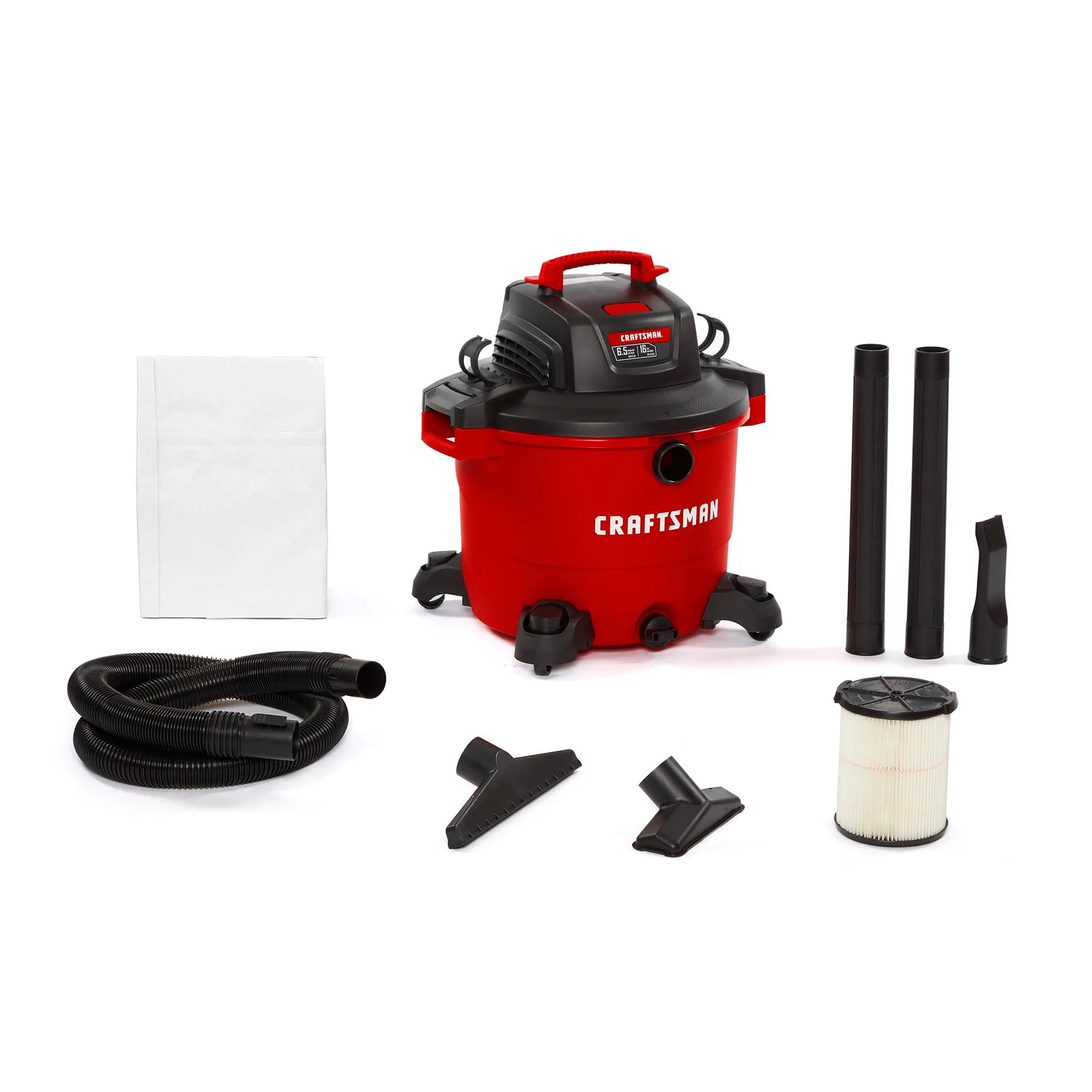
CRAFTSMAN CMXEVBE17595 16 Gallon 6.5 Peak HP Wet Dry Vac, Heavy-Duty Shop Vacuum Wet and Dry with Filter, Dust Bag, Hose and Attachments for Home Projects & Renovations
Product details
HEAVY-DUTY: Powerful 6.5 Peak HP provides extra power for large projects in the garage, shop and on the jobsite BUILT-IN BLOWER PORT: Rear blowing port on this wet dry shop vac allows for quick cleaning of leaves and grass clippings in your garage and outdoors OVERSIZED DRAIN: Built-in oversized drain on the wet/dry vac allows for convenient emptying of liquids DUAL-FLEX TECHNOLOGY: 2-1/2 in. diameter shop vacuum hose features Dual-Flex technology for 180-degree mobility at each end to resist kinking ACCESSORIES INCLUDED: 2-1/2 in. x 7 ft. POS-I-LOCK Dual-Flex Hose, 2 Extension Wands, Utility Nozzle, Car Nozzle, Wet Nozzle, Qwik Lock Filter and Dust Collection Bag COMPATIBLE FILTERS: CMXZVBE38751, CMXZVBE38753, CMXZVBE38754, CMXZVBE38773, CMXZVBE38755, CMXZVBE38776, CMXZVBE38777, CMXZVBE38778, and CMXZVBE38779 Genuine CRAFTSMAN Vac Filters COMPATIBLE DUST BAGS: CMXZVBE38749 and CMXZVBE38750 Genuine CRAFTSMAN Dust Bags VAC WARRANTY: 3 Year Limited Warranty
- HEAVY-DUTY: Powerful 6.5 Peak HP provides extra power for large projects in the garage, shop and on the jobsite
- BUILT-IN BLOWER PORT: Rear blowing port on this wet dry shop vac allows for quick cleaning of leaves and grass clippings in your garage and outdoors
- OVERSIZED DRAIN: Built-in oversized drain on the wet/dry vac allows for convenient emptying of liquids
- DUAL-FLEX TECHNOLOGY: 2-1/2 in. diameter shop vacuum hose features Dual-Flex technology for 180-degree mobility at each end to resist kinking
- ACCESSORIES INCLUDED: 2-1/2 in. x 7 ft. POS-I-LOCK Dual-Flex Hose, 2 Extension Wands, Utility Nozzle, Car Nozzle, Wet Nozzle, Qwik Lock Filter and Dust Collection Bag
- COMPATIBLE FILTERS: CMXZVBE38751, CMXZVBE38753, CMXZVBE38754, CMXZVBE38773, CMXZVBE38755, CMXZVBE38776, CMXZVBE38777, CMXZVBE38778, and CMXZVBE38779 Genuine CRAFTSMAN Vac Filters
- COMPATIBLE DUST BAGS: CMXZVBE38749 and CMXZVBE38750 Genuine CRAFTSMAN Dust Bags
- VAC WARRANTY: 3 Year Limited Warranty
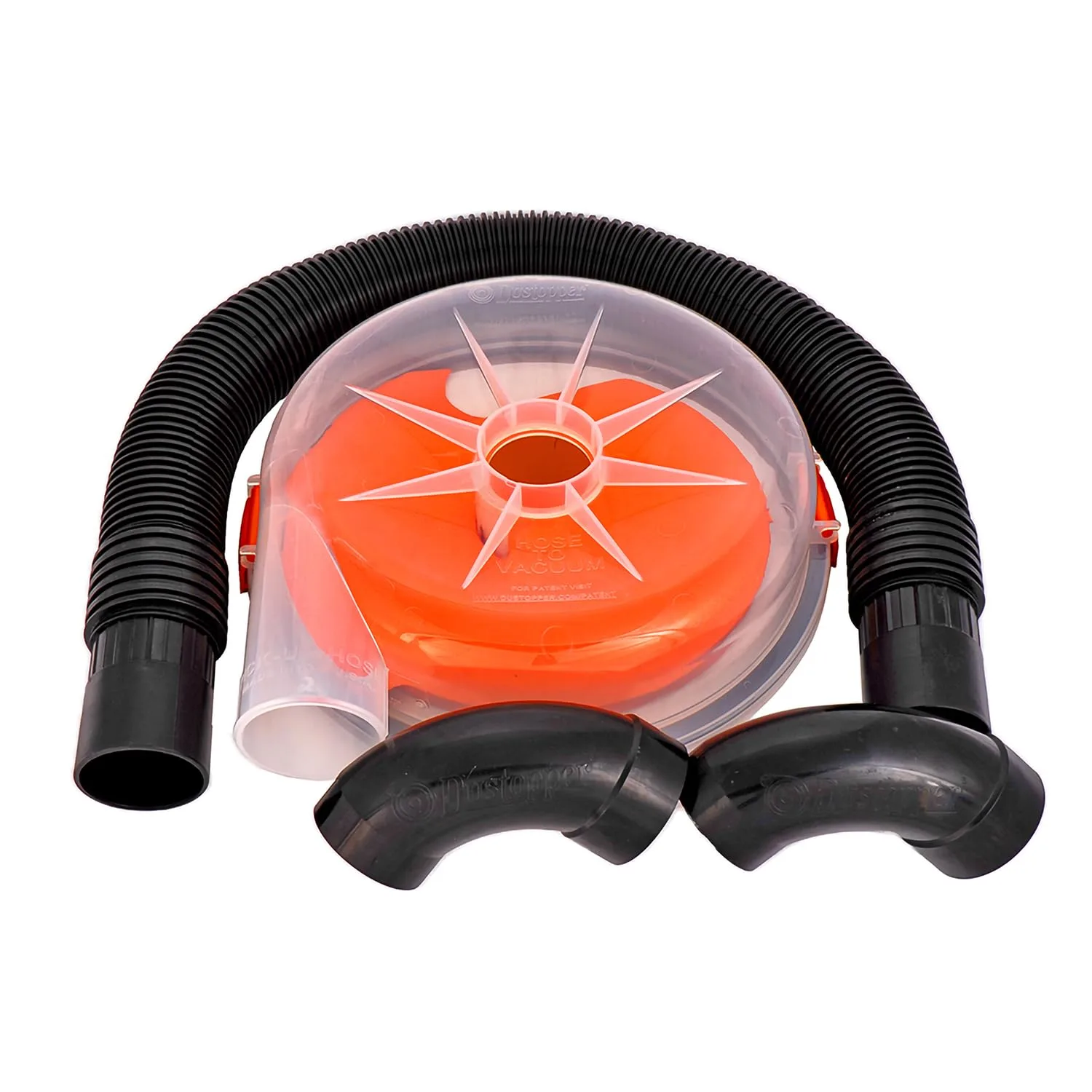
The Dustopper PRO, Low-Profile Dust Separator for Shop Wet/Dry Vacuums. Includes High-Flow 90 Degree Sweep Elbows and Connection Hose. Fits Standard 5 Gallon Buckets, Made in USA Complete Assembly – Separator, Hose & Elbows
Product details
AWARD-WINNING AND PATENTED LOW-PROFILE DESIGN: The Dustopper “PRO” version awarded “Most Innovative Concept Award” at the 2023 National Hardware Show in Las Vegas. Fine Woodworking Magazine editor-at-large says this, “…I like the new Dustopper PRO best.” ENGINEERED FOR MAXIMUM SEPARATION, NOT JUST CFM: The Dustopper is optimized to achieve maximum separation when collecting dust. Engineers of cyclonic separators know that too much CFM can add eddy currents in the air flow that can lower dust separation efficiency. DUSTOPPER PRO SAVES MONEY ON FILTERS AND VACUUM BAGS: Separating and capturing dust before it enters your vacuum is the best way to save money on costly filters and bags. Your investment pays for itself in no time. INDUSTRIAL GRADE GASKET FITS ALL STANDARD 5-GALLON PAILS: The Dustopper designed a hollow-core EPDM gasket that ensures a leak-proof seal to standard pails…and it’s preinstalled! No assembly, no setup, no leaks, no hassles. INCLUDES TWO PATENTED HIGH FLOW SWEEP ELBOWS: Our Dustopper elbows are engineered to optimize CFM by removing turbulence and lowering flow restriction, even on other dust collection systems. Best part…you get TWO of them! PROUDLY MADE IN THE USA: The amazing quality of the Dustopper PRO is a testament to the exceptional quality of products engineered and manufactured in the USA.
- AWARD-WINNING AND PATENTED LOW-PROFILE DESIGN: The Dustopper “PRO” version awarded “Most Innovative Concept Award” at the 2023 National Hardware Show in Las Vegas. Fine Woodworking Magazine editor-at-large says this, “…I like the new Dustopper PRO best.”
- ENGINEERED FOR MAXIMUM SEPARATION, NOT JUST CFM: The Dustopper is optimized to achieve maximum separation when collecting dust. Engineers of cyclonic separators know that too much CFM can add eddy currents in the air flow that can lower dust separation efficiency.
- DUSTOPPER PRO SAVES MONEY ON FILTERS AND VACUUM BAGS: Separating and capturing dust before it enters your vacuum is the best way to save money on costly filters and bags. Your investment pays for itself in no time.
- INDUSTRIAL GRADE GASKET FITS ALL STANDARD 5-GALLON PAILS: The Dustopper designed a hollow-core EPDM gasket that ensures a leak-proof seal to standard pails…and it’s preinstalled! No assembly, no setup, no leaks, no hassles.
- INCLUDES TWO PATENTED HIGH FLOW SWEEP ELBOWS: Our Dustopper elbows are engineered to optimize CFM by removing turbulence and lowering flow restriction, even on other dust collection systems. Best part…you get TWO of them!
- PROUDLY MADE IN THE USA: The amazing quality of the Dustopper PRO is a testament to the exceptional quality of products engineered and manufactured in the USA.
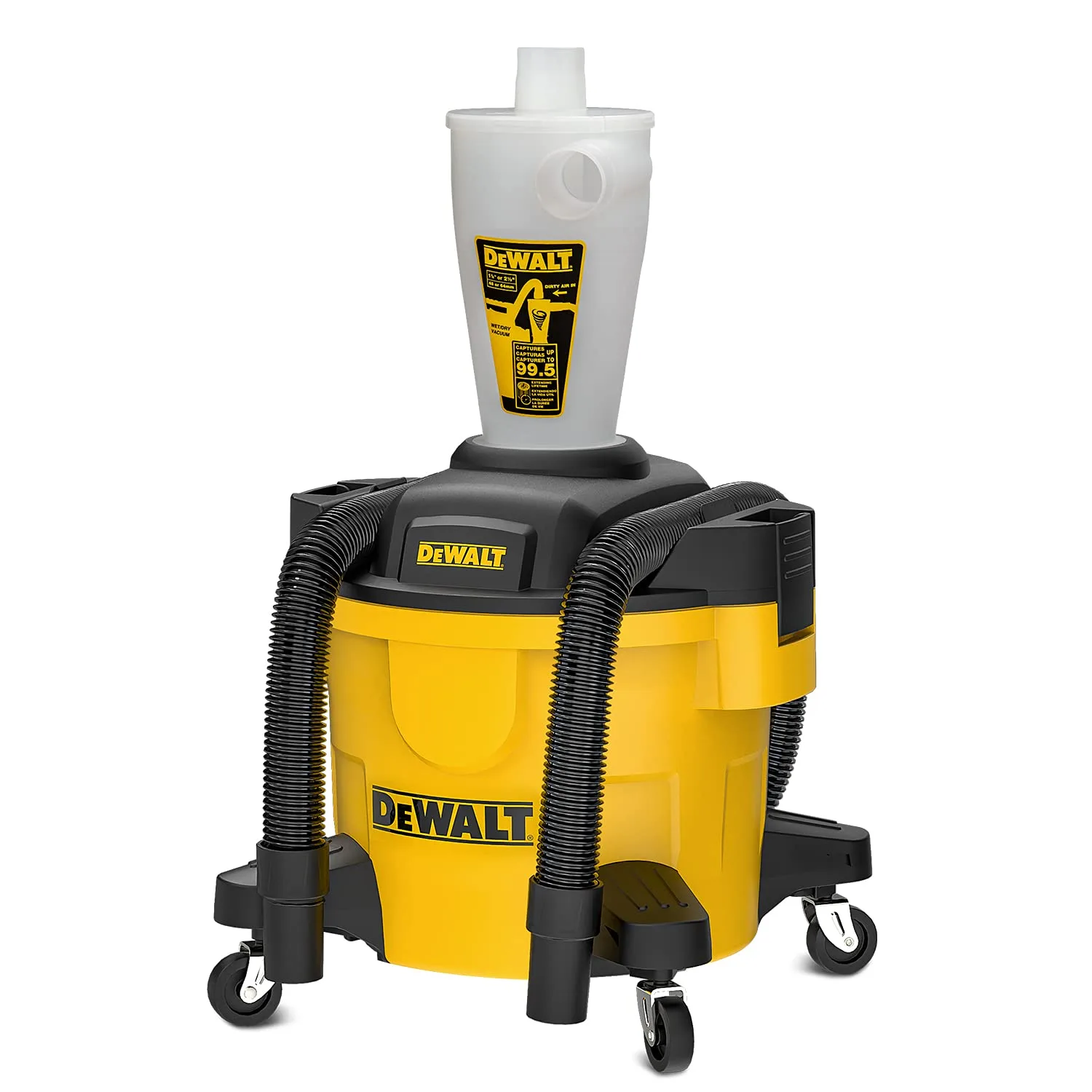
DEWALT Dust Separator with 6 Gallon Poly Tank, 99.5% Efficiency Cyclone Dust Collector, High-Performance Cycle Powder Collector Filter, DXVCS002, Yellow
Product details
【HIGH EFFICIENCY】 Our DEWALT high efficiency dust separator can capture wood chips and other debris before they enter your vacuum cleaner, reducing suction loss due to clogged vacuum filters. Saves you the cost and time of expensive filter and dust bag replacement. 【WIDE APPLICATION】 This dust separator applies to most materials: wood chips, drywall dust, concrete dust, clay silica dust, soda water, cooling ash and soot, water, metal shavings, baking powder, grass and leaves, pets hair, drug waste and more. 【COMPATIBLE DESIGN】 The four-caster base of the dust collection system makes it very stable and easy to move around the workshop. Our 6 gallon shop vacuum system barrels are easy to empty. With 1-7/8" or 2-1/2" port, it can be used with most vacuum cleaners, such as household vacuum cleaners, industrial vacuum cleaners, sweepers, etc. 【PREMIUM MATERIALS】 All included parts are made of durable, high-quality and heat resistant materials with anti-clogging design for optimum efficiency. 【WHAT YOU GET】1 x DEWALT dust separator, 1 x 6 gallon poly bucket (vacuum cleaner not included), 2 x Hose Holder, 1xLid, 2 x Lid Sealing Strip, 2 x Lid Latch, 2 x Handle, 1 x 1-7/8" Hose, 1 x Wheel Bracket, 4 x Caster bushing, 4 x Screws (3.9 * 16 F), 4 x Screws (4.8 * 16 F),1 x 3 years limited warranty.
- 【HIGH EFFICIENCY】 Our DEWALT high efficiency dust separator can capture wood chips and other debris before they enter your vacuum cleaner, reducing suction loss due to clogged vacuum filters. Saves you the cost and time of expensive filter and dust bag replacement.
- 【WIDE APPLICATION】 This dust separator applies to most materials: wood chips, drywall dust, concrete dust, clay silica dust, soda water, cooling ash and soot, water, metal shavings, baking powder, grass and leaves, pets hair, drug waste and more.
- 【COMPATIBLE DESIGN】 The four-caster base of the dust collection system makes it very stable and easy to move around the workshop. Our 6 gallon shop vacuum system barrels are easy to empty. With 1-7/8" or 2-1/2" port, it can be used with most vacuum cleaners, such as household vacuum cleaners, industrial vacuum cleaners, sweepers, etc.
- 【PREMIUM MATERIALS】 All included parts are made of durable, high-quality and heat resistant materials with anti-clogging design for optimum efficiency.
- 【WHAT YOU GET】1 x DEWALT dust separator, 1 x 6 gallon poly bucket (vacuum cleaner not included), 2 x Hose Holder, 1xLid, 2 x Lid Sealing Strip, 2 x Lid Latch, 2 x Handle, 1 x 1-7/8" Hose, 1 x Wheel Bracket, 4 x Caster bushing, 4 x Screws (3.9 * 16 F), 4 x Screws (4.8 * 16 F),1 x 3 years limited warranty.
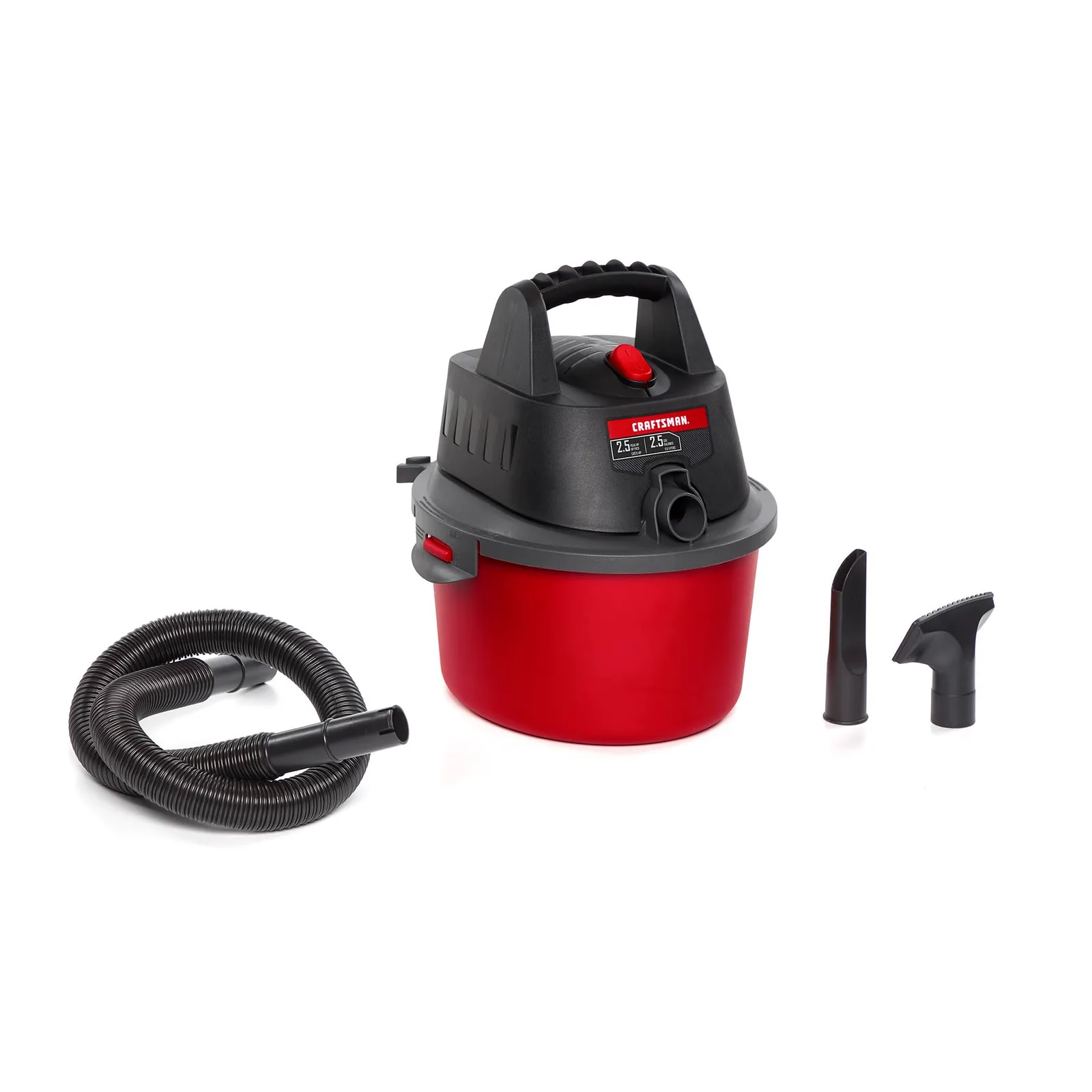
CRAFTSMAN CMXEVBE17250 2.5 Gallon 2.5 Peak HP Wet Dry Vac, Portable Shop Vacuum Wet and Dry with Filter Bag, Hose and Attachments for Cleaning in The Home
Product details
PORTABLE: Lightweight, 2.5-gallon wet dry shop vac offers unparalleled mobility IDEAL FOR SMALL MESSES: Perfect for the home, garage, cars, trucks and vans EASY TO STORE: Compact size, carry handle and cord wrap feature allow for easy storage TWO-IN-ONE CAPABILITY: Shop vacuum can be used as a blower for added versatility DESIGNED FOR TIGHT SPACES: 1-1/4 in. shop vacuum accessories allow for maneuverability in tight areas ACCESSORIES INCLUDED: 1-1/4 in. x 5 ft. Friction Fit Hose, Crevice Tool, Utility Nozzle, Filter Bag COMPATIBLE FILTER: CMXZVBE38737 Genuine CRAFTSMAN Filter Bag NOT COMPATIBLE WITH: CMXZVBE38662 Car Cleaning Kit VAC WARRANTY: 3 Year Limited Warranty
- PORTABLE: Lightweight, 2.5-gallon wet dry shop vac offers unparalleled mobility
- IDEAL FOR SMALL MESSES: Perfect for the home, garage, cars, trucks and vans
- EASY TO STORE: Compact size, carry handle and cord wrap feature allow for easy storage
- TWO-IN-ONE CAPABILITY: Shop vacuum can be used as a blower for added versatility
- DESIGNED FOR TIGHT SPACES: 1-1/4 in. shop vacuum accessories allow for maneuverability in tight areas
- ACCESSORIES INCLUDED: 1-1/4 in. x 5 ft. Friction Fit Hose, Crevice Tool, Utility Nozzle, Filter Bag
- COMPATIBLE FILTER: CMXZVBE38737 Genuine CRAFTSMAN Filter Bag
- NOT COMPATIBLE WITH: CMXZVBE38662 Car Cleaning Kit
- VAC WARRANTY: 3 Year Limited Warranty
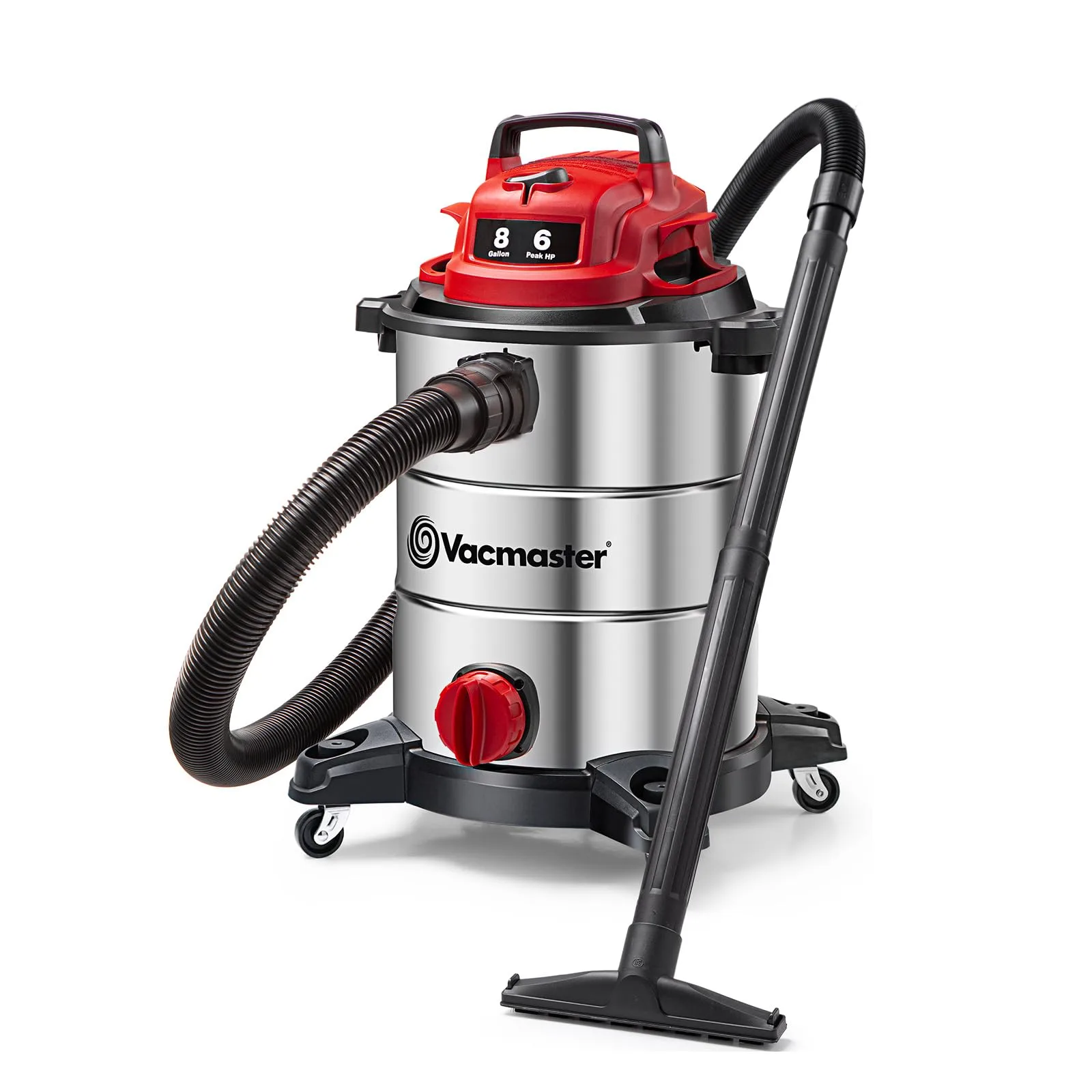
Vacmaster VOC812SF 1101 8-Gallon Premium Stainless Steel Wet/Dry Vacuum, Red Edition, 8 Gal
Product details
Premium Stainless Steel 8-Gallon Tank High-Performance Motor Delivers 83-Inches of Water Lift for Tough Messes 17-foot Cleaning Reach with Hose and Power Cord Complete Vac Organization with On-Board Hose, Cord and Accessory Storage Easily Converts to Blower Durable, 360° Rotating Casters for Easy Transport 10 Accessories, including Round Dust Brush for Blinds, Screens, Dashboards and Other Scratch Prone Surfaces Cartridge & Foam Filters for Wet & Dry Pick, To Protect the Motor and Maintain Suction Power Large Drain Port for Quick Emptying
- Premium Stainless Steel 8-Gallon Tank
- High-Performance Motor Delivers 83-Inches of Water Lift for Tough Messes
- 17-foot Cleaning Reach with Hose and Power Cord
- Complete Vac Organization with On-Board Hose, Cord and Accessory Storage
- Easily Converts to Blower
- Durable, 360° Rotating Casters for Easy Transport
- 10 Accessories, including Round Dust Brush for Blinds, Screens, Dashboards and Other Scratch Prone Surfaces
- Cartridge & Foam Filters for Wet & Dry Pick, To Protect the Motor and Maintain Suction Power
- Large Drain Port for Quick Emptying
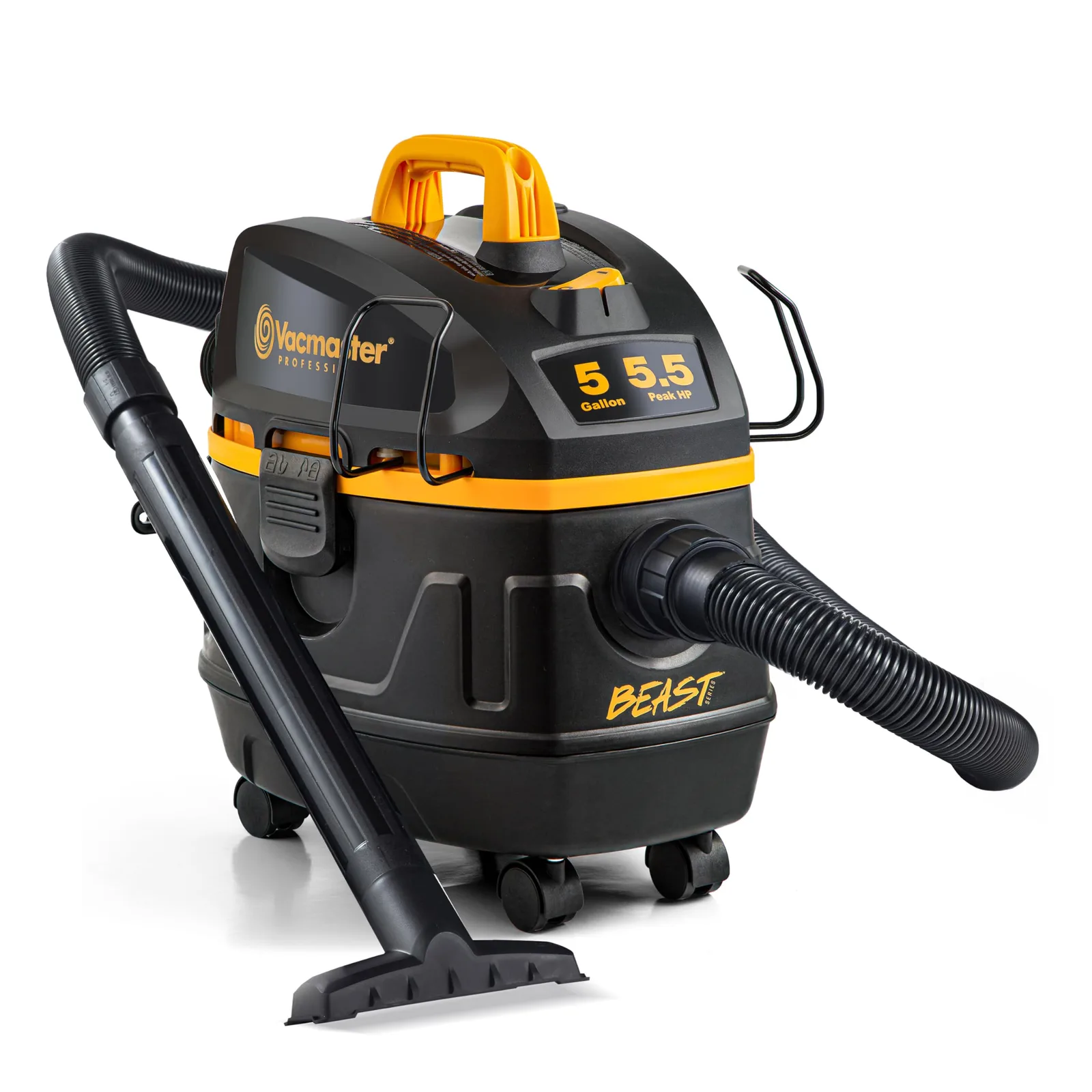
Vacmaster Professional Beast Series VFB511H 0201 5-Gallon 5.5 Peak HP Wet/Dry Vac, Black Upgraded 5 Gal
Product details
Beast Series High-Performance Motor with 320 Air Watts of Power Equipped with High-Efficiency Cartridge Filter & Dust Bag for Capturing Fine Dust Particles Down to 1 Micron in Size 25-Feet of Cleaning Reach with Premium Kink-Resistant Hose and Power Cord 9 Accessories, including a Car, Utility, and Crevice Tool for Various Tasks Complete Vac Organization with On-Board Hose, Cord and Accessory Storage Easily Converts to Blower Oversized Latches For a Secure Seal Large Dust-Sealed On/Off Switch
- Beast Series High-Performance Motor with 320 Air Watts of Power
- Equipped with High-Efficiency Cartridge Filter & Dust Bag for Capturing Fine Dust Particles Down to 1 Micron in Size
- 25-Feet of Cleaning Reach with Premium Kink-Resistant Hose and Power Cord
- 9 Accessories, including a Car, Utility, and Crevice Tool for Various Tasks
- Complete Vac Organization with On-Board Hose, Cord and Accessory Storage
- Easily Converts to Blower
- Oversized Latches For a Secure Seal
- Large Dust-Sealed On/Off Switch