Best Automatic Vacuum Switches: iVAC vs i-Socket for a Small Shop
Compare iVAC and i-Socket vacuum switches by circuit arrangement, trigger behavior, run-on delay, cordless-tool limits, and model-specific instructions.
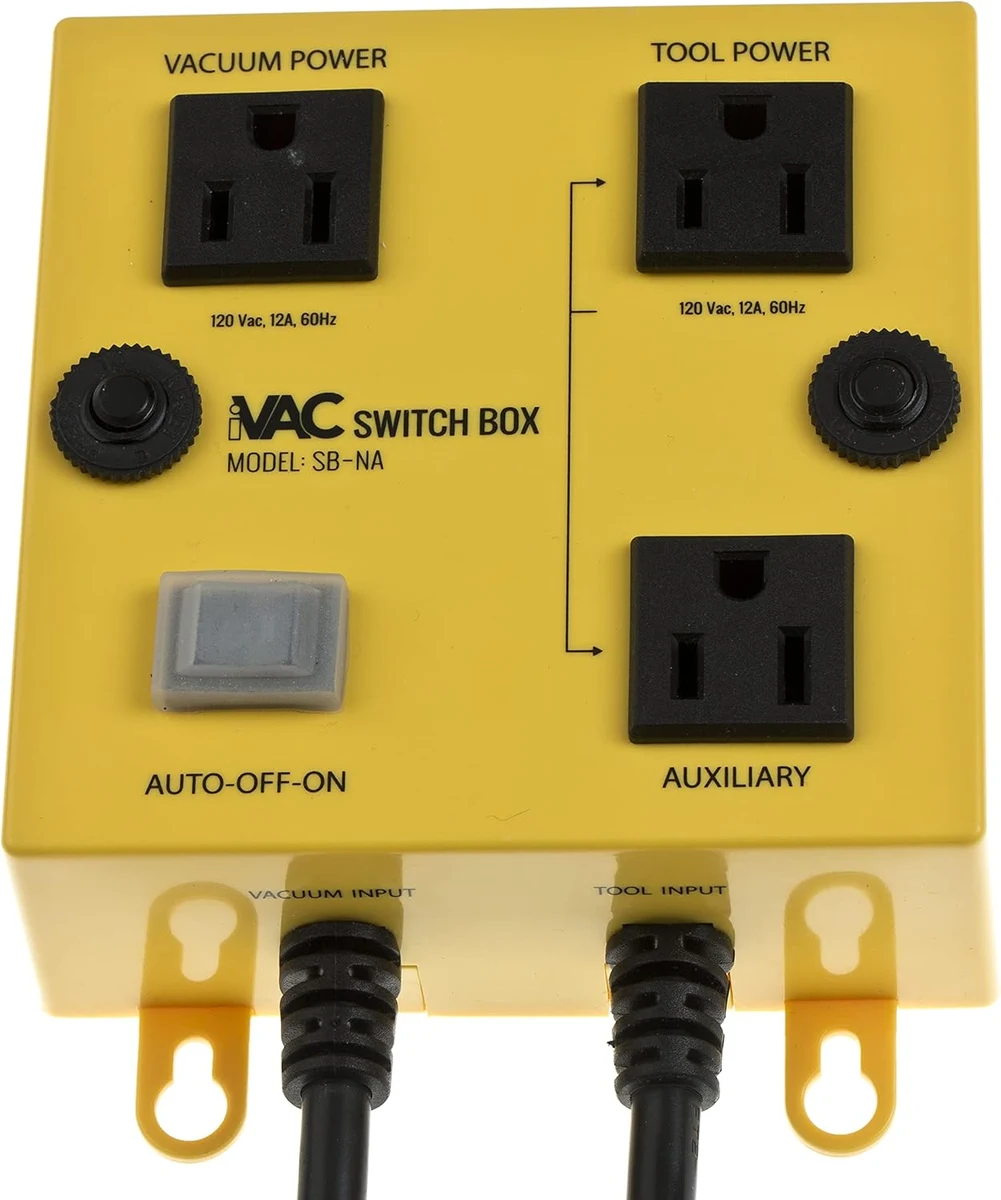
We would compare the iVAC SB-NA first when the tool and vacuum need separate supply circuits. For a suitable single-circuit setup, the i-Socket Workshop is a compact alternative. Neither device creates more electrical capacity, and neither should be selected from the vacuum's peak-horsepower label alone.
PRODUCTS IN THIS GUIDE
iVAC SB-NA automated vacuum switch box
Candidate for a compatible tool/vacuum setup requiring the manufacturer's documented dual-input circuit arrangement. Follow current model instructions.
Check price on Amazon for iVAC SB-NA automated vacuum switch box (opens in a new tab)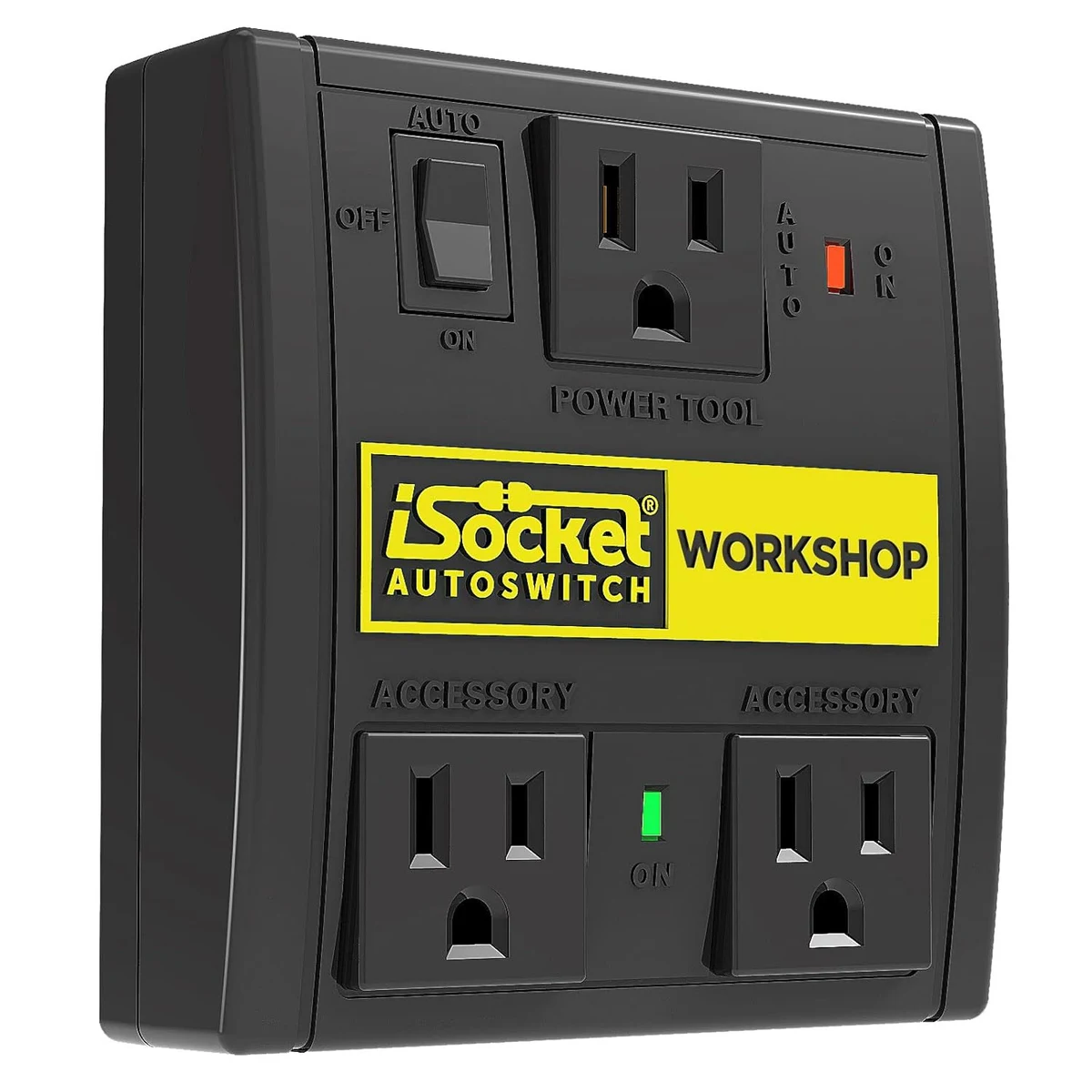
i-Socket Workshop automatic vacuum switch
Compact automatic vacuum control for a verified suitable supply and load. Confirm actual outlet labels because the Amazon title and manufacturer description differ.
Check price on Amazon for i-Socket Workshop automatic vacuum switch (opens in a new tab)An automatic switch is useful when you already have a suitable vacuum and a corded tool connected to it. It removes the extra trip to the vacuum's switch and leaves the vacuum running briefly after the tool stops. It cannot fix poor dust capture, an unsuitable vacuum, or an overloaded supply.
Research comparison — October 27, 2026. We checked manufacturer information, instructions, and the matching Amazon listings. We have not tested switching thresholds, relay life, or electrical certification. Affiliate links may earn us a commission.
Two switches worth comparing
| Choice | Best reason to consider it | Main constraint | Amazon |
|---|---|---|---|
| iVAC SB-NA Switch Box | Manufacturer-documented dual-input arrangement for separately protected circuits | Must follow its exact input, load, and circuit instructions; not an iVAC Pro component | iVAC SB-NA ↗ |
| i-Socket Workshop | Compact Auto/On/Off control and a stated seven-second run-on | One supply connection; combined loads still have to fit the permitted arrangement | i-Socket Workshop ↗ |
Read the current unit label and manual before purchase. We deliberately do not call either a universal switch for every table saw, dust collector, and shop vacuum. A resistive current rating is not permission to control an arbitrary motor load.
iVAC SB-NA: the circuit arrangement is the differentiator
The iVAC Switch Box page describes two supply inputs and three modes: Auto, Off, and On. Its documented configuration can separate the tool's supply from the vacuum's supply when the two loads cannot share the permitted circuit. It also identifies this box as separate from, and incompatible with, iVAC Pro components.
That makes it a useful candidate for a small workshop that already has appropriate separate circuits. It is less compelling if your only available supply is one branch circuit and the combined loads exceed what that setup permits. Two nearby receptacles are not proof of two circuits.
The manufacturer's instruction sheet gives the input arrangements and a roughly six-second off delay. It also specifies dry indoor use. Follow the instructions supplied with the actual revision you buy rather than copying a diagram from a different version online.
We would choose it for the documented power-routing flexibility, not because the short delay guarantees a breaker will never trip. Starting current and continuous loading remain real constraints. If the circuit arrangement is uncertain, have it identified before buying the switch.
There is also a seller consideration. iVAC's warranty information limits coverage to authorized sellers and identifies its Amazon storefront. Check the actual seller, not merely that the listing has an iVAC title.
i-Socket Workshop: simple control for a suitable load
The i-Socket manufacturer page describes the Workshop model with Auto/Off/On accessory control, an approximately 0.5-amp tool-actuation threshold, and a seven-second run-on period. Those details make it a candidate for a compatible corded sander or similar small-tool station.
The limitation is the single supply connection. Connecting the tool and vacuum to separate sockets on the device does not put them on separate supply circuits. Add their running requirements and check the manufacturer's permitted load arrangement before choosing it.
The Amazon listing's title refers to two power tools, while the manufacturer specification describes a power-tool outlet and accessory outlets. Confirm the labeling and instructions for the delivered model rather than interpreting the listing title as an outlet wiring diagram. We would resolve that difference with the seller or manufacturer before using multiple devices.
A compact plug-in body also needs physical room at the receptacle. Consider where the connected cords will hang and whether they obstruct another socket or pull on the device. Clear access to the mode switch is more useful than hiding the whole arrangement behind the vacuum.
Why cordless tools change the answer
These switches ordinarily respond to current drawn by a tool through their sensing connection. A cordless sander running on its own battery does not draw that operating current from the switch. Plugging its charger into the sensing outlet is not an equivalent trigger.
For battery tools, consider an extractor with a compatible wireless trigger system or an appropriate manufacturer-supported remote. Those are different systems; a similarly named iVAC Pro component does not automatically work with the SB-NA box.
Also check low-power tools. A device below the switch's actuation threshold may fail to trigger it reliably. Ask about the actual tool and operating mode rather than assuming a small rotary tool will work because a large saw does.
Calculate the load before choosing the box
Write down the tool's nameplate current, the vacuum's current, supply voltage, and other loads sharing the relevant circuit. Note motor-load restrictions and any extension-cord requirements in all the manuals.
A hypothetical 12-amp tool and 9-amp vacuum total 21 amps of stated running load. A delayed start does not turn that into a suitable 15-amp combined load. This is a screening example, not a complete circuit-design calculation; motor starting and manufacturer restrictions can impose additional limits.
For the iVAC dual-input arrangement, follow the manufacturer's instructions for separately protected circuits. Do not improvise splitters, modified plugs, or a wiring conversion. Our electrical-layout guide can help you list the equipment to discuss with an electrician.
Run-on delay is useful, but it does not measure clean air
A short run-on can move debris remaining in the hose after the tool stops. It does not certify the air is clean, replace an exposure assessment, or guarantee that a poorly designed hood captures dust.
Compare the entire tool station: shroud or port, fitted adapter, manageable hose, vacuum filtration, and then automation. If the hose keeps falling off the sander, a switch only automates an ineffective arrangement. See the hose adapter guide before adding electronics to solve a connection problem.
Questions buyers ask
Can I use either with a 240-volt table saw?
Not by assuming compatibility with a 115/120-volt product. Choose equipment explicitly rated and instructed for the voltage and load. A plug adapter does not change the switch's rating.
Will my vacuum restart when power returns?
That depends on the vacuum's controls. A model that requires a button press after power is restored may not work with an external power-switching controller. Confirm its behavior with the manufacturer before ordering.
Will an automatic switch reduce suction?
It is not an airflow component. If dust capture deteriorates, check the hose, filter, bag, and electrical operating conditions. Do not defeat a protection device to keep a struggling setup running.
Which would you buy first?
We would choose the iVAC SB-NA ↗ when its documented two-input arrangement solves an identified circuit need. We would consider the i-Socket Workshop ↗ for a verified compatible single-supply station, after confirming the outlet-labeling discrepancy.
Both are convenience purchases after the collection and power requirements are settled. Product imagery is Amazon catalog photography, not an electrical test.
Explore the recommendations.
Check Amazon for current product details, available options, and pricing.
iVAC SB-NA automated vacuum switch box
Product details
Candidate for a compatible tool/vacuum setup requiring the manufacturer's documented dual-input circuit arrangement. Follow current model instructions.
- Auto, Off, and On modes
- Manufacturer-documented dual supply inputs
- Not compatible with iVAC Pro components
i-Socket Workshop automatic vacuum switch
Product details
Compact automatic vacuum control for a verified suitable supply and load. Confirm actual outlet labels because the Amazon title and manufacturer description differ.
- Auto, On, and Off accessory control
- Manufacturer describes seven-second run-on
- One supply connection; verify combined permitted load