Best Dust Collection Hoses for Small Woodshops: Match the System
Choose between large-port PVC dust hose and a flexible tool-extraction kit, with sizing, routing, connection, storage, and static-control buying checks.
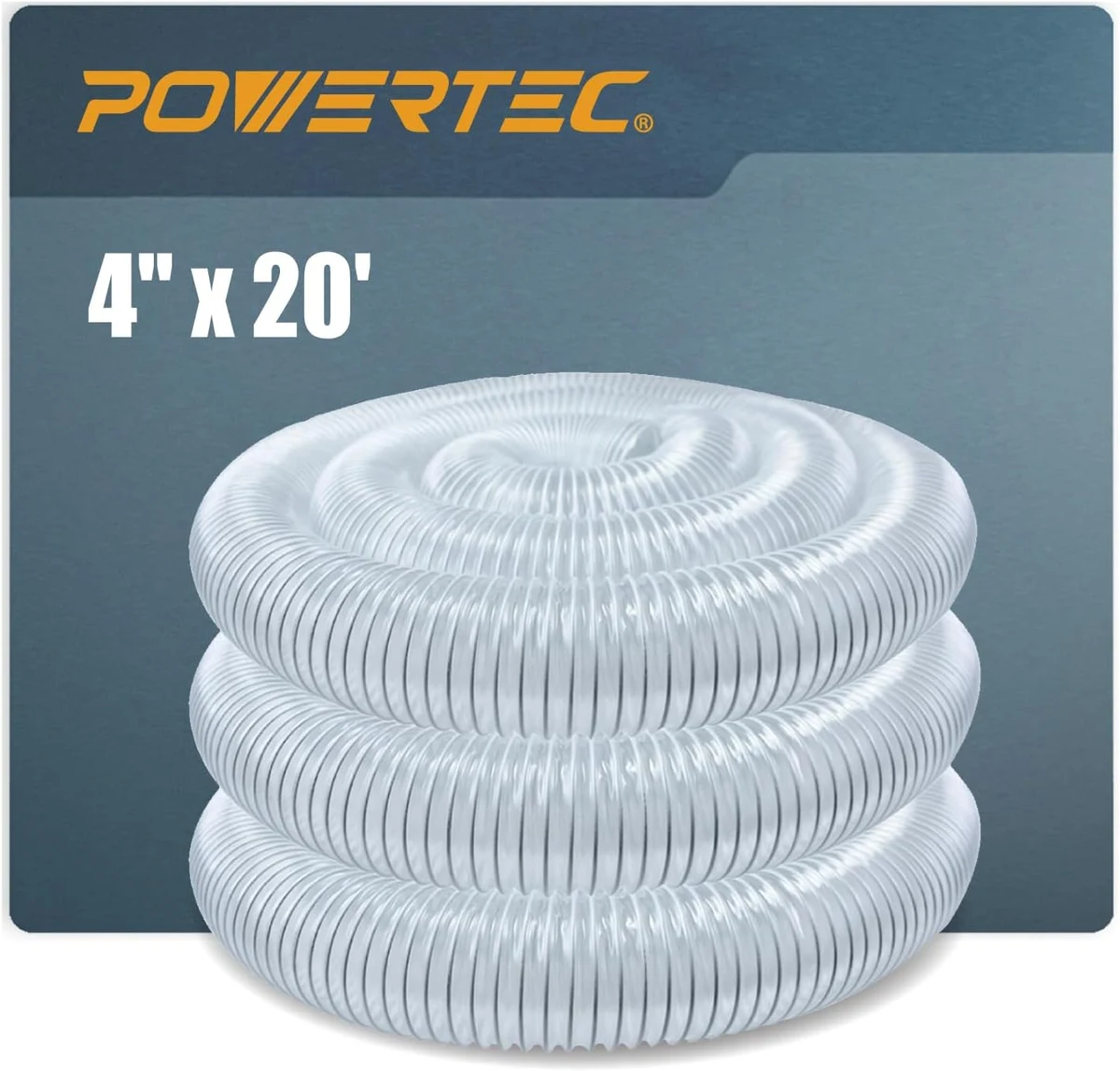
For a compatible four-inch dust collector connection, compare the POWERTEC 70143 clear PVC hose. For a handheld tool connected to a shop vacuum, compare a flexible tool-hose kit such as the Cen-Tec 94192. These are different airflow systems, so the larger diameter is not automatically the better purchase.
PRODUCTS IN THIS GUIDE
POWERTEC 70143 four-inch × 20-foot PVC hose
Clear large-port flexible hose for a correctly planned dust collector connection. Minimize unnecessary active length and verify fitting dimensions.
Check price on Amazon for POWERTEC 70143 four-inch × 20-foot PVC hose (opens in a new tab)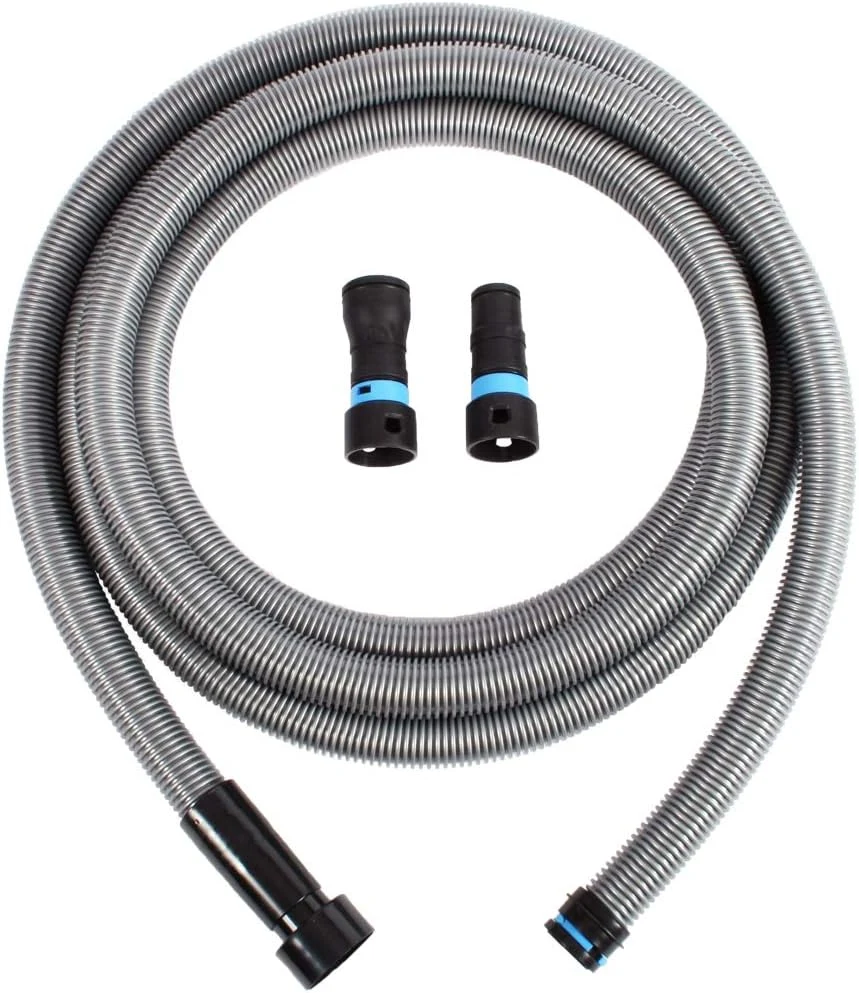
Cen-Tec 94192 Quick Click 16-foot hose kit
Small-port tool-extraction hose kit with interchangeable ends. Verify the actual tool and vacuum connections; broad brand compatibility is not universal fit.
Check price on Amazon for Cen-Tec 94192 Quick Click 16-foot hose kit (opens in a new tab)The most common expensive mistake is buying the hose first, then trying to adapt both ends until it fits. Start with the collector or vacuum, the machine's requirements, and the actual connection dimensions. A hose can join two components physically while still being the wrong arrangement for useful collection.
Research buying guide — October 27, 2026. We reviewed manufacturer documentation and verified the selected Amazon product identities and photographs. We have not measured pressure loss, flexibility, abrasion life, or static behavior. Affiliate purchases may earn us a commission.
Two useful hose paths
| Product | Appropriate starting point | What it does not solve | Amazon |
|---|---|---|---|
| POWERTEC 70143, nominal four-inch × 20-foot clear PVC hose | A flexible connection in a correctly sized large-port dust collection setup | Choosing the collector, proving airflow at the machine, or making a shop vac into a four-inch collector | 70143 hose ↗ |
| Cen-Tec 94192, nominal 1.25-inch × 16-foot Quick Click kit | Flexible extraction at compatible handheld-tool ports using a suitable vacuum | Universal fit across every tool or documented anti-static performance for an entire system | 94192 hose kit ↗ |
The POWERTEC size and model are documented in its dust-management catalog. The Cen-Tec kit is identified in the manufacturer's 94192 sheet and the exact Amazon listing linked above.
POWERTEC 70143: a large-port hose to size deliberately
The 70143 is a clear, wire-reinforced PVC hose sold as a 20-foot length in the four-inch size. We would consider it when a flexible connection is needed between a compatible machine and an adequately sized collector, especially if seeing a blockage is useful.
The clear wall helps identify where chips accumulate without dismantling the entire line. It is still a flexible corrugated hose, not a reason to run an unnecessary 20-foot coil behind the machine. Buy the length for your planned route and follow the product instructions if shortening it is appropriate.
Think about where flexibility is needed. A mobile machine might need an arc that permits movement; a fixed machine may need only a short final connection to rigid duct. Support the run so it does not sag into a series of low pockets or press sharply against a cabinet edge.
Its limits are important. PVC and a reinforcing wire do not by themselves establish an anti-static system or a suitable hose for hot material. Do not infer temperature, conductivity, or hazardous-dust ratings from the product's appearance. Choose components rated for the actual material and operating conditions.
Cen-Tec 94192: flexibility at the tool
The 94192 Amazon listing ↗ describes a 16-foot hose with interchangeable Quick Click tool fittings. We would compare it for a sander or another compatible small-port tool where a large cleanup hose is cumbersome.
The smaller, tool-oriented hose format addresses reach and handling. It can make a station easier to arrange when you need to move around a panel rather than keep the vacuum beside your hand. The removable ends are also worth considering if several measured tool ports can share one hose.
The tradeoffs are storage, resistance from length, and exact fit. Sixteen feet is useful only if you need that reach; a small fixed bench may have to store much of it. A multi-brand compatibility list does not establish that the supplied end fits your specific sander. Confirm the connection geometry before buying.
We would not choose this small-hose kit to replace a four-inch machine connection. It is also not advertised here as an independently verified anti-static system. If your extractor requires a conductive hose and approved fittings, buy the specified system rather than assuming any flexible replacement is equivalent.
Cen-Tec 94192 Quick Click 16-foot hose kit
Check price on Amazon for Cen-Tec 94192 Quick Click 16-foot hose kit (opens in a new tab)How to measure both ends
For a hose that clamps over a rigid port, compare the hose's inside diameter with the port's outside diameter. For a cuff that inserts into a socket, compare the cuff's outside diameter with the socket's inside diameter. Then check engagement length, taper, and any lip or locking feature.
Write down both measurements instead of writing only “four inch” or “two-and-a-half inch.” Nominal sizes describe product families and do not replace dimensional drawings. A dust hose, vacuum cuff, and plumbing fitting with similar labels may have different actual dimensions.
If a connector screws into the hose, confirm thread direction and the intended hose construction. Do not force a wrong-thread cuff into the reinforcing spiral. Our adapter buying guide includes a worked example of why two identical outside diameters cannot mate.
Length: buy reach without storing avoidable restriction
Draw the route from machine port to collector inlet. Include the machine's complete travel, a comfortable curve at each end, and clearance for stock and people. Then remove loops that are present only because the hose came in that length.
A longer hose and additional bends add resistance. The amount depends on the diameter, interior, bend geometry, and actual airflow. We have not assigned a universal “CFM lost per foot” figure because that would imply precision the setup does not support.
For a stationary shop system, a short flexible machine connection and planned rigid duct may be more useful than a long flexible trunk. For a vacuum station, a longer lightweight hose may be worth the handling benefit. The system determines the compromise; neither rule should be applied blindly.
Clamps, storage, and the real purchase cost
Check whether clamps and adapters are included. A bare hose can look inexpensive until you add the two correct ends, retention hardware, and support. Conversely, a complete tool kit adds little value if none of its supplied tool ends fit.
Plan storage that preserves a reasonable bend radius and keeps the hose off walking routes. Hooks should support rather than pinch the hose. Keep a removable tool end where it can be found, and label similar adapters with the tool they fit.
Inspect the installed run after moving equipment. Look for abrasion at edges, crushing under casters, leaking joints, or a coil that can snag long stock. Replace damaged components according to the manufacturer rather than accepting a permanently taped repair near the machine.
Static claims deserve a separate check
A wire helix is reinforcement; a clear wall is visibility. Neither establishes a documented electrical path through the hose and its fittings. Conductive and anti-static products can have different specifications and connection requirements.
Follow the collector, hose, and tool manufacturer's instructions for the actual setup. Do not treat a homemade grounding wire as certification for combustible or hazardous dust. If that application is relevant, choose a designed system with the appropriate documented components.
Questions buyers ask
Is a four-inch hose better on my shop vac?
Not automatically. A shop vac and a large-port collector have different performance characteristics. Match the tool and collection requirements rather than maximizing the hose diameter alone.
Should I buy 20 feet even if I need only six?
Only if the product and your route make the remaining length useful. Keeping unnecessary coils in the active run adds bulk and resistance. Consider an appropriately sized shorter product or permitted shortening.
Will the Cen-Tec kit fit every DEWALT or Bosch tool?
No such universal fit is established here. Measure the exact tool and compare the included fittings, even when its brand appears in a compatibility list.
Which should I buy first for a new shop?
Choose the collection system before the hose. Then compare POWERTEC 70143 ↗ for the large-port path or Cen-Tec 94192 ↗ for a compatible handheld-tool station. Use our dust collector sizing guide or shop vac versus extractor comparison to settle that first decision.
The photographs are Amazon catalog images, not an installation tested in our shop.
Explore the recommendations.
Check Amazon for current product details, available options, and pricing.
POWERTEC 70143 four-inch × 20-foot PVC hose
Product details
Clear large-port flexible hose for a correctly planned dust collector connection. Minimize unnecessary active length and verify fitting dimensions.
- Nominal four-inch diameter and 20-foot length
- Clear wire-reinforced PVC
- A wire helix does not establish an anti-static system
Cen-Tec 94192 Quick Click 16-foot hose kit
Product details
Small-port tool-extraction hose kit with interchangeable ends. Verify the actual tool and vacuum connections; broad brand compatibility is not universal fit.
- Nominal 1.25-inch, 16-foot hose kit
- Interchangeable Quick Click tool ends
- Check current included fittings and tank-end geometry