Shop Vac vs Dust Extractor for Sanders: What Is Worth Paying For?
Compare a compact DEWALT shop vac and Bosch HEPA dust extractor for sanding, including suction control, hose fit, filter cleaning, bags, and power limits.
Keep or buy a suitable shop vac for occasional sanding if you can achieve the required tool connection and filtration. Pay for a dust extractor when its documented filtration, suction adjustment, tool activation, and maintenance features solve problems you encounter regularly. A higher price or the word “extractor” does not by itself prove better dust capture at your particular sander.
PRODUCTS IN THIS GUIDE
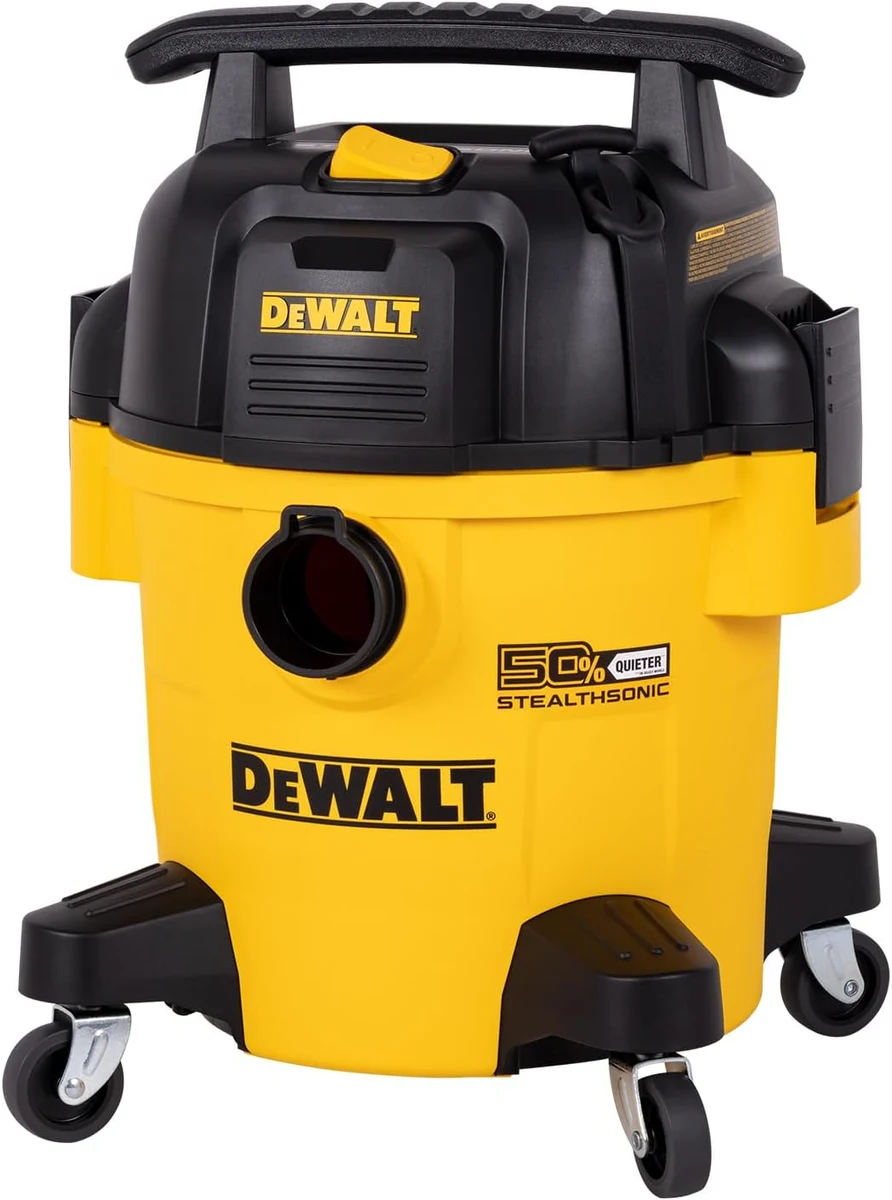
DEWALT DXV05P-QT STEALTHSONIC five-gallon vacuum
Compact wet/dry cleanup option with a plastic tank. Check the supplied filtration and tool connection against the intended dust application.
Check price on Amazon for DEWALT DXV05P-QT STEALTHSONIC five-gallon vacuum (opens in a new tab)Bosch VAC090AH nine-gallon dust extractor
Tool-connected extractor with documented HEPA filter, fleece bag, automatic filter cleaning, and Power Broker adjustment. Follow the manual for tool-outlet limits.
Check price on Amazon for Bosch VAC090AH nine-gallon dust extractor (opens in a new tab)For concrete examples, we compare the compact DEWALT DXV05P-QT cleanup vacuum with the Bosch VAC090AH extractor. They are different classes of purchase. The goal is to identify what the extra equipment buys you, not to declare one machine the right answer for every shop.
Research comparison — October 27, 2026. We checked manufacturer material, operating instructions, and Amazon product identities. We have not tested either machine with a sander or measured dust exposure. Affiliate links may earn us a commission.
What changes when you move to an extractor?
| Buying question | DEWALT DXV05P-QT example | Bosch VAC090AH example |
|---|---|---|
| Intended role here | Compact wet/dry cleanup vacuum adapted to a suitable tool | Tool-connected dust extractor |
| Filtration purchase | Check the supplied cartridge and approved bags for the actual material | Manufacturer specifies a HEPA filter and fleece bag in this configuration |
| Starting with the tool | Do not assume an integrated tool-activation outlet | Tool-activation function is documented |
| Suction adjustment | Plan the appropriate tool-end connection and permitted control | Power Broker adjustment is documented |
| Filter cleaning | Follow the filter's maintenance instructions | Automatic filter cleaning is documented |
| Portability | Five-gallon cleanup format | Nine-gallon extractor format; account for the complete hose setup |
| Purchase | DEWALT on Amazon ↗ | Bosch on Amazon ↗ |
The Bosch features above come from its VAC090AH product information. The DEWALT kit identity and included attachments are shown on its exact Amazon listing ↗. Treat retailer bundles as separate comparisons when the contents differ.
First solve the connection at the sander
The opening in the sander and its internal dust path strongly affect the result. A large vacuum hose connected through several loose reducers can be awkward, leak, or detach. A smooth-running extractor connected to the wrong port can still collect poorly.
Record the sander's dust-port dimensions and attachment design. Check whether the connection slides over a spigot, inserts into a socket, or locks to a proprietary adapter. Then compare the hose's actual end fitting. Nominal 1.25-, 1.5-, and 1-7/8-inch labels are not interchangeable dimensions.
Hose drag is part of the purchase. If a heavy hose pulls the sander off an edge or changes how you hold it, the arrangement needs attention. Support the hose above or behind the bench where appropriate and leave enough freedom for the full sanding stroke. Our adapter guide covers this before you spend money on another vacuum.
Why suction control can be worth paying for
More suction is not automatically easier sanding. Depending on the tool, pad, abrasive, and surface, excessive hold-down can make the sander harder to move. A manufacturer-supported way to adjust the system can improve handling while maintaining the intended collection arrangement.
The Bosch Power Broker feature also manages the relationship between the vacuum and a connected tool's electrical demand. That is not unlimited shared power. Read the current Bosch operating instructions for the allowed settings and loads before connecting a tool.
A tool-end bleed or a different hose can sometimes address handling on an existing compatible shop vac. If the rest of your setup works, changing the entire machine may not be the first purchase to make. Avoid uncontrolled leaks elsewhere as a substitute for an intended adjustment.
Filtration: buy the documented configuration
The VAC090AH is sold with an identified HEPA filter and fleece collection bag. That is a more specific starting point than buying a generic vacuum and assuming a later filter marked HEPA makes the complete machine equivalent.
For the DEWALT cleanup example, the supplied cartridge and dust bag do not establish the same system specification. Ask about approved components and your actual application before treating an aftermarket filter as an upgrade. A filter medium's particle-size label alone does not describe leakage around the filter, tank, or exhaust path.
This comparison addresses ordinary woodworking decisions, not permission to collect unknown renovation dust or hazardous coatings. Identify the material and follow the tool and collection requirements. Neither a visible absence of dust nor a powerful-sounding vacuum is an exposure measurement.
Automatic filter cleaning: useful, with a bag requirement
Bosch documents cleaning pulses on the VAC090AH to help maintain airflow as the filter loads. That is valuable to investigate when fine sanding dust repeatedly reduces the performance of your current vacuum. It does not eliminate filter inspections or bag changes.
The cleaning pulse also creates an additional sound during operation. If low noise is your main reason for upgrading, consider both the motor and the cleaning cycle. We have not measured their combined effect in a workshop.
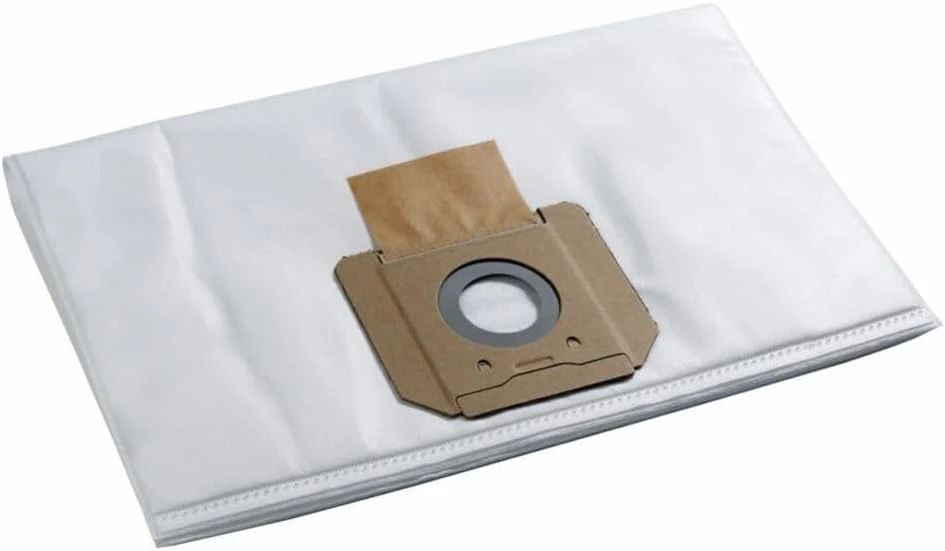
Bag compatibility matters: the Bosch manual distinguishes fleece from paper and warns about paper with cleaning pulses. Do not defeat the documented bag arrangement to reduce consumable cost. Our fleece-versus-paper guide explains the buying implications.
Compare a complete sanding station, not two bare machines
For the shop-vac path, count the vacuum if needed, correct bag and filter, manageable hose, adapter, storage, and any compatible automatic switch. For the extractor path, count the machine, included versus optional hose parts, replacement bags, and future filters.
An existing suitable vacuum has a major cost advantage over a new purchase. Conversely, a pile of adapters and add-ons can erase a cheap vacuum's apparent saving. Put both complete shopping lists beside the sander you own and decide which solves its actual problems.
Portability can reverse the choice too. A small cleanup vacuum might move upstairs easily but need frequent emptying. A larger extractor may be better parked at one station but cumbersome to lift. Try a footprint mock-up in the storage location and include hose parking.
Tool activation and cordless sanders
A corded tool plugged into a compatible sensing outlet can start the extractor when it draws power. A battery sander does not ordinarily trigger that current-sensing connection. A charger plugged into the outlet is not a substitute.
For cordless work, compare a specifically compatible remote or wireless system, or accept manual control. Before buying an external automatic switch, confirm that the vacuum resumes operation when supply power is switched and that all loads are within the relevant ratings.
Questions buyers ask
Do I need an extractor if I sand only a few small projects?
Possibly not. Start by identifying the material, verifying the collection requirements, and improving an existing suitable connection. Upgrade when a documented feature solves a repeated limitation.
Is the Bosch a replacement for a four-inch planer collector?
No. A small-hose dust extractor and a large-port chip collector serve different airflow needs. Use our dust collector sizing guide for stationary-machine planning.
Does HEPA mean I can skip a collection bag?
No. Follow the machine's required filter-and-bag arrangement. The Bosch instructions specifically address fleece use with HEPA filtration.
What would you buy for a new sanding station?
For regular tool-connected sanding, we would compare the Bosch VAC090AH ↗ against the complete cost of the alternatives. For occasional cleanup and a compatible tool setup, the DEWALT DXV05P-QT ↗ is a smaller starting point. If noise and lighter extractor features matter, see the quiet-vacuum shortlist.
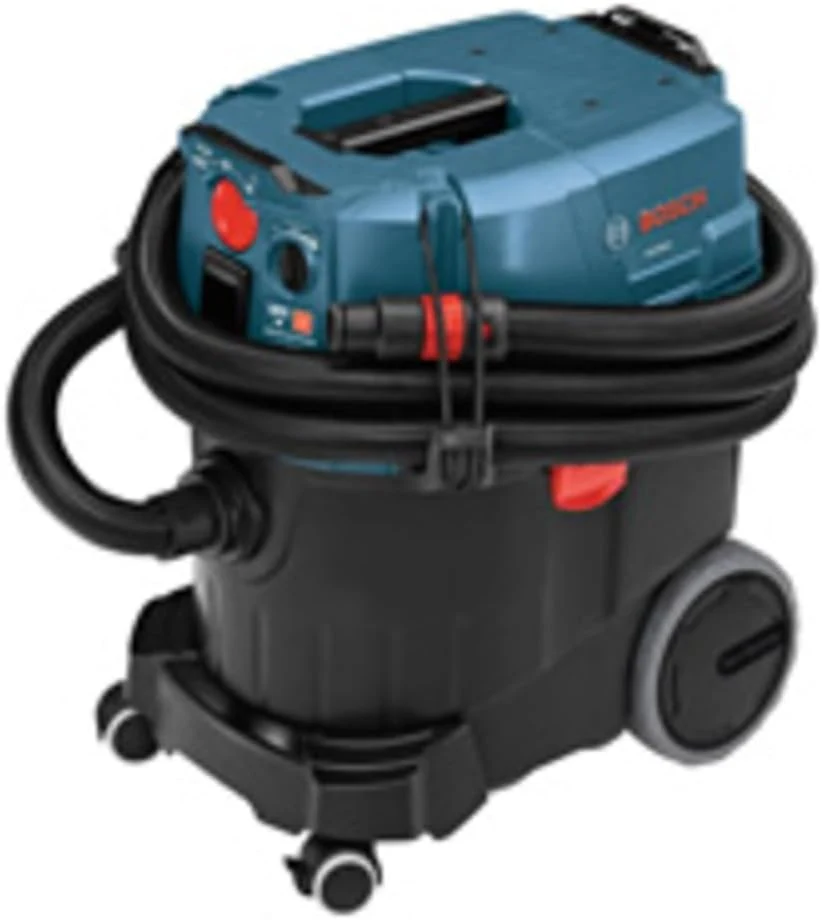
The photograph is Amazon catalog imagery, not a test of sanding dust capture.
Explore the recommendations.
Check Amazon for current product details, available options, and pricing.
DEWALT DXV05P-QT STEALTHSONIC five-gallon vacuum
Product details
Compact wet/dry cleanup option with a plastic tank. Check the supplied filtration and tool connection against the intended dust application.
- Five-gallon format
- Listing includes seven-foot, 1-7/8-inch hose
- Do not infer whole-system HEPA performance from the standard kit
Bosch VAC090AH nine-gallon dust extractor
Product details
Tool-connected extractor with documented HEPA filter, fleece bag, automatic filter cleaning, and Power Broker adjustment. Follow the manual for tool-outlet limits.
- Nine-gallon extractor configuration
- Documented HEPA filter and fleece bag
- Automatic cleaning; use approved bags and settings