Dustopper PRO Review: The Best Low-Profile Separator?
Dustopper PRO review covering its low-profile design, five-gallon bucket fit, airflow considerations, setup, and ideal small-shop uses.
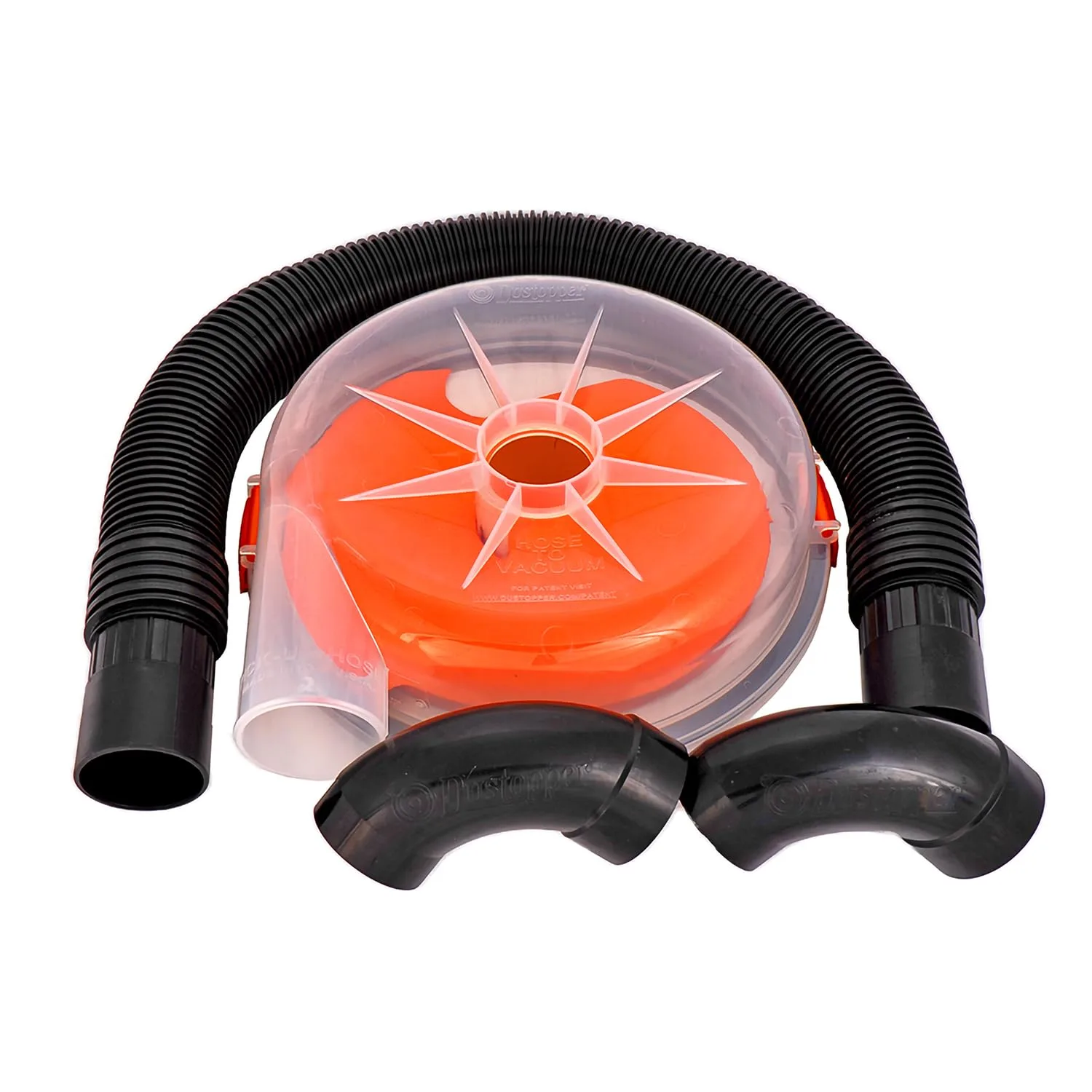
The Dustopper PRO is one of the most space-efficient ways to add pre-separation to a full-size shop vacuum. Instead of placing a tall cone above the bucket, it uses a shallow cyclonic chamber that can slide beneath a workbench. That shape is the reason to choose it—and also the reason careful hose routing and vacuum matching matter.
Research review — September 5, 2026. We examined Dustopper's current specifications, instructions, and Amazon listing. We have not independently tested airflow, separation efficiency, liquid pickup, static behavior, or durability. Performance varies with the vacuum, hose, seals, material, and fill level.
Check the Dustopper PRO on Amazon ↗.
The short verdict
The Dustopper PRO is a strong fit for a small shop that already owns a five-gallon bucket and a wet/dry vacuum with nominal 2-1/2-inch connections. Its low height, built-in latches, gasket, and included sweep elbows make a clean under-bench installation possible without fabricating a tall cart.
Do not buy it based on the “fits most” idea alone. Dustopper recommends a vacuum rated at 5 peak HP or higher, and its ports are intended for nominal 2-1/2-inch hose. Smaller dust-extractor hoses will need a planned adapter path.
What is included
| Detail | Dustopper's published specification |
|---|---|
| Form | Low-profile cyclonic separator lid |
| Bucket fit | Standard five-gallon pails |
| Hose size | Nominal 2-1/2-inch vacuum hose and accessory ports |
| Vacuum guidance | 5 peak HP or higher |
| Included airflow parts | Two high-flow 90-degree sweep elbows |
| Material | Durable anti-static resin |
The official Dustopper PRO page says the current version adds a gasket seal, stronger walls, reinforced top, grounding hardware, larger outlet, and improved latches. The company claims up to 99.9% pre-separation, while noting that efficiency varies with debris and operating conditions.
The included sweep elbows are more useful than they may appear. A tight plumbing elbow can create turbulence and restriction. A broader-radius turn helps you keep hoses beneath a bench without forcing an abrupt bend immediately at the lid.
Where the low profile wins
Height is often the limiting dimension in a one-car garage. A tall cone on two stacked buckets can consume the space below a bench and become top-heavy when pulled by a hose. The Dustopper's shallow lid keeps the center of gravity low and lets the bucket remain the largest part of the assembly.
It is also straightforward to empty. Release the latches, lift the separator, and dump or replace the bucket. A second bucket with a tight lid makes it easier to pause work without sending collected dust back into the room.
The compromises
Low-profile separators depend on controlled air movement inside a shallow chamber. Dustopper's own support material explains that excessive airflow can introduce currents that reduce separation efficiency. That is one reason the entire system—not only the peak-horsepower label—matters.
Bucket strength matters too. A powerful vacuum can collapse a thin pail if the tool end becomes blocked. Use a sound, compatible container, inspect it for cracks, and never deliberately seal the pickup hose to “test suction.”
The PRO is not the smallest possible purchase because you still need a bucket, stable cart or parking spot, and any adapters required by your hose system. Price the complete setup before comparing it with an integrated separator.
Dustopper PRO versus taller cyclones
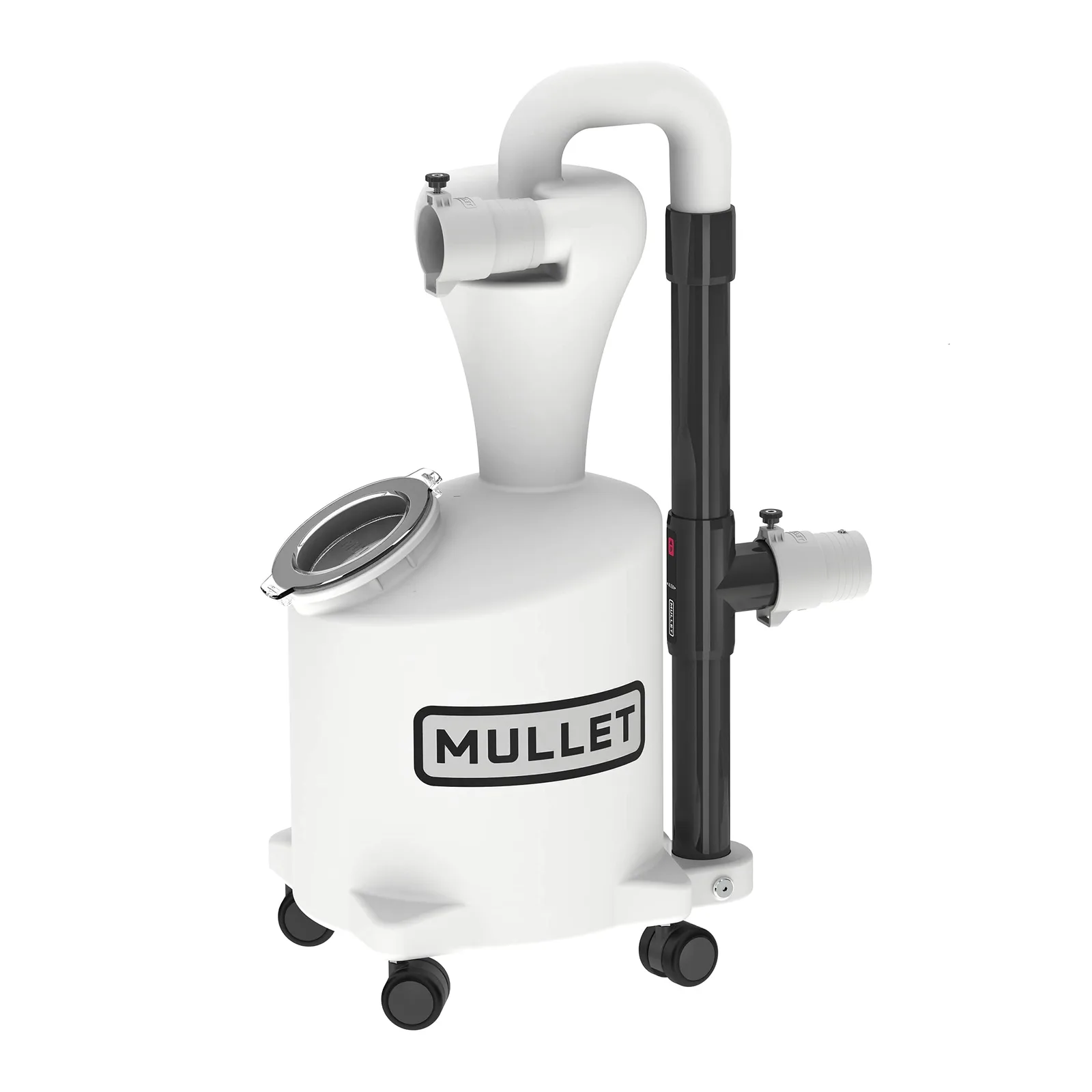
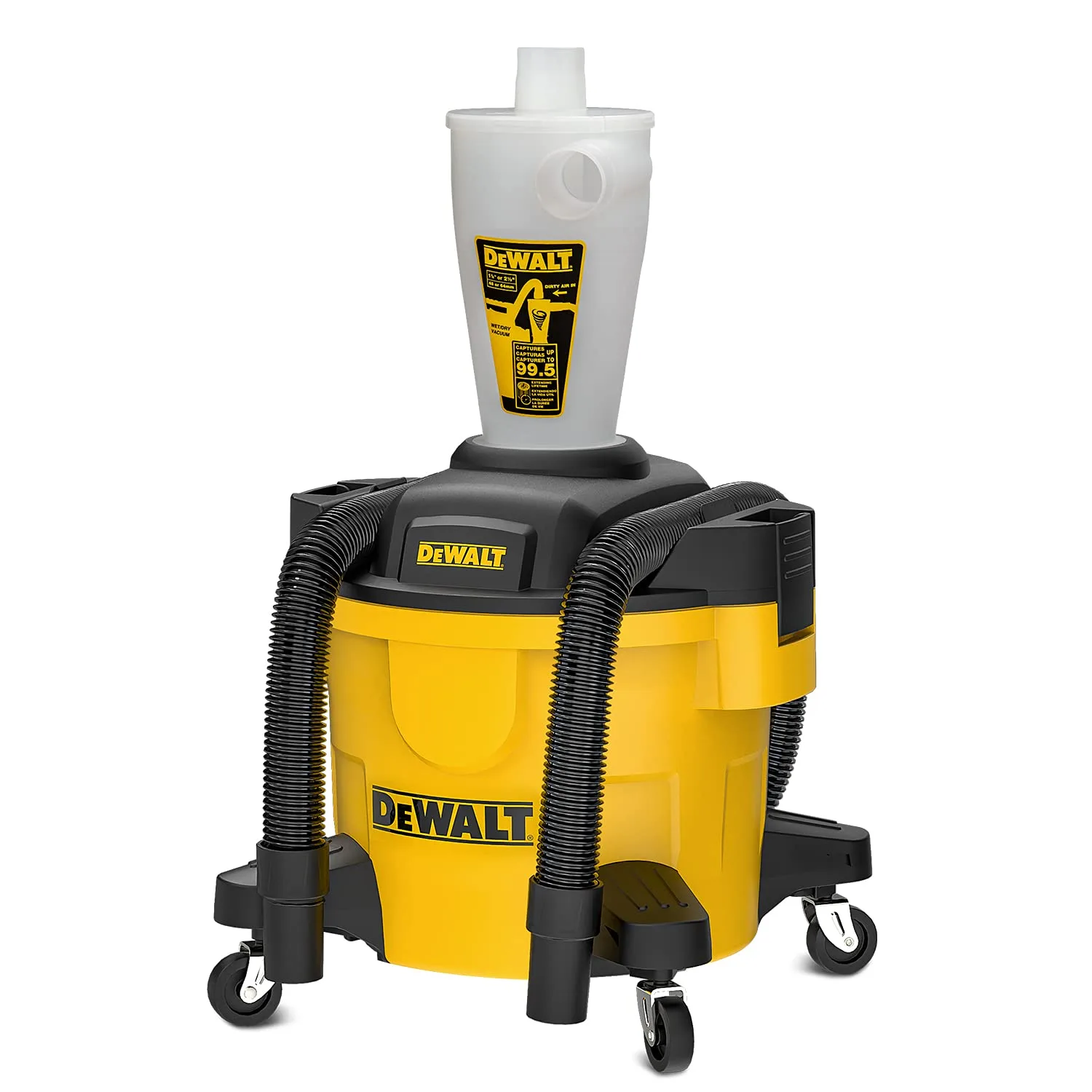
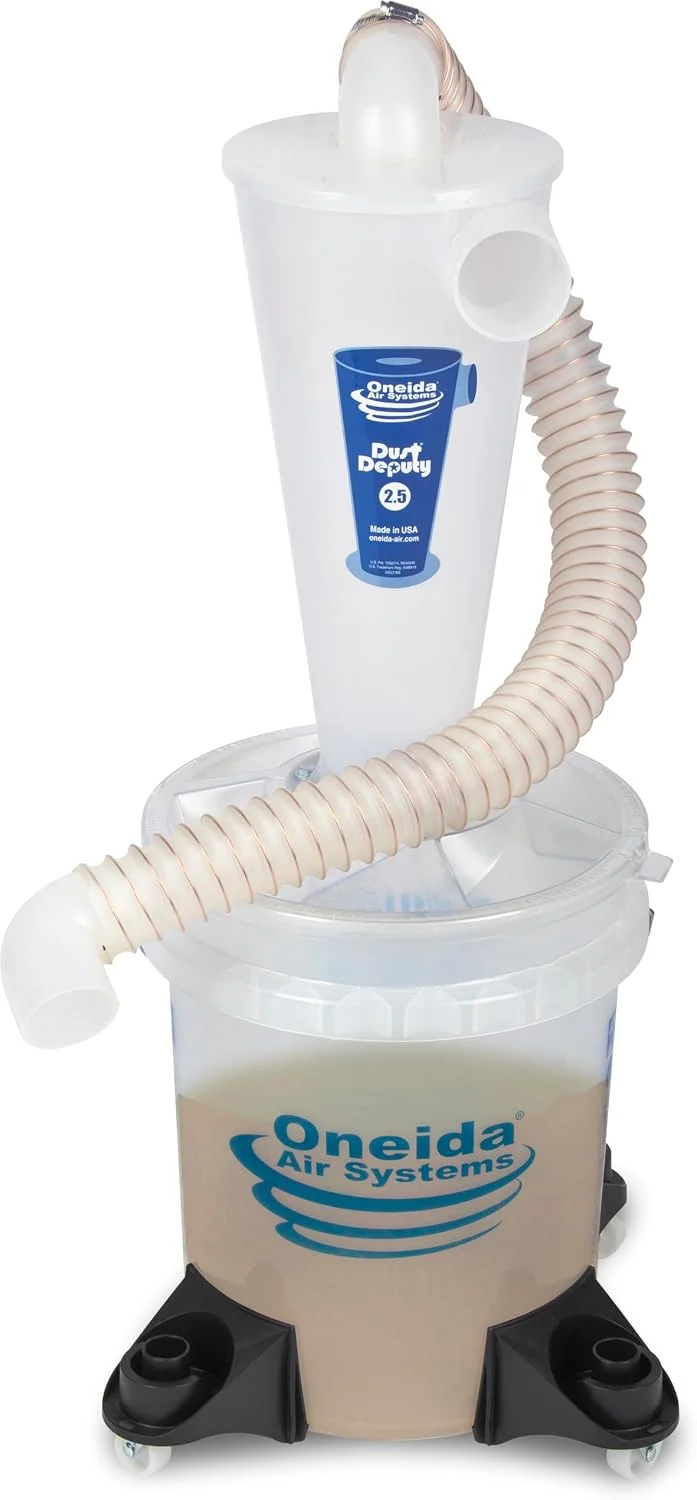
The Oneida Dust Deputy 2.5 is better suited to someone who wants a traditional tall cyclone and prioritizes direct 2.5-inch cuff compatibility. The Mullet High-Speed Cyclone offers a more integrated mobile frame. The Dustopper's advantage is fitting beneath or beside equipment where vertical clearance is scarce.
A practical installation checklist
- Measure the space with both sweep elbows and hoses attached.
- Confirm the bucket rim is clean and the gasket sits evenly.
- Connect the tool hose to the inlet and the vacuum hose to the outlet as marked in the manual.
- Support the hoses so they do not pry up on the separator while you work.
- Empty the bucket before debris reaches the underside of the lid.
- Continue using the correct vacuum filter and bag for the dust being collected.
Who should buy it?
Consider the Dustopper PRO for a compact mobile cart, under-bench station, or shop-cleanup vacuum with 2-1/2-inch hose. Look elsewhere if you use a small European-style extractor hose, want a ready-to-roll system with its own bin, or need four-inch airflow for a planer, jointer, or large cabinet saw.
Can it collect liquids?
The manufacturer presents it as capable of separating liquids, but wet pickup must also be permitted by your vacuum. Remove dry-only bags or filters only as directed by the vacuum manual, and never collect hazardous liquids.
Is the grounding kit a substitute for dust safety planning?
No. Static mitigation is one part of system design. It does not make combustible dust harmless or certify a home-shop setup for explosive atmospheres.
View the Dustopper PRO on Amazon ↗, read our shop vacuum guide, or compare the Rockler Dust Right separator. The featured product image matches the Amazon listing for ASIN B0CN7DC7N9; verify the selected variation before ordering.