Oneida Dust Deputy 2.5 Review: Better Airflow for a Shop Vac?
Dust Deputy 2.5 review comparing DIY and Deluxe kits, larger hose ports, installation needs, limitations, and ideal shop-vac applications.
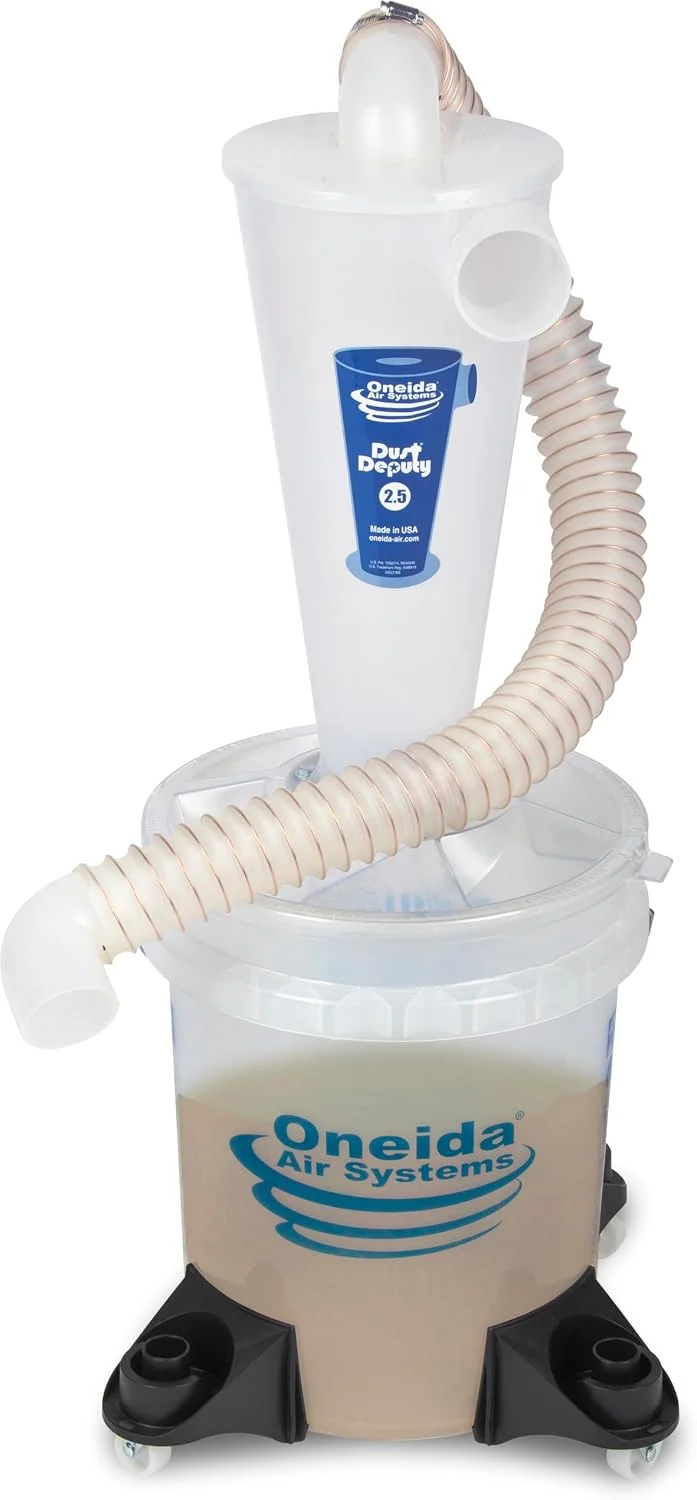
The Oneida Dust Deputy 2.5 is a high-airflow update to the familiar shop-vacuum cyclone. Its larger inlet and outlet are designed for modern wet/dry vacuums with 2.5-inch hose cuffs, making it a better starting point than the original smaller Dust Deputy when you want to preserve as much airflow as practical.
Research review — September 5, 2026. We reviewed current Oneida specifications, dimensions, manuals, and the manufacturer-linked Amazon listing. We have not independently measured airflow, separation efficiency, static discharge, or durability. Oneida's performance figures are manufacturer claims and depend on the full system.
Check the Dust Deputy 2.5 Deluxe kit on Amazon ↗.
The short verdict
Choose the Dust Deputy 2.5 if your vacuum already uses standard 2.5-inch cuffs and you want a proven traditional cyclone shape. The DIY version is best for someone comfortable building an airtight collection bin; the Deluxe kit is the easier route when you also need buckets, hose, casters, and mounting hardware.
Its biggest downside is height. The cyclone alone is roughly 15-5/8 inches tall, so a bucket-mounted assembly needs substantially more vertical clearance than a low-profile lid separator.
DIY and Deluxe are different purchases
| Detail | Dust Deputy 2.5 DIY |
|---|---|
| Cyclone height | 15.625 inches |
| Inlet and outlet | Nominal 2.25-inch ID / 2.5-inch OD tapered ports |
| Separation claim | More than 99% of fine wood dust |
| Build material | Anti-static polypropylene |
| Included | Cyclone, gasket, mounting hardware |
| Still required | Airtight reinforced container and vacuum hose setup |
Oneida's Dust Deputy 2.5 DIY specifications say the larger cyclone can deliver up to twice the airflow of its smaller cyclone and common lid-style separators. That is not twice the airflow of your vacuum; it is a comparison of restriction through the separator designs.
The Deluxe kit adds a purpose-built collection drum, dolly, hose, elbows, gasket, and hardware. Check the exact Amazon variation because kit contents and container capacity can differ.
Why the 2.5-inch ports matter
Every reducer and narrow section raises resistance. A separator that accepts the cuffed hose from a full-size wet/dry vacuum can avoid an immediate step down at the cyclone. That helps with cleanup, router-table fences, miter-saw hoods, and other uses that can benefit from a larger vacuum hose.
It does not change the fundamental difference between a vacuum and a dust collector. High static pressure makes a vacuum effective through a small hose; high airflow makes a dust collector better for large machine hoods. Do not put a 2.5-inch separator in the middle of a four-inch collector line.
Building the DIY version correctly
The collection container must be airtight and strong enough to resist vacuum pressure. Thin utility buckets can deform if the inlet is blocked. Use the gasket and mounting pattern in the manual, reinforce the lid when necessary, and support the cyclone so hose weight does not flex the seal.
A compact dolly that carries both the separator and vacuum makes the system easier to live with. Keep the cyclone upright, make room to remove the bin, and secure the hoses so pulling the tool end does not topple the assembly.
Dust Deputy 2.5 versus low-profile separators
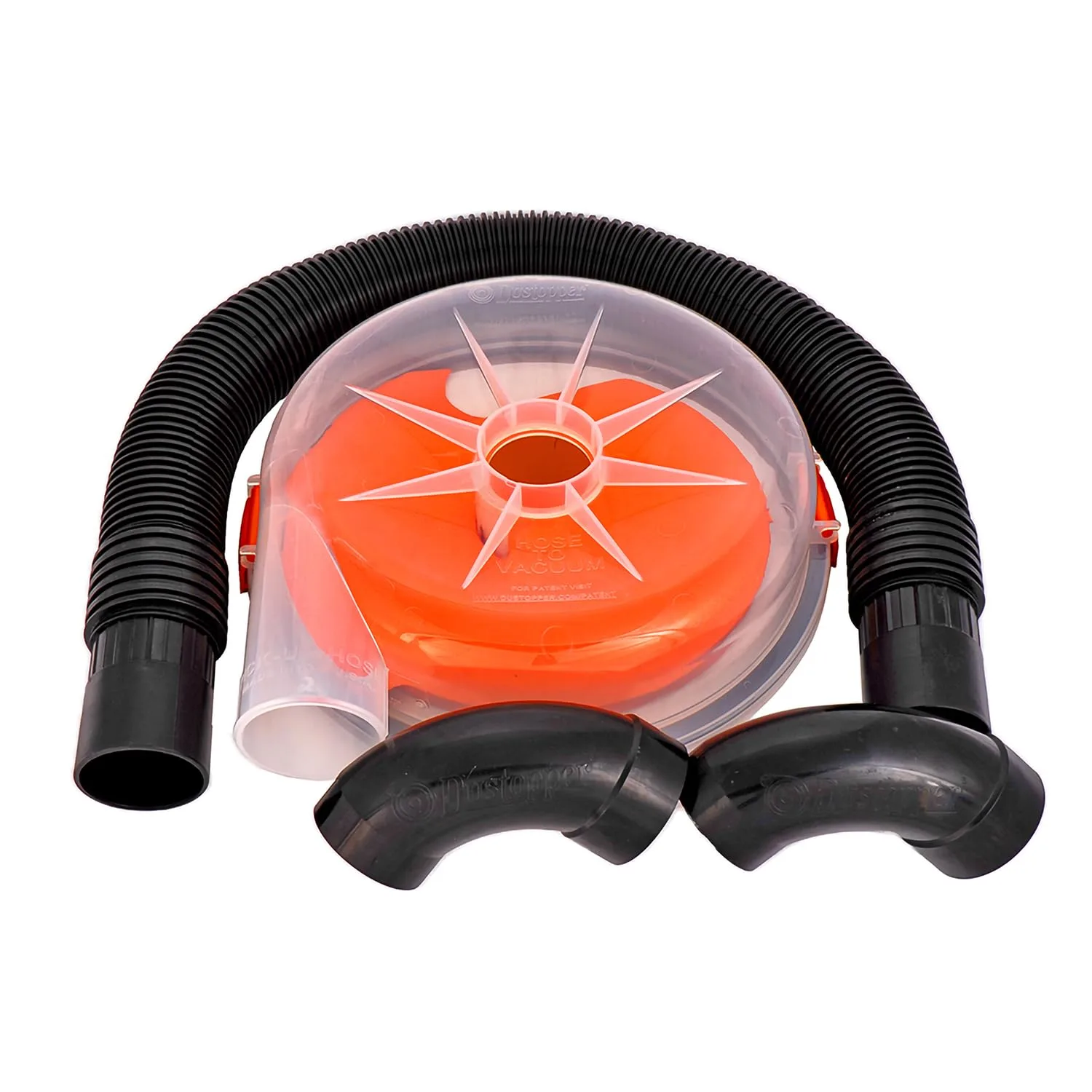
The Dustopper PRO wins when the system must fit beneath a bench. The Rockler Dust Right separator provides a complete ten-gallon rolling bin. The Dust Deputy 2.5 is the flexible choice for a DIY builder who wants the traditional cyclone geometry and large cuffs.
Operating habits that protect performance
- Keep the cyclone vertical and all seals airtight.
- Use smooth, gradual hose paths and the shortest practical connection between separator and vacuum.
- Empty the bin before debris reaches the cyclone discharge.
- Check the vacuum filter after fine sanding work even when the bin looks effective.
- Use only collection methods approved for the material. Ordinary shop vacuums and plastic separators are not a solution for hot sparks or regulated hazardous dust.
Who should buy it?
Consider the Dust Deputy 2.5 if you have a strong full-size shop vacuum, use 2.5-inch hose, and want either a customizable DIY build or a complete kit. Look elsewhere if height is your main constraint, you only use a compact small-hose extractor, or your stationary machines need a central four- or six-inch system.
Will it stop all fine dust from reaching the filter?
No. The manufacturer reports high separation efficiency, but no separator is perfect in every setup. Very fine particles, leaks, full bins, and disturbed debris can send material onward. Keep the correct filter installed and maintain it.
Is the anti-static material fully conductive?
Oneida distinguishes anti-static resin from fully static-conductive material. Follow its grounding instructions and do not infer certification beyond the published rating.
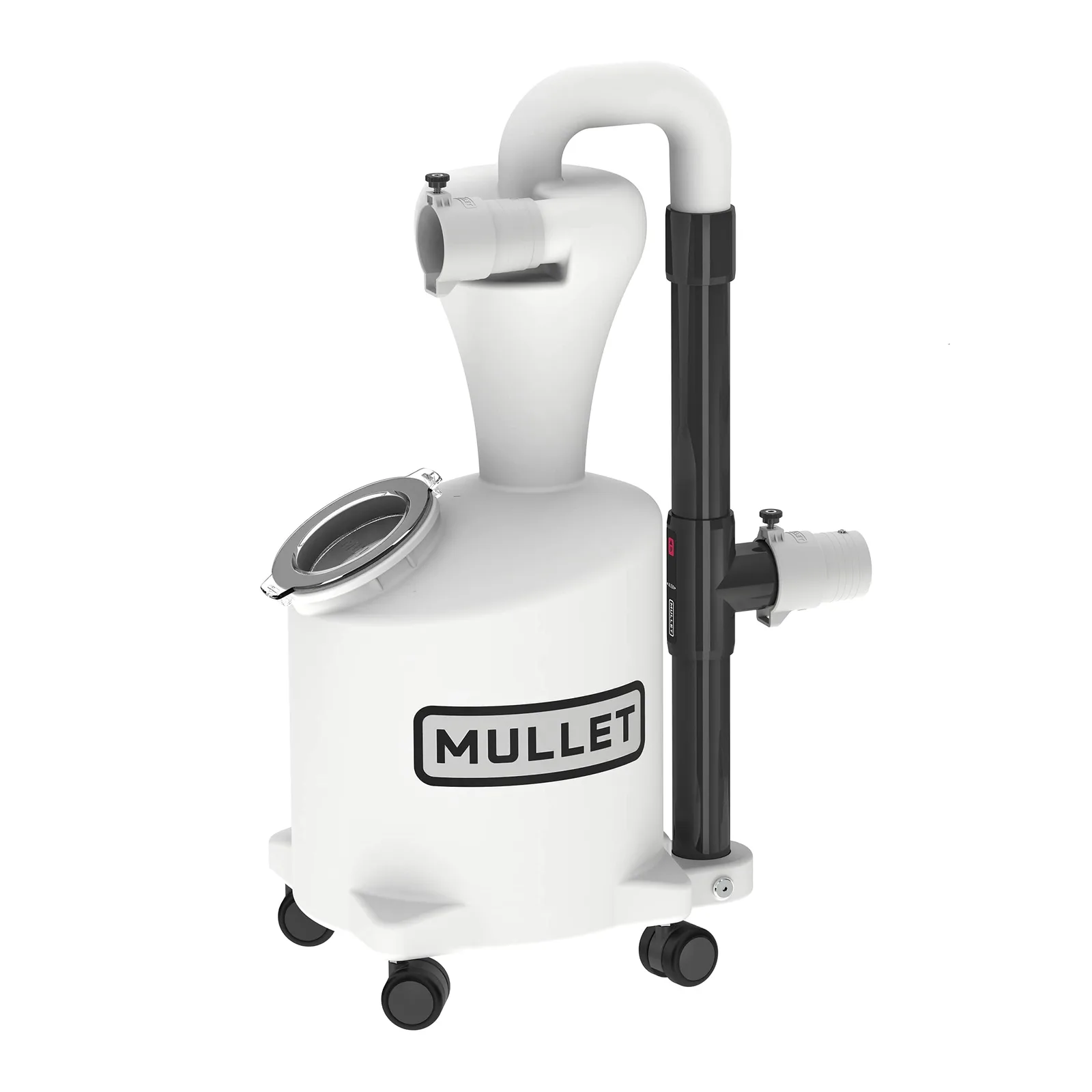
View the Dust Deputy 2.5 Deluxe on Amazon ↗, compare the Mullet High-Speed Cyclone, or use our dust collector calculator before choosing the rest of the system. The featured product image matches the Amazon listing for ASIN B0B4PSSFSN; verify the selected variation before ordering.