Rockler Dust Right Separator Review: Is 10 Gallons Better?
Rockler Dust Right Separator review covering its ten-gallon bin, five-caster base, hose fit, capacity advantages, and small-shop tradeoffs.
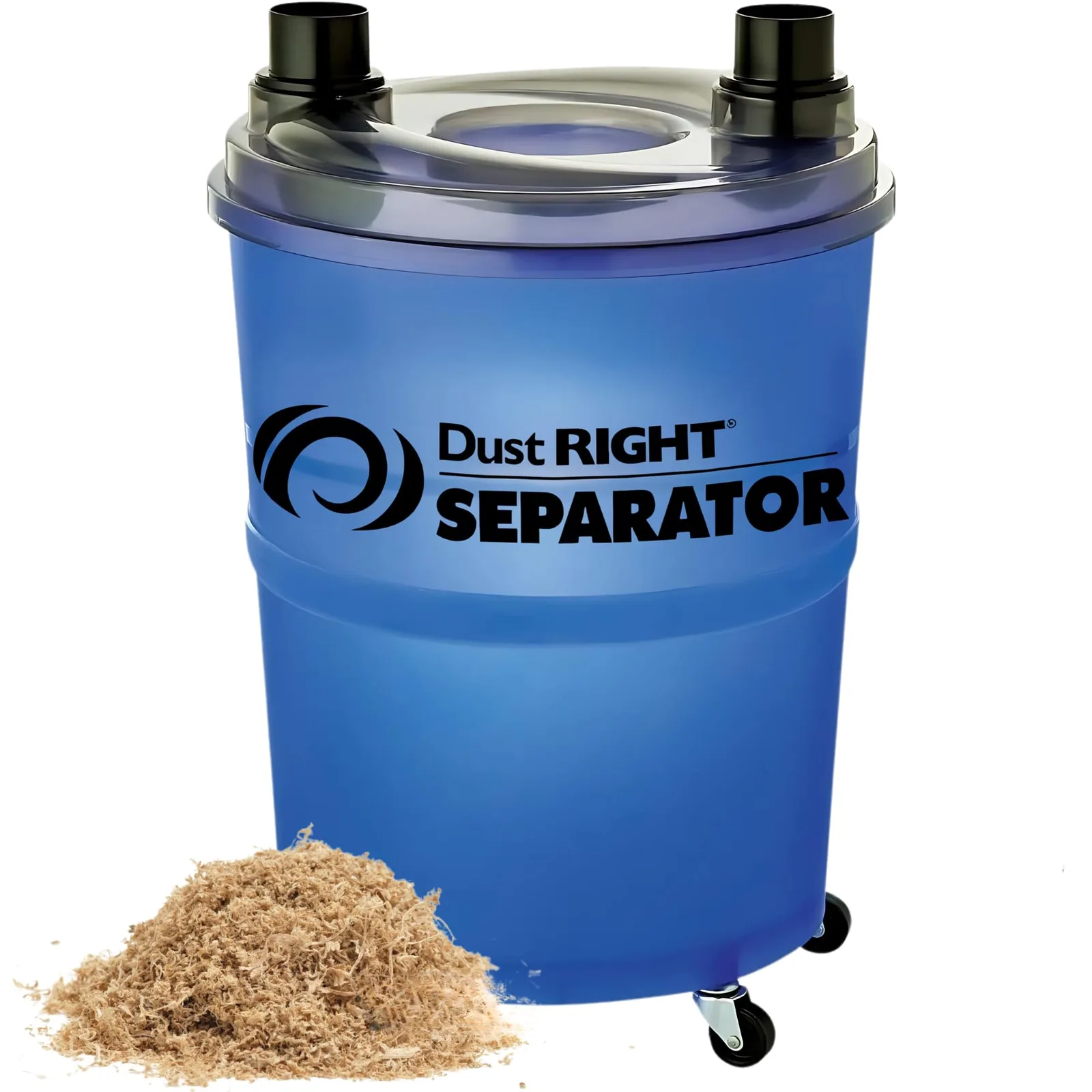
The Rockler Dust Right Separator is built around a useful idea: give a shop-vacuum separator enough capacity and wheelbase that it can collect real project debris without becoming a top-heavy bucket tower. Its ten-gallon translucent bin, five-caster base, and included connecting hose make it the roomiest complete system in this group.
Research review — September 5, 2026. We reviewed Rockler's current product specifications, instructions, and Amazon listing. We have not independently measured separation efficiency, airflow loss, stability, hose fit, or durability. This is an editorial evaluation of the published design, not a hands-on test.
Check the Rockler Dust Right Separator on Amazon ↗.
The short verdict
The Dust Right is a sensible choice for a woodworker who fills five-gallon separators too quickly but still wants to use a shop vacuum. Its wide five-caster base should be easier to move around a hose-filled shop than a narrow DIY stack, and the translucent container makes the fill level visible.
It needs more floor space than a bucket-top separator, and Rockler recommends a shop vacuum rated at 4 HP or more. Confirm that the included and required fittings match your vacuum before buying.
Published specifications that matter
| Detail | Rockler's published specification |
|---|---|
| Capacity | Ten gallons |
| Vacuum connection | For shop vacuums with a 2-1/4-inch ID outlet |
| Suggested vacuum | 4 HP or more |
| Included hose | Approximately 36-inch Flex-Form hose |
| Mobility | Five-caster base |
| Fill check | Translucent collection bucket |
The official Dust Right product page says the hoses connect inside the inlet and outlet ports to resist accidental disconnection. It describes cyclonic airflow that drops sawdust and chips before they reach the vacuum filter. Rockler does not publish a universal separation percentage on that page, which is appropriate given how much the vacuum, material, hose, and seals can change results.
Capacity is the main advantage
A ten-gallon bin gives bulky chips more room than a standard five-gallon pail. That can be helpful at a router table, miter saw, or benchtop planer where a short session produces more volume than fine sanding alone. More capacity does not make a shop vacuum suitable for every planer: the tool's airflow requirement and port size still decide whether a vacuum-based system is appropriate.
The translucent wall is equally practical. You can stop before chips rise into the separator without opening the lid. Marking a conservative maximum fill line makes that habit easier.
Stability and movement
Five casters distribute the footprint around the bucket and allow movement in multiple directions. That should help on a smooth shop floor, but small casters can still catch on cords, expansion joints, and chips. Move the separator by its body rather than yanking the hose.
The 36-inch connecting hose is intended to bridge the separator and vacuum. Put those two pieces close together; extra hose between them adds restriction without increasing reach at the tool. Use the longer hose on the inlet side where mobility actually helps.
Dust Right versus compact alternatives
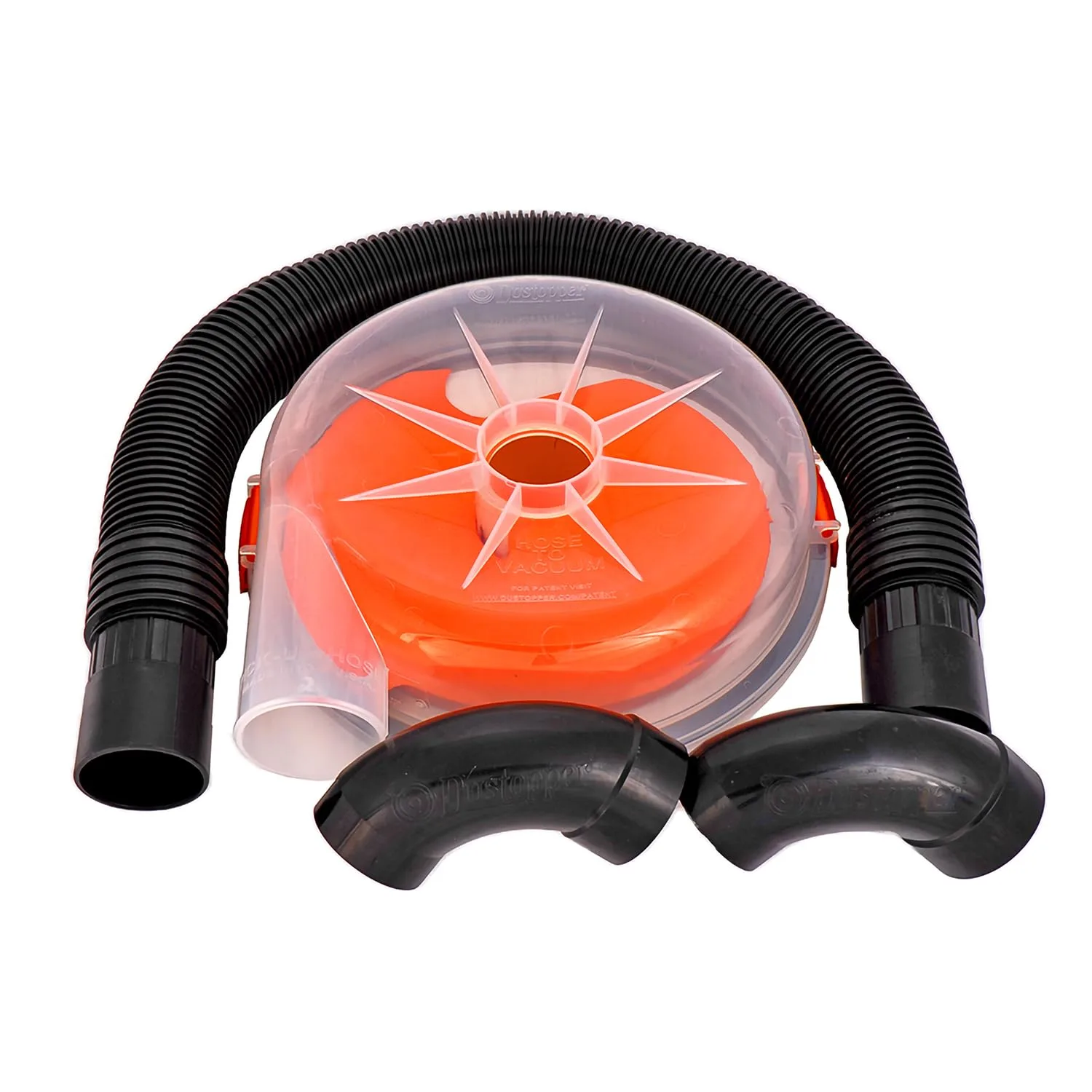
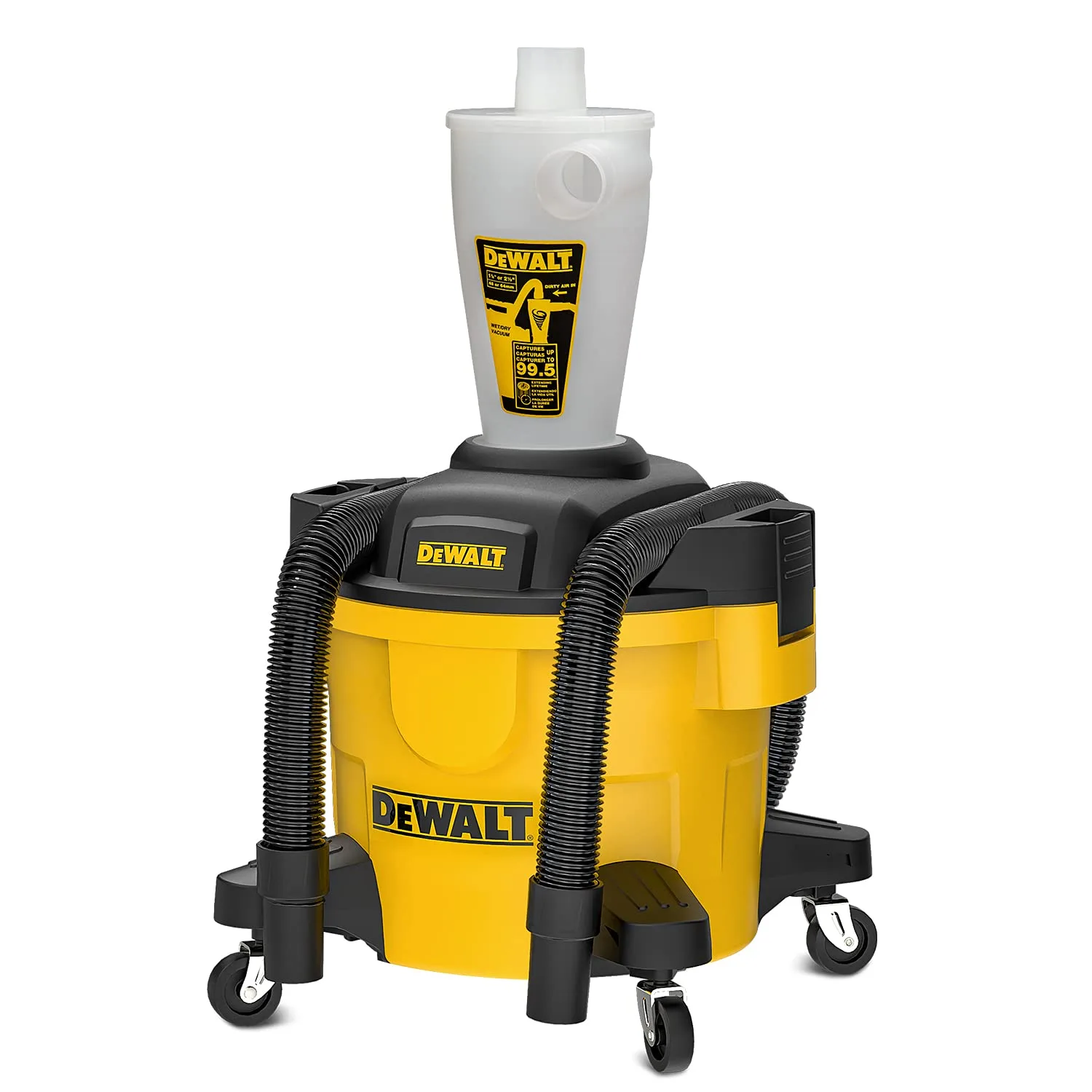
The DEWALT DXVCS002 offers a smaller six-gallon mobile package. The Dustopper PRO is easier to fit beneath a bench. The Dust Deputy 2.5 offers more freedom to choose your own container. Rockler's design is best understood as the capacity-and-stability option.
Connection planning
Rockler specifies a 2-1/4-inch inside-diameter vacuum outlet for the system. Measure your actual vacuum port and hose cuffs before ordering. A “2-1/2-inch shop vac” description can refer to the nominal hose family while the physical cuff fits over or inside a different measured diameter.
Use Rockler's connection guide when mixing Dust Right fittings with another hose system. A firm friction fit is useful, but it should still come apart intentionally for emptying and service.
Setup and care
- Assemble the five-caster base on a flat surface and confirm every fastener is secure.
- Connect the short hose from separator outlet to vacuum inlet.
- Route the tool hose to the separator inlet without tight bends.
- Check lid and port seals whenever performance changes.
- Empty the translucent bin before the pile reaches the internal separator.
- Continue inspecting the vacuum filter and use a suitable bag when the application calls for one.
Who should buy it?
Consider the Dust Right if you want more capacity than a standard bucket, move the system around a level shop, and already own a compatible full-size wet/dry vacuum. Choose a smaller design if floor space is tight, the unit must live below a bench, or you rarely generate enough debris to justify ten gallons.
Is it a replacement for a dust collector?
No. It is a pre-separator for a shop vacuum. Large stationary machines with four-inch ports generally need much greater airflow. Our small-garage dust collector comparison covers that equipment class.
Does the translucent bucket weaken over time?
All plastic collection vessels deserve periodic inspection. Look for cracks, damaged latches, distorted seals, and caster problems. Replace a compromised component rather than trying to restore it with tape in the airflow path.
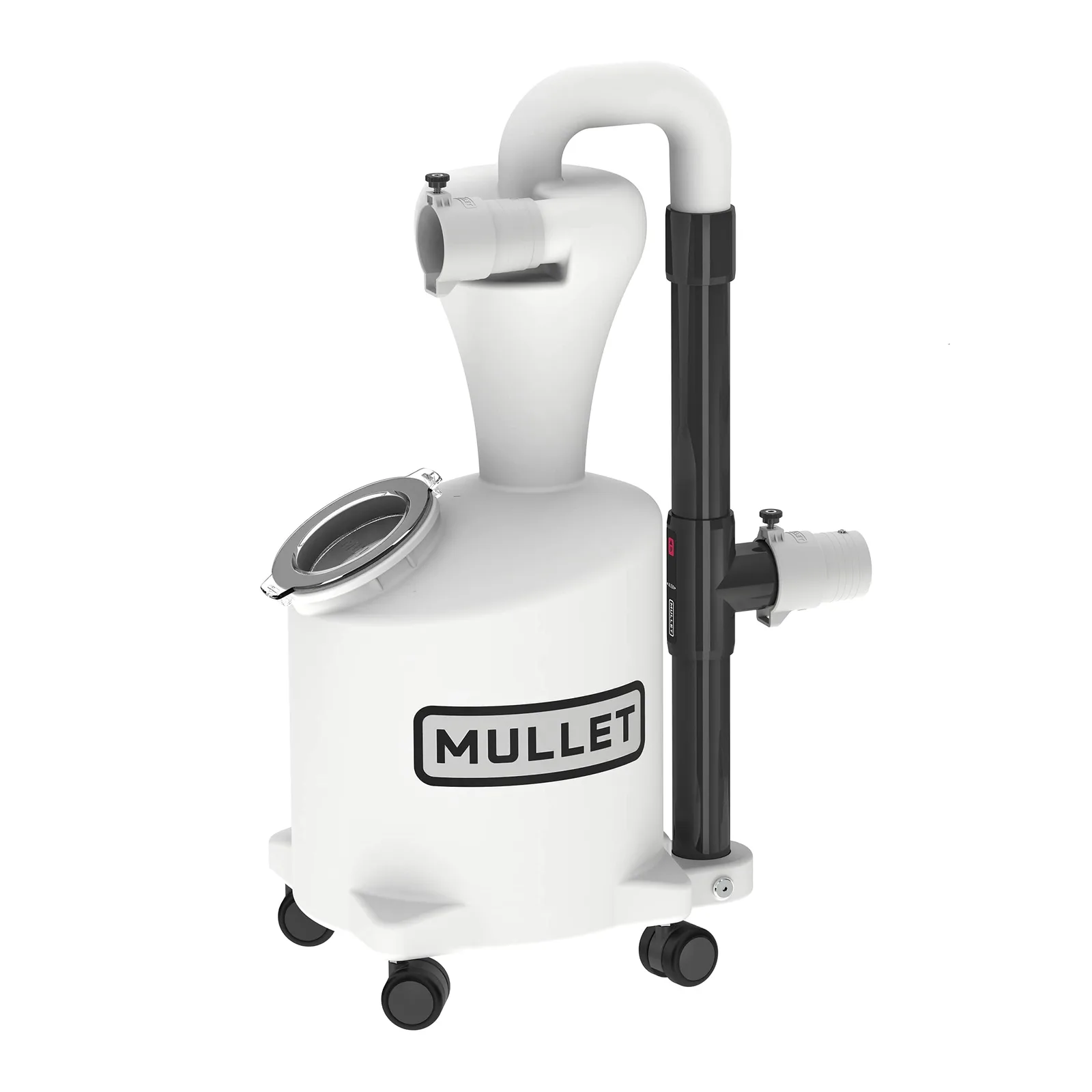
View the Rockler Dust Right Separator on Amazon ↗, compare the Mullet High-Speed Cyclone, or read our shop vacuum guide. The featured product image matches the Amazon listing for ASIN B00AHGJC8S; verify the selected variation before ordering.