The Ultimate Workshop Organization Guide
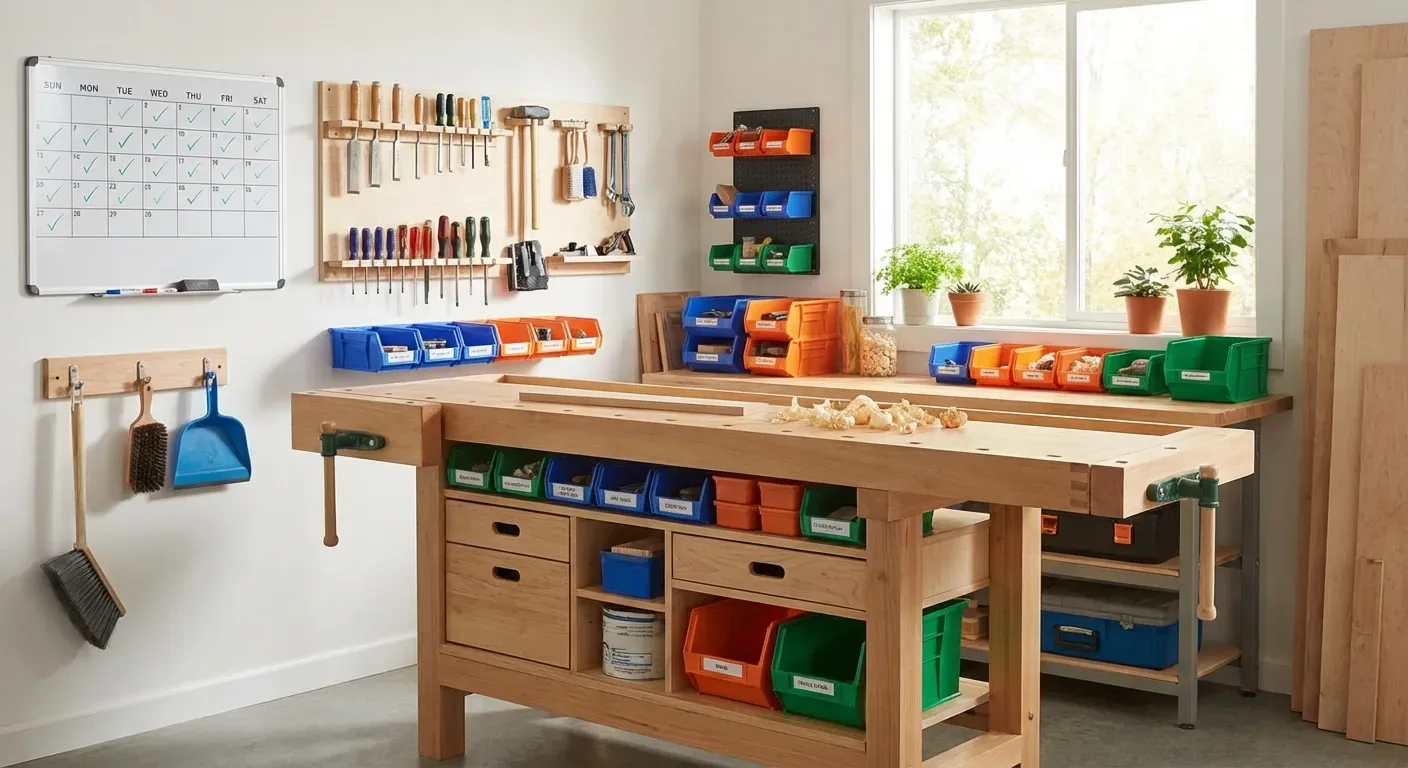
Organize a woodworking shop with practical zones, storage systems, labeling ideas, and a step-by-step plan for reclaiming your workspace.
Read the guide →From the first French cleat to a complete shop rethink. Find a useful place to start.
Find the right advice for your space.
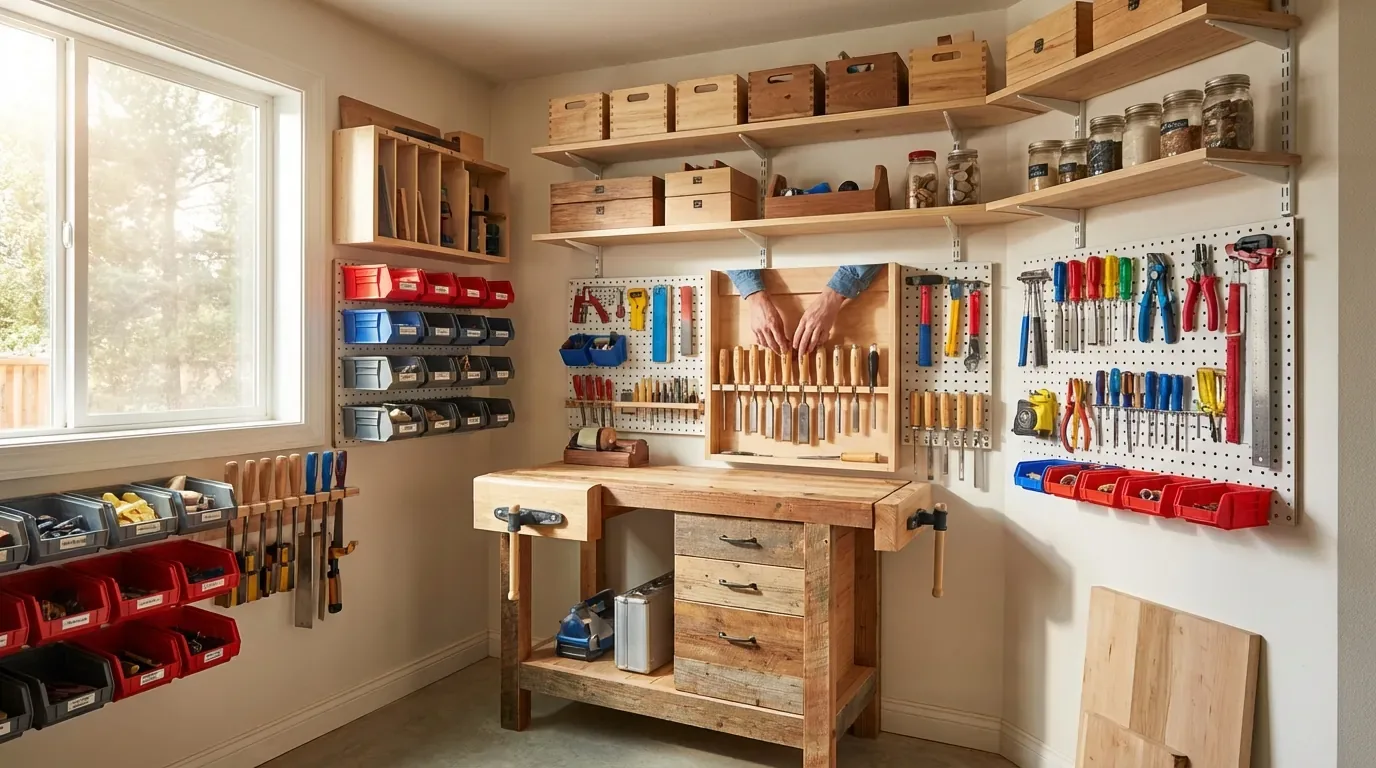
Organize a woodworking shop with practical zones, storage systems, labeling ideas, and a step-by-step plan for reclaiming your workspace.
Read the guide →Plan a small workshop layout around safe clearances, material flow, mobile tools, lighting, power, and storage that uses every square foot.
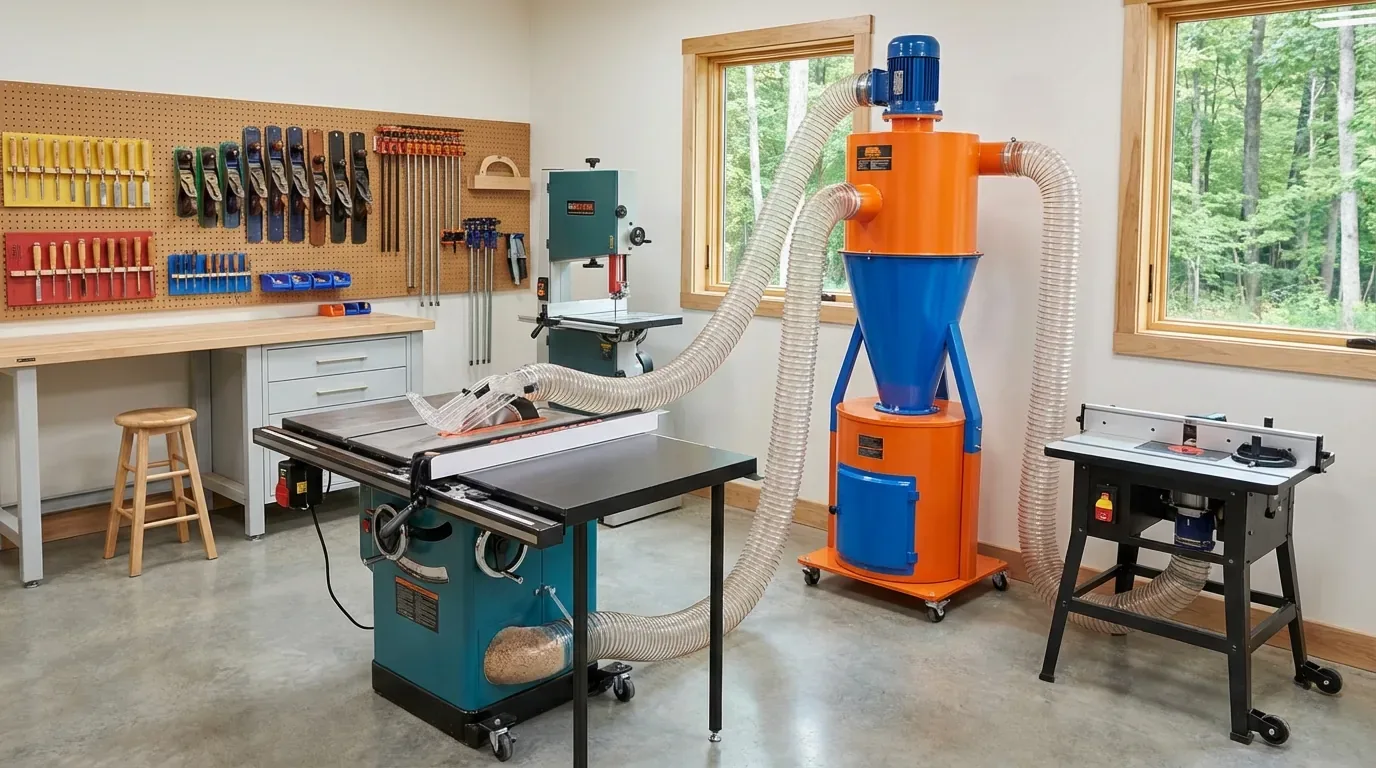
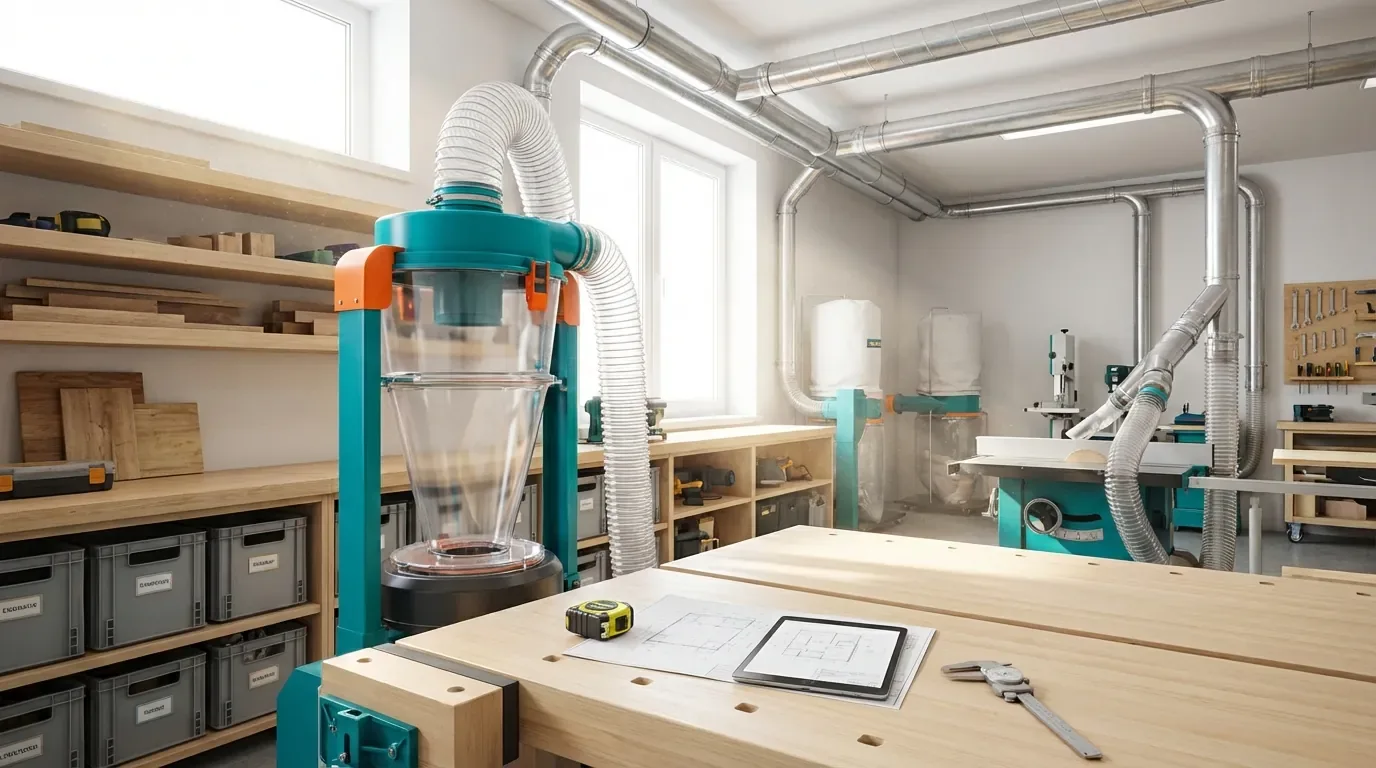
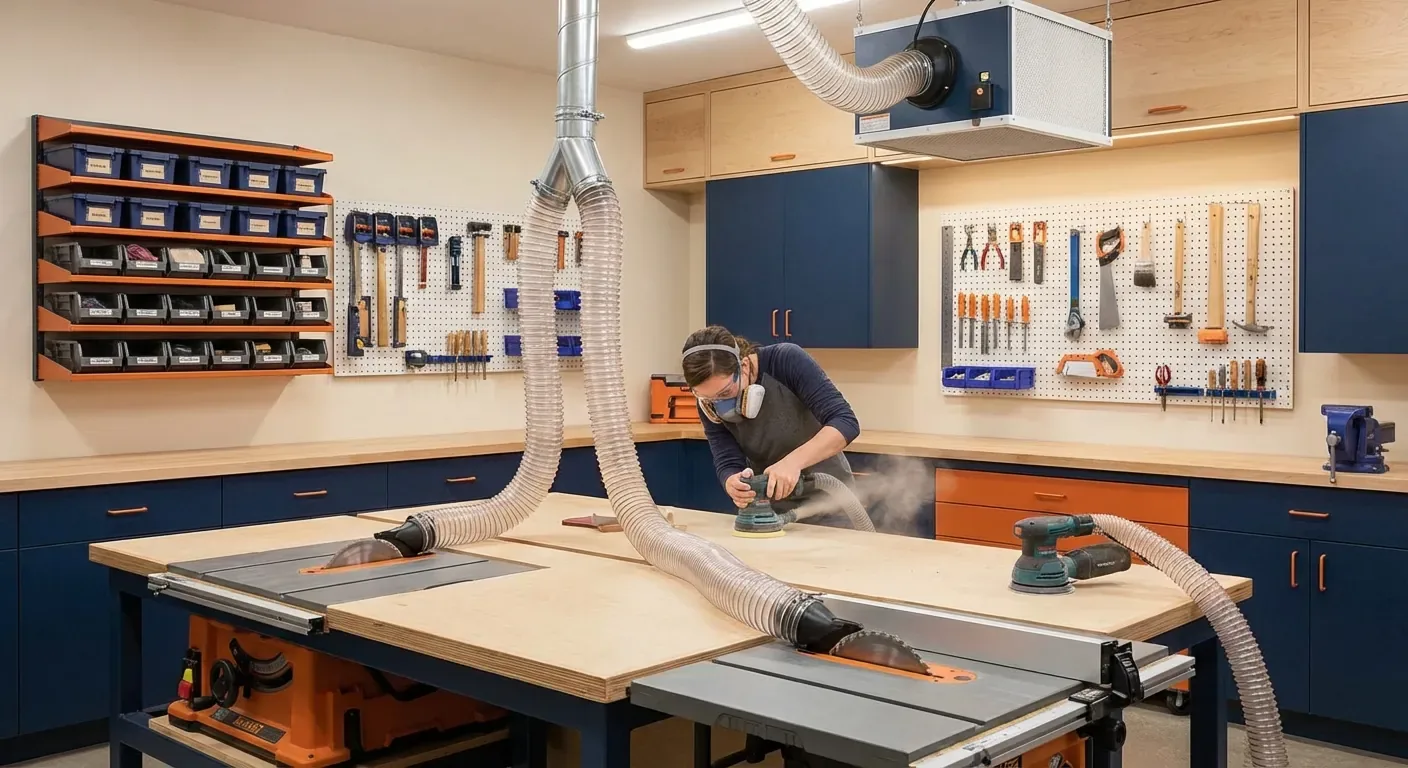
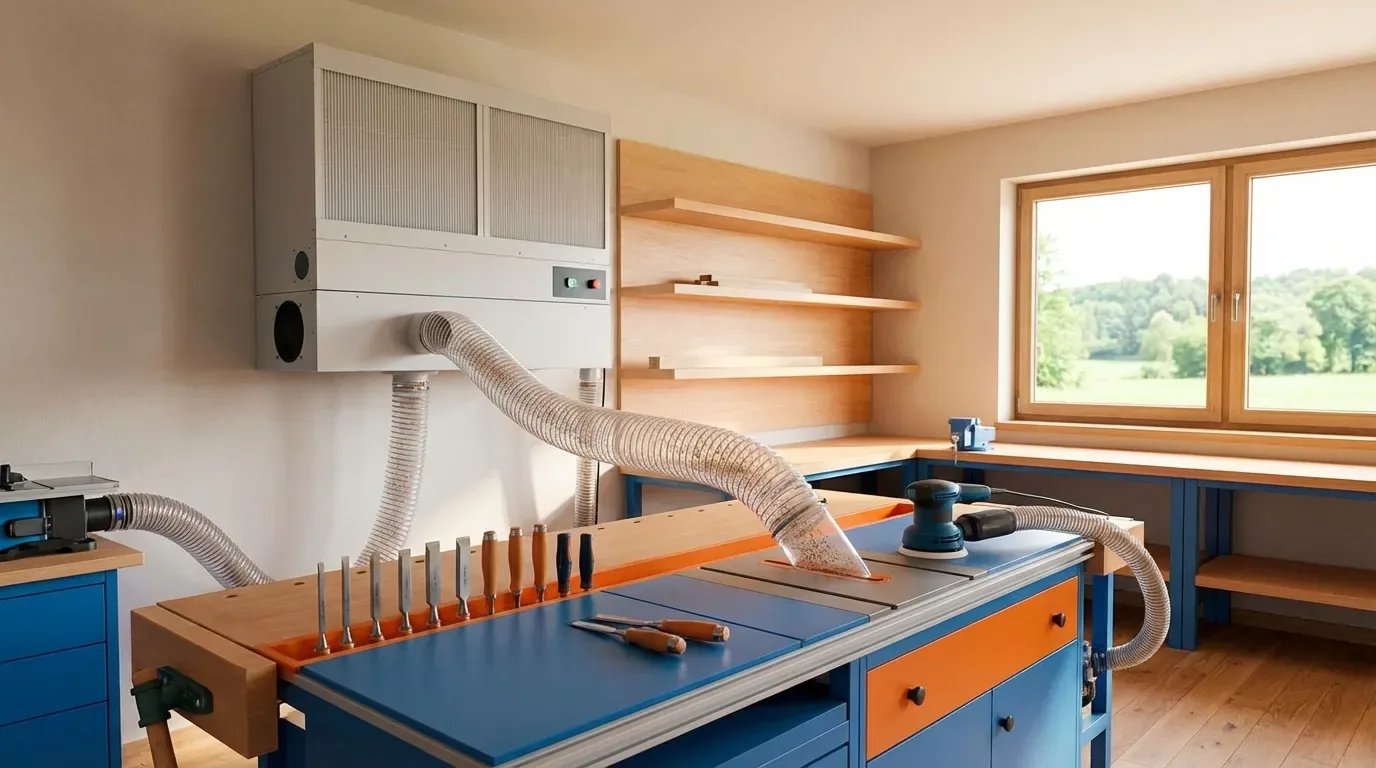
Read the guide →Understand source capture, shop vacs, dust collectors, ductwork, air filtration, and maintenance for a cleaner woodworking shop.
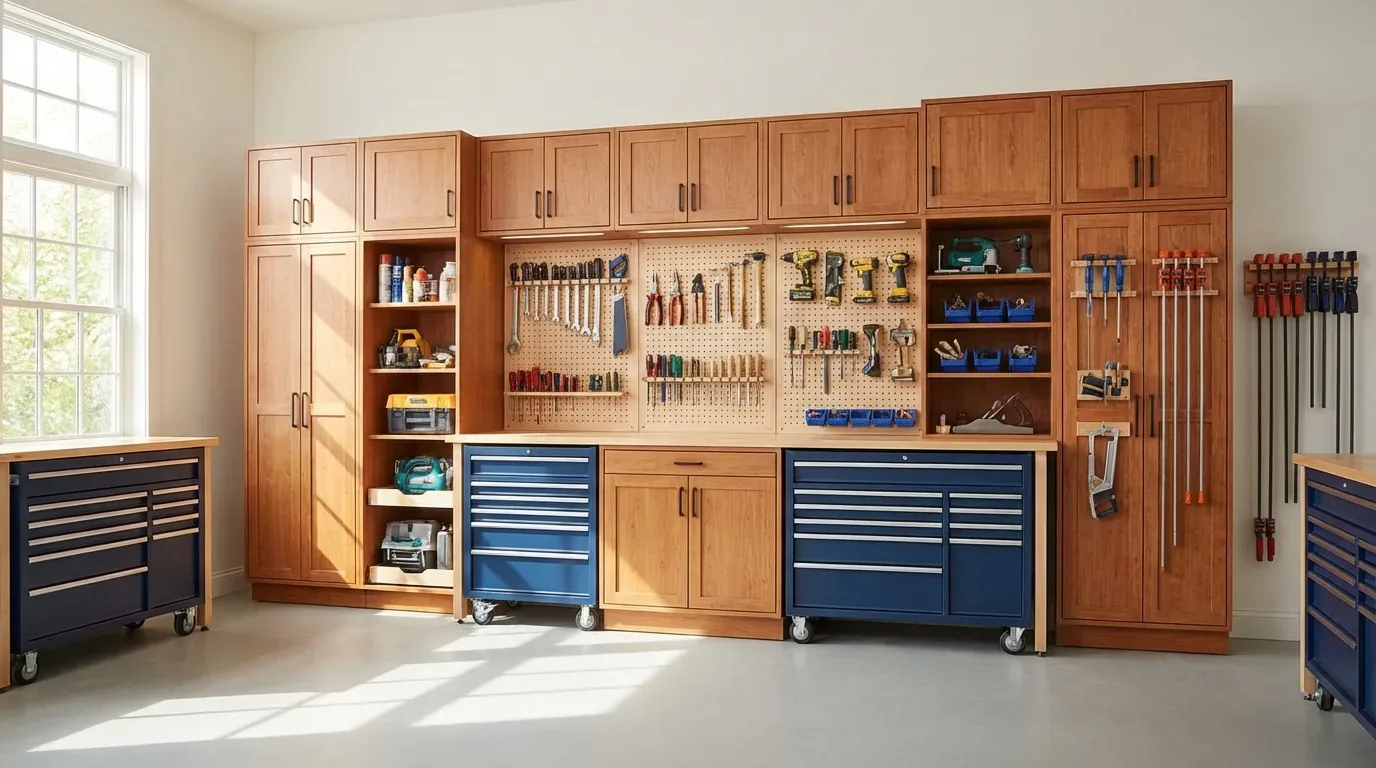
Read the guide →Compare cabinets, modular boxes, pegboards, French cleats, drawers, and mobile storage to build a tool-storage system that fits your shop.
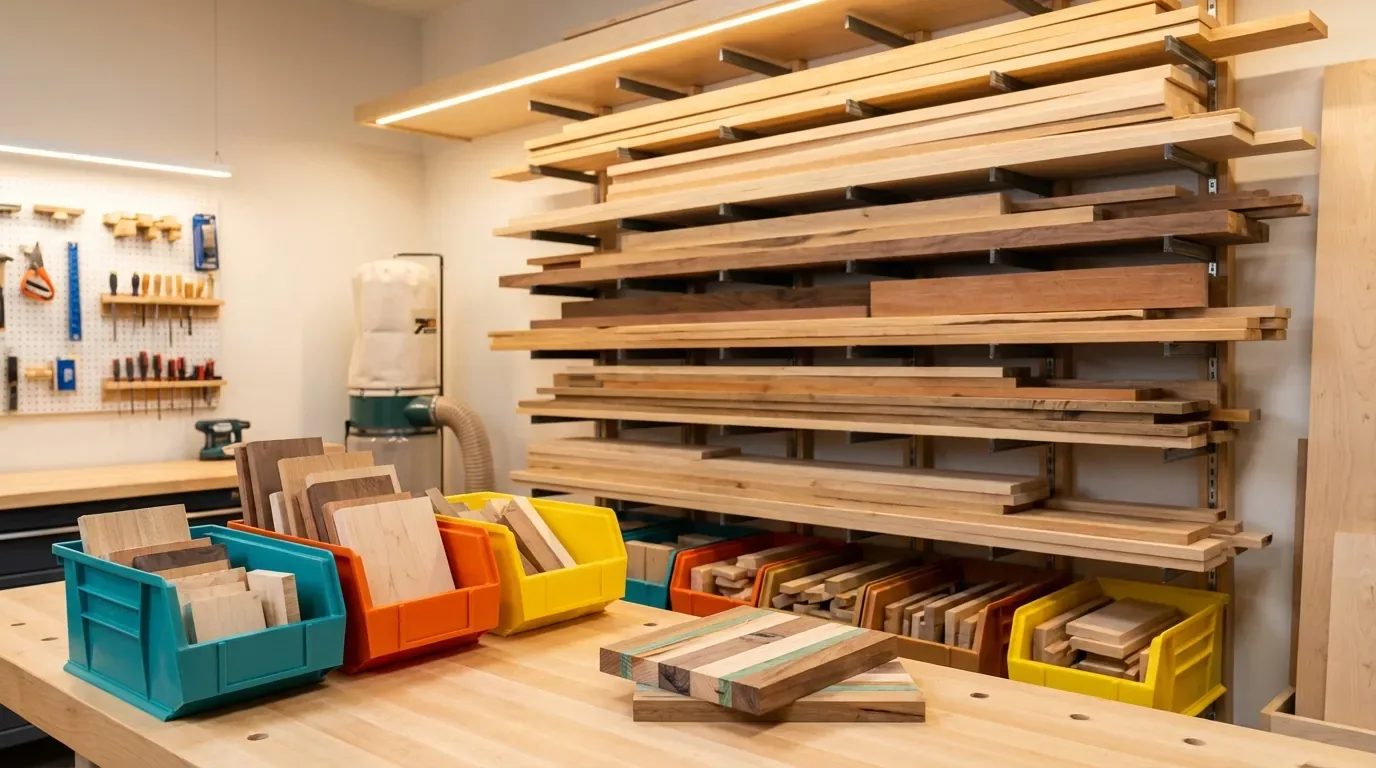
Read the guide →Store boards, sheet goods, and useful offcuts safely with lumber-rack guidance, scrap-sorting rules, and space-saving shop layouts.
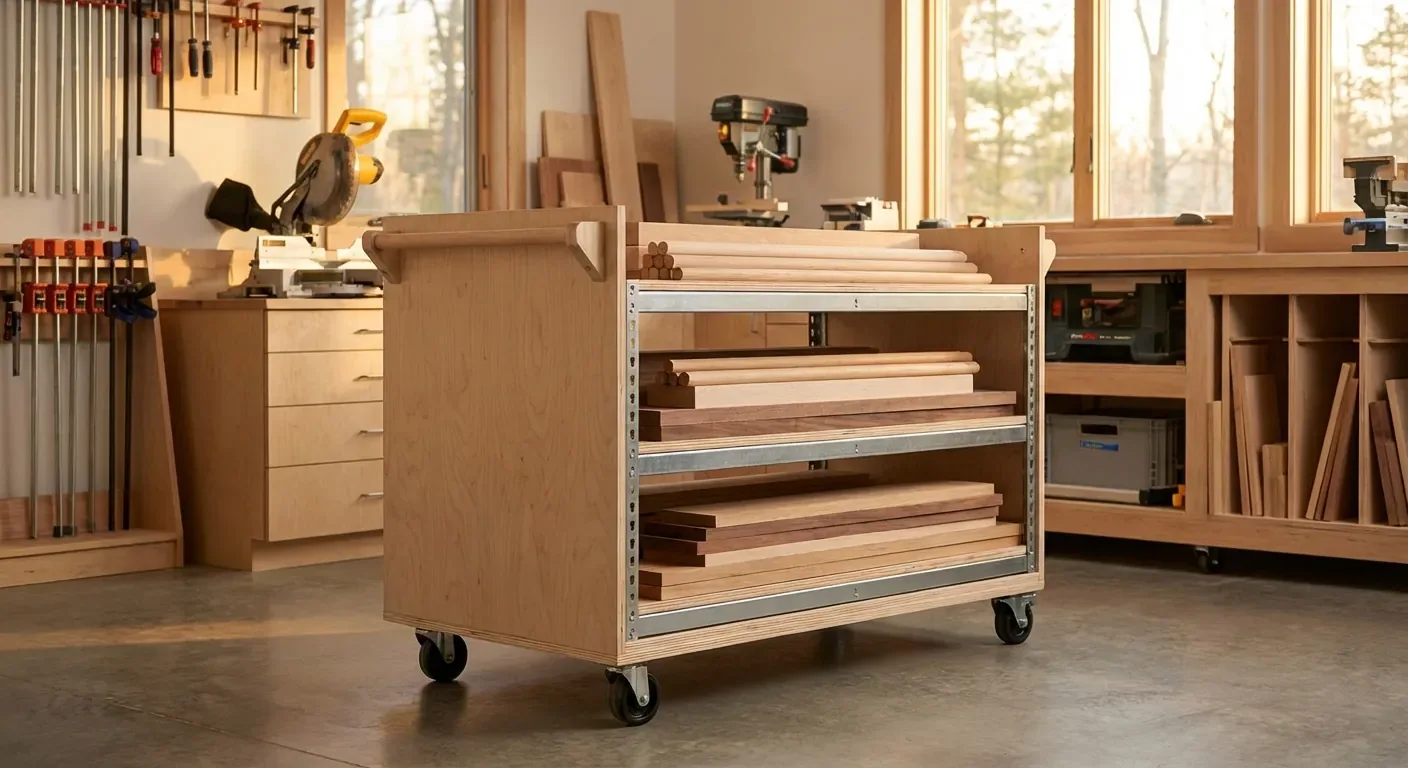
Read the guide →Plan and build a mobile lumber cart with space for boards and sheet goods, safe weight distribution, sturdy casters, and shop-friendly dimensions.
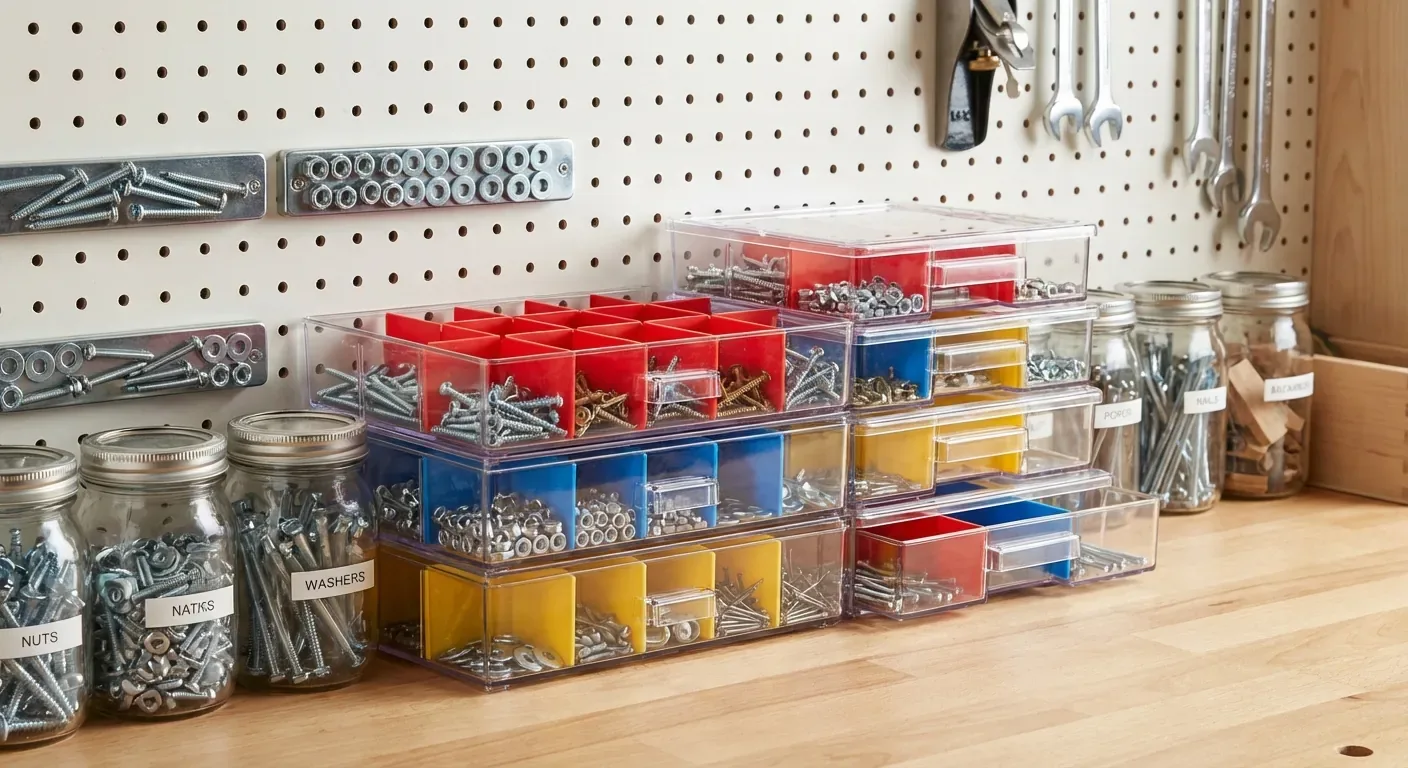
Read the guide →Organize screws, nails, washers, and other small hardware with practical bins, labels, sorting rules, and restocking habits.
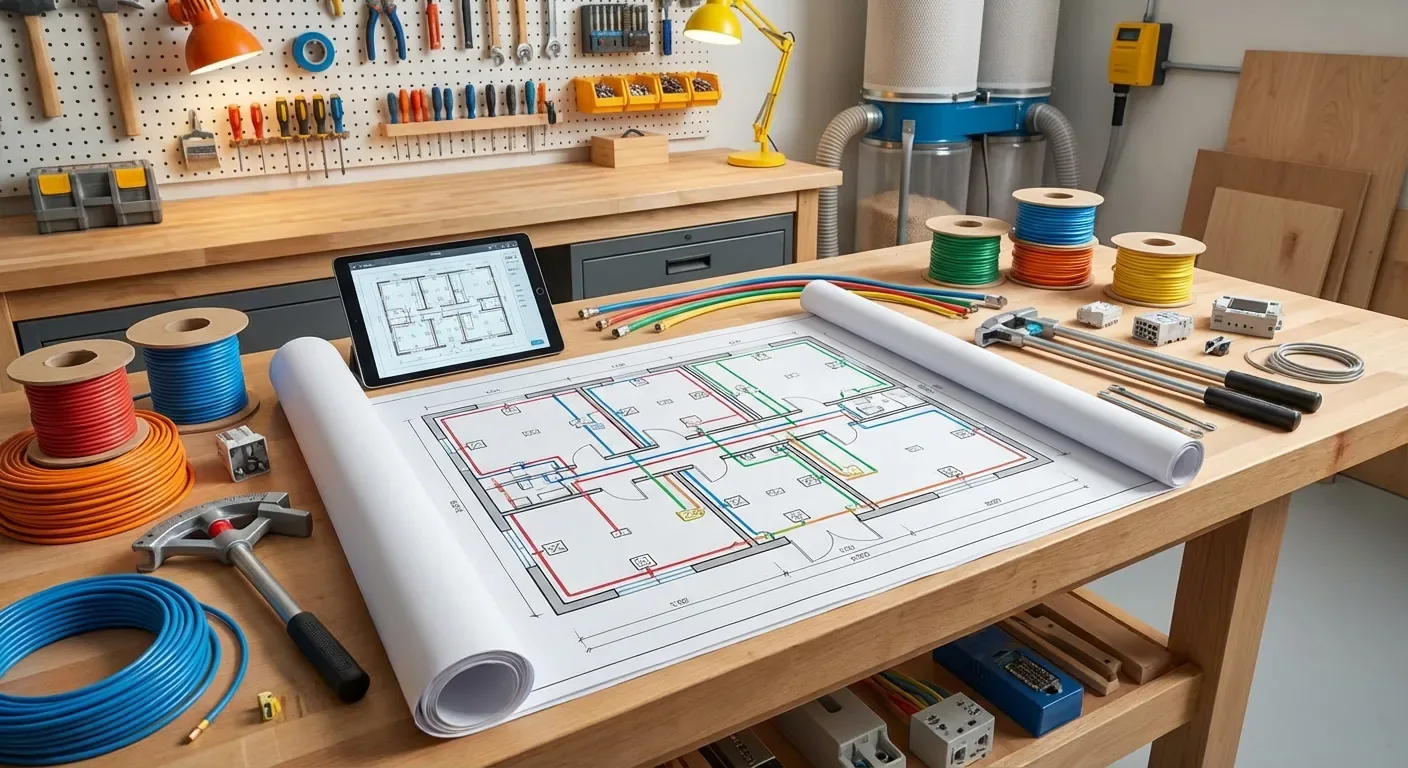
Read the guide →Plan workshop circuits, outlet locations, lighting, dust-collector power, and future tool needs before discussing the layout with an electrician.
Read the guide →Estimate required CFM, duct transport velocity, and duct pressure loss, then compare the result with a dust collector's published fan curve.
Read the guide →Lay out a 10-by-10 workshop with mobile tools, wall storage, safe working clearances, and flexible zones for cutting and assembly.
Read the guide →Keep useful wood scraps without losing shop space using simple sorting rules, vertical bins, rolling carts, and project-ready cutoffs.
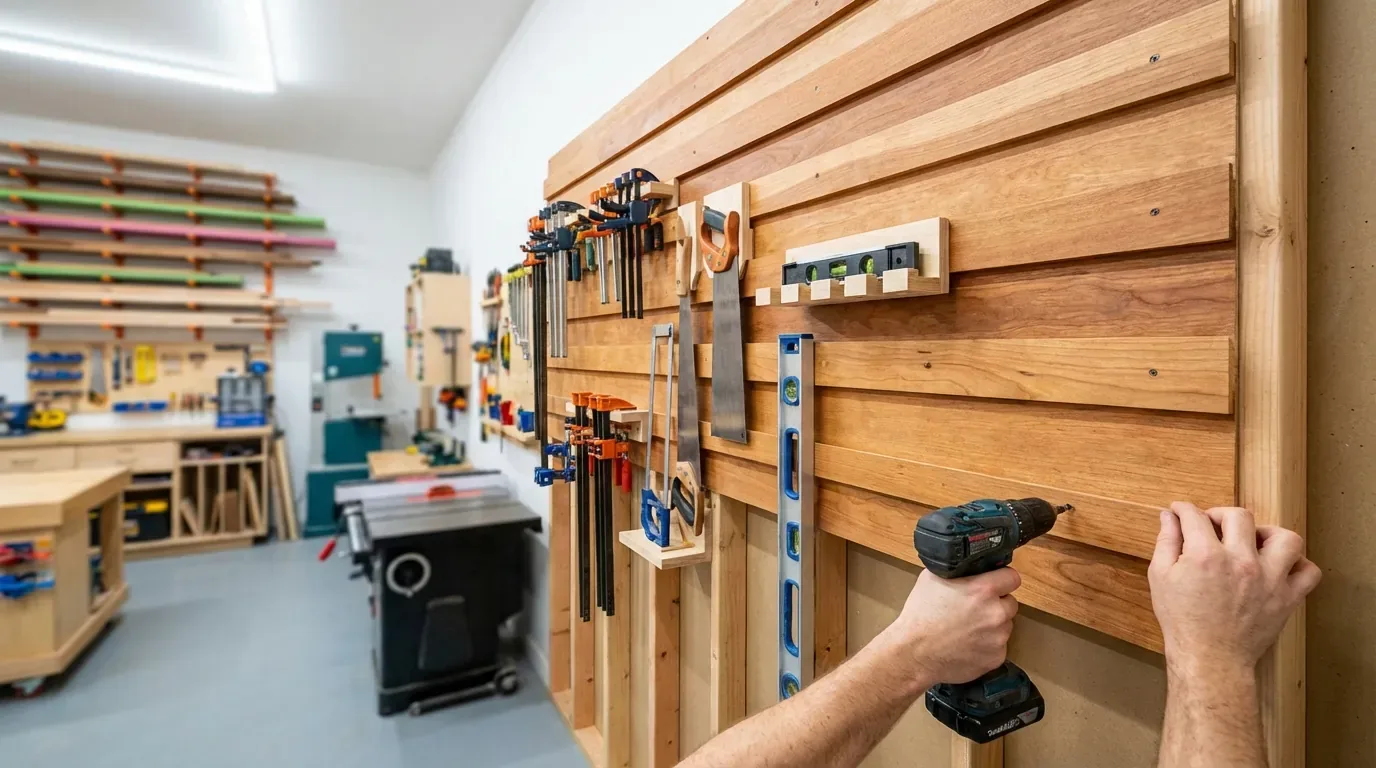
Read the guide →Install a French-cleat wall with guidance on material, spacing, stud attachment, level layout, and movable workshop tool holders.
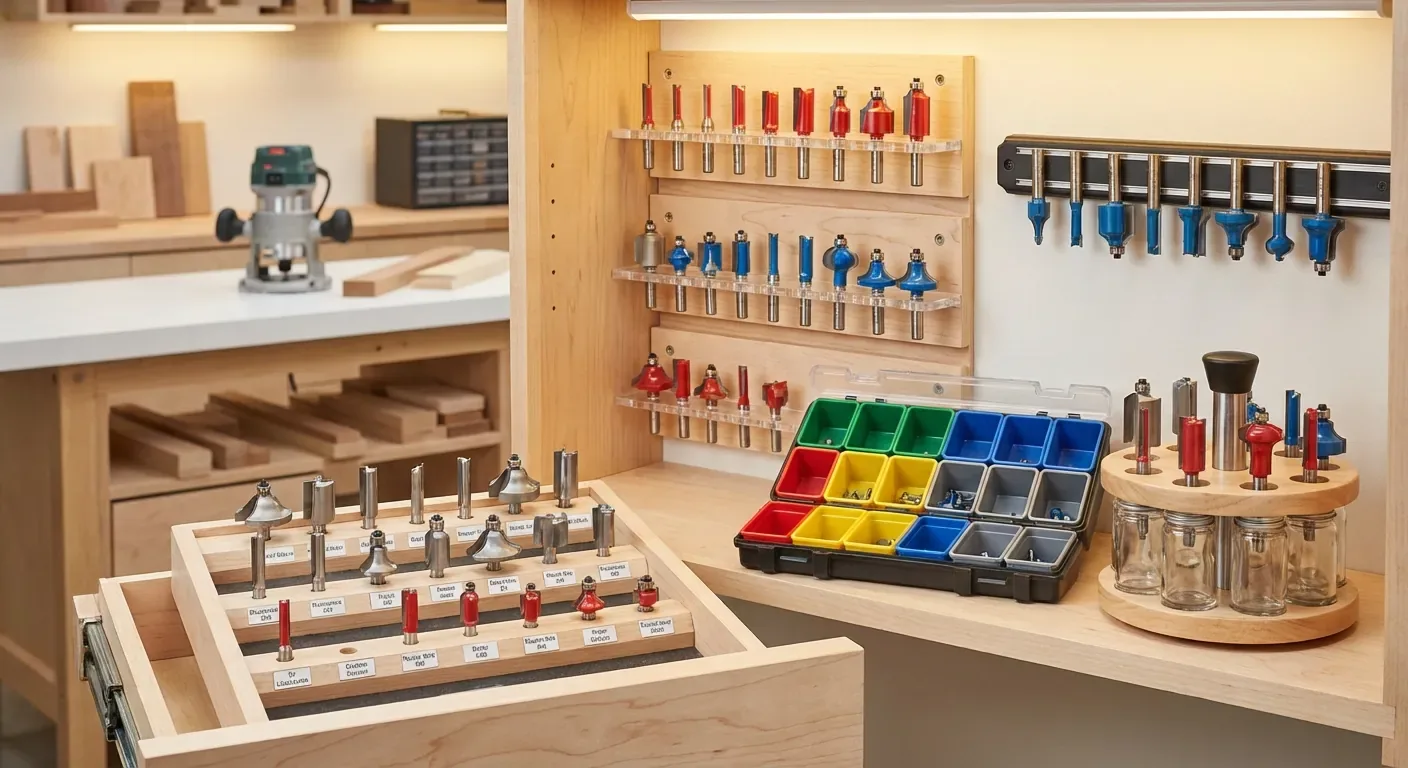
Read the guide →Organize router bits in trays, drawers, racks, cases, or custom holders while protecting cutting edges and keeping profiles easy to identify.
Read the guide →Reduce wood-dust exposure with source capture, air filtration, safe cleanup, respiratory protection, and practical maintenance habits.
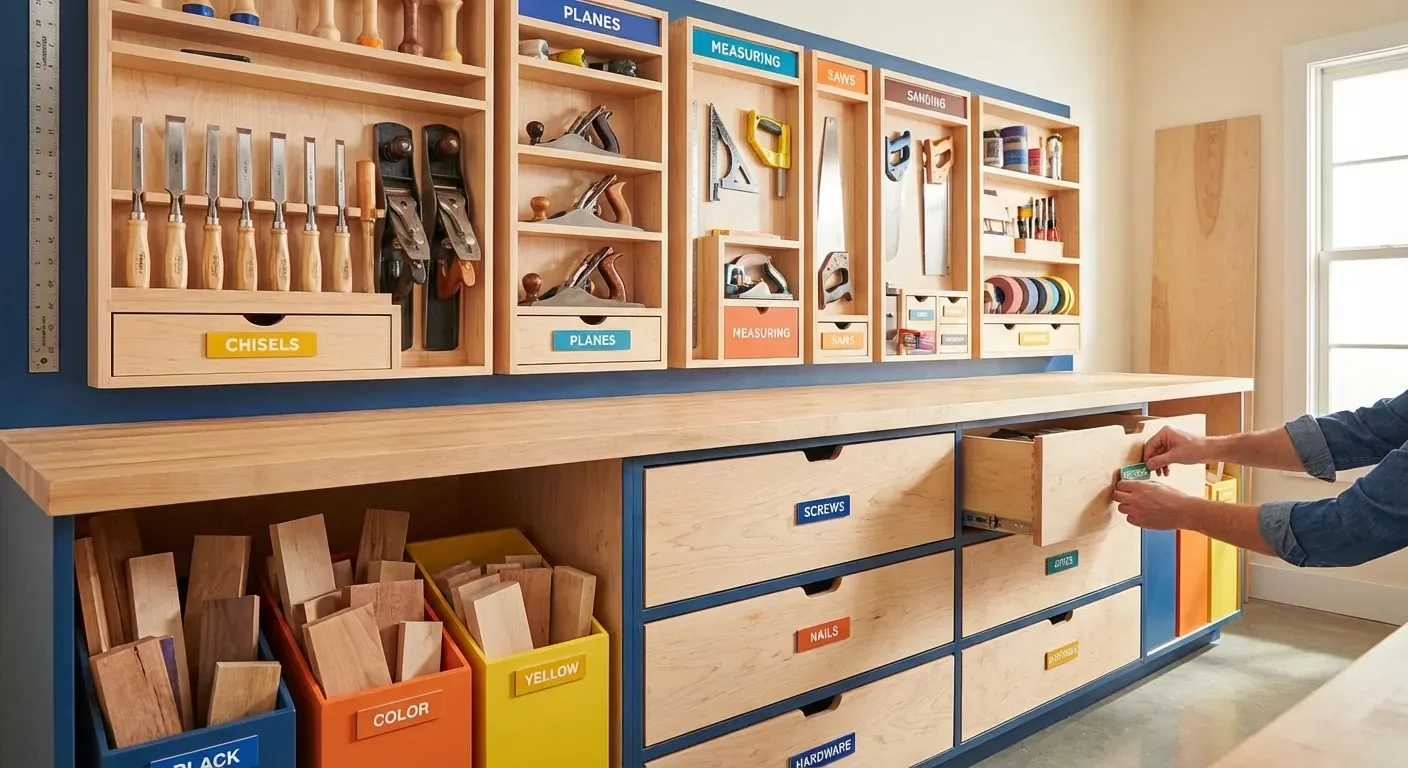
Read the guide →Create a workshop labeling system for drawers, bins, shelves, tools, and consumables that makes items easier to find and return.
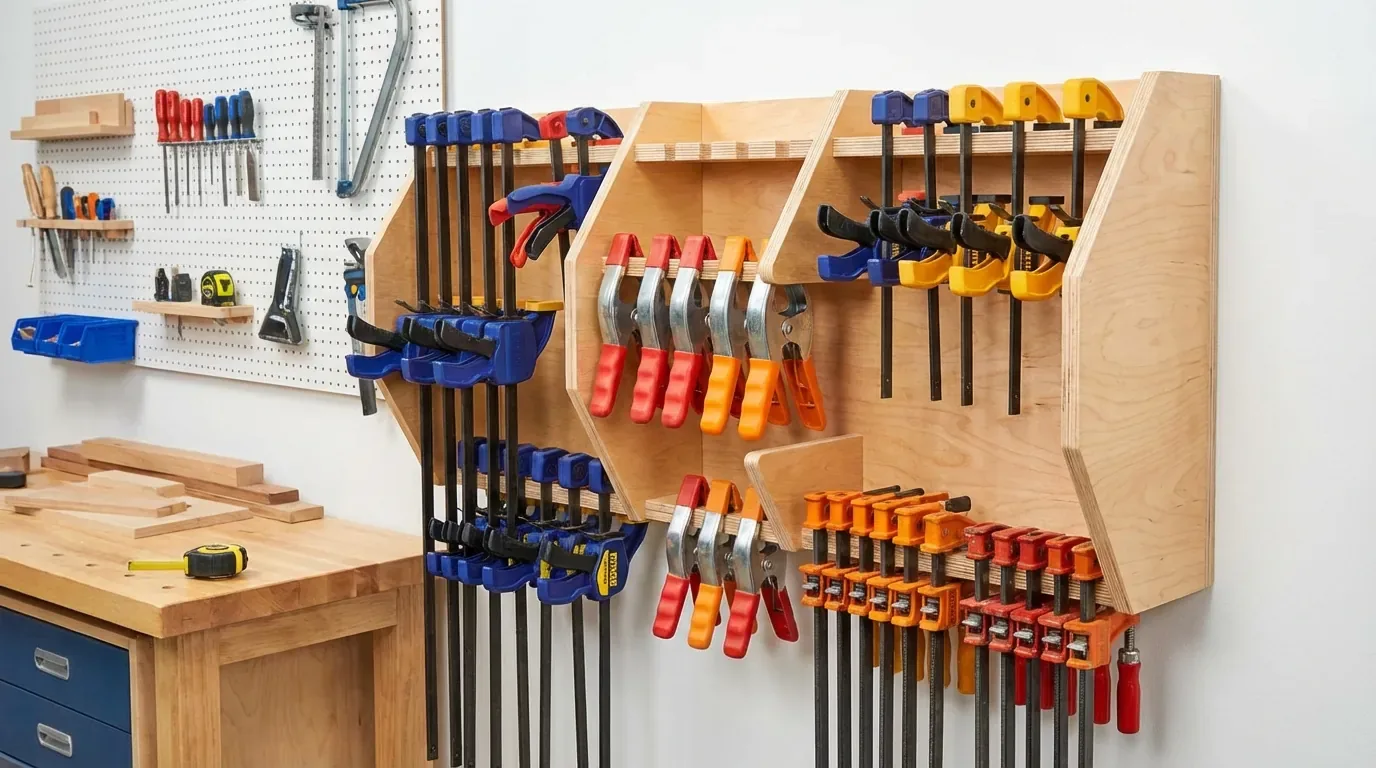
Read the guide →Explore wall-mounted, rolling, and under-bench clamp-rack ideas for organizing parallel, bar, pipe, and quick-grip clamps.
Read the guide →Maintain cleaner workshop air with source collection, ventilation, filtration schedules, filter checks, and dust-safe cleanup practices.
Read the guide →Use a simple planning grid to test workshop layouts, machine clearances, material paths, storage zones, and mobile-tool positions.
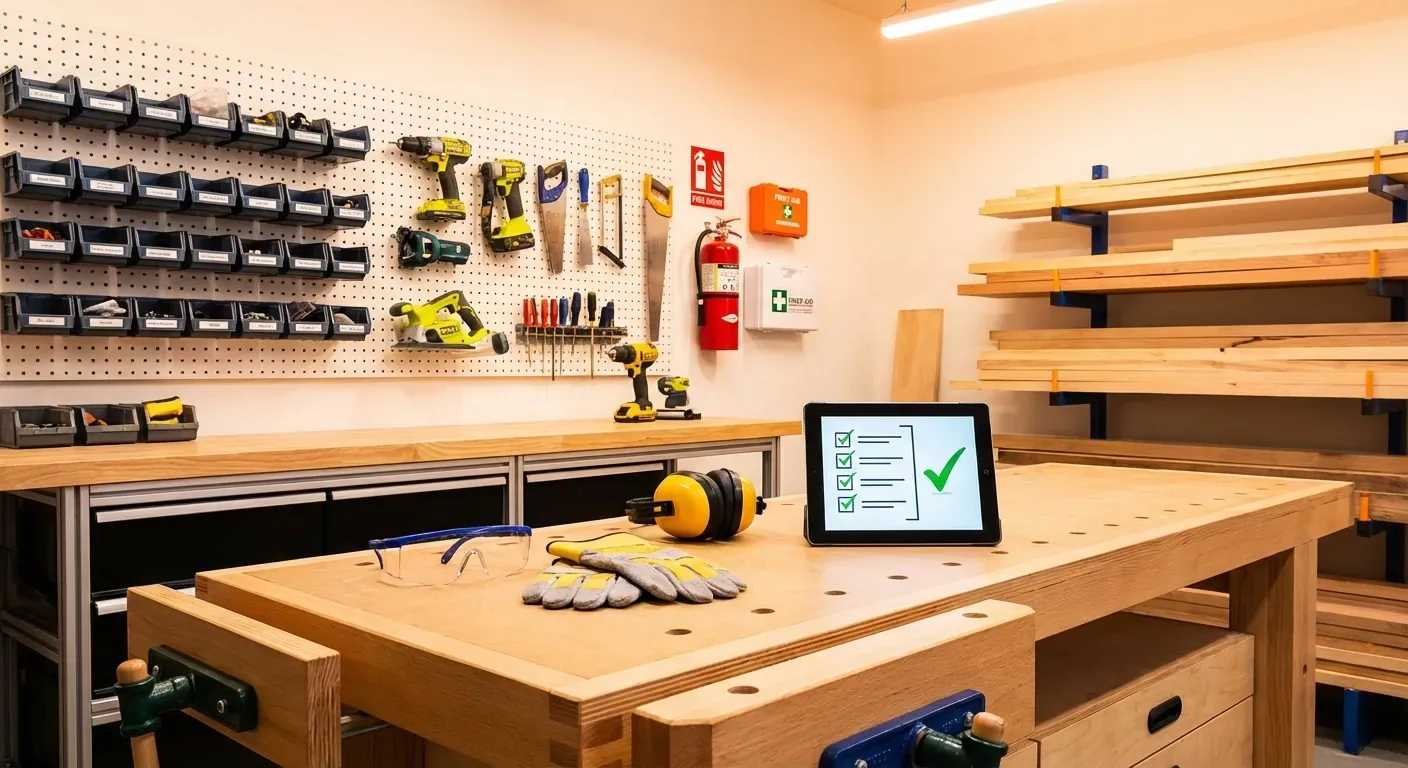
Read the guide →Review a practical workshop safety checklist covering personal protection, machine setup, dust, electrical risks, fire prevention, and housekeeping.
Read the guide →Plan modular workshop cabinets with adaptable dimensions, drawer and shelf options, durable joinery, and layouts that can grow with your tools.
Read the guide →Reset a cluttered workshop in 30 manageable sessions covering tools, hardware, lumber, surfaces, safety, storage, and maintenance routines.
Read the guide →